- Physical Examination
- Surgical Examination
- Ophthalmology
- Clinical Skills
- Orthopedics
- Surgery Videos
- Laparoscopy
- Pediatrics
- Funny Videos
- Cardiothoracic Surgery
- Nursing Videos
- Plastic Surgery
- Otorhinolaryngology
- Histology and Histopathology
- Neurosurgery
- Dermatology
- Pediatric Surgery
- Urology
- Dentistry
- Oncology and Cancers
- Anatomy Videos
- Health and Fitness
- Radiology
- Anaesthesia
- Physical Therapy
- Pharmacology
- Interventional Radiology
- Cardiology
- Endocrinology
- Gynecology
- Emergency Medicine
- Psychiatry and Psychology
- Childbirth Videos
- General Medical Videos
- Nephrology
- Physiology
- Diet and Food Health
- Diabetes Mellitus
- Neurology
- Women Health
- Osteoporosis
- Gastroenterology
- Pulmonology
- Hematology
- Rheumatology
- Toxicology
- Nuclear Medicine
- Infectious Diseases
- Vascular Disease
- Reproductive Health
- Burns and Wound Healing
- Kidney Zone Podcast
- Other
Lungs
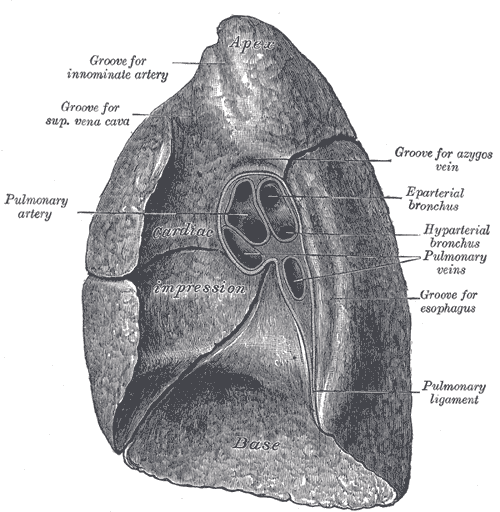
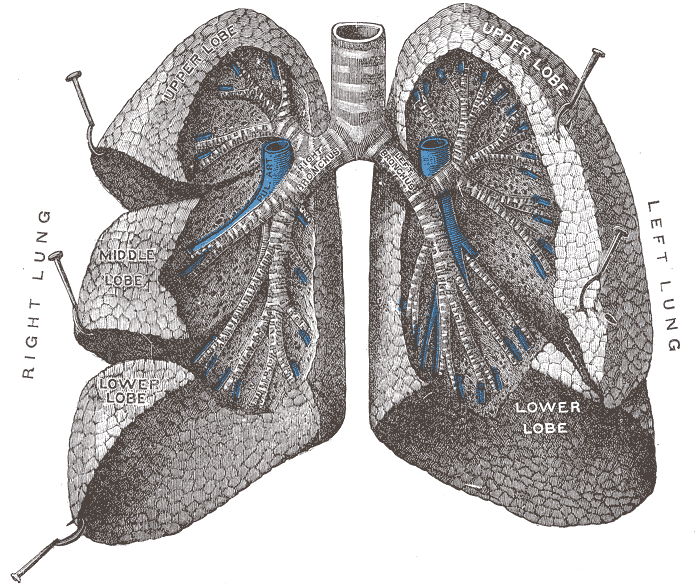
Gray's Anatomy (1918) plate, public domain
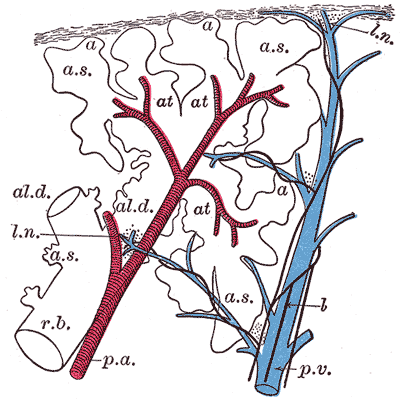
The lungs are the paired organs of breathing filling most of the chest. The right lung has three lobes and is slightly larger; the left has two lobes and a notch where the heart sits. Inside, the bronchial tree branches into millions of alveoli where gases exchange with the blood. The lungs receive the entire output of the right side of the heart through the pulmonary arteries.
Key facts
- Together the lungs weigh only about a kilogram, because they are mostly air spaces.
- If spread flat, the gas-exchange surface of the lungs would cover roughly a tennis court.
- The right lung takes about 55% of the air you breathe; the left about 45%.
- Lungs float in water — a property once used in post-mortem examinations.
What can go wrong
The lungs are affected by infections (pneumonia), chronic airway diseases (asthma, COPD), blood clots travelling from the legs (pulmonary embolism), fluid around them from heart failure, and cancers that often relate to smoking or inhaled exposures. Lung tissue itself has no pain fibres, so many lung problems present as cough or breathlessness rather than pain.
Related conditions
Related procedures & tests
Related symptoms
Related muscles
Watch: related videos
Frequently asked questions
Can you live with one lung?
Yes. After removal of a lung (pneumonectomy) the remaining lung expands and can sustain normal daily activities, though maximal exercise capacity is reduced.
Why does the left lung have fewer lobes?
The heart projects into the left side of the chest, leaving less room; the left lung has two lobes and a cardiac notch instead of three lobes.
Educational information only. This atlas explains normal anatomy and describes conditions in general terms; it is not medical advice and does not replace assessment by a qualified clinician. If you have symptoms that worry you, seek medical care.