- Physical Examination
- Surgical Examination
- Ophthalmology
- Clinical Skills
- Orthopedics
- Surgery Videos
- Laparoscopy
- Pediatrics
- Funny Videos
- Cardiothoracic Surgery
- Nursing Videos
- Plastic Surgery
- Otorhinolaryngology
- Histology and Histopathology
- Neurosurgery
- Dermatology
- Pediatric Surgery
- Urology
- Dentistry
- Oncology and Cancers
- Anatomy Videos
- Health and Fitness
- Radiology
- Anaesthesia
- Physical Therapy
- Pharmacology
- Interventional Radiology
- Cardiology
- Endocrinology
- Gynecology
- Emergency Medicine
- Psychiatry and Psychology
- Childbirth Videos
- General Medical Videos
- Nephrology
- Physiology
- Diet and Food Health
- Diabetes Mellitus
- Neurology
- Women Health
- Osteoporosis
- Gastroenterology
- Pulmonology
- Hematology
- Rheumatology
- Toxicology
- Nuclear Medicine
- Infectious Diseases
- Vascular Disease
- Reproductive Health
- Burns and Wound Healing
- Kidney Zone Podcast
- Other
Alveoli
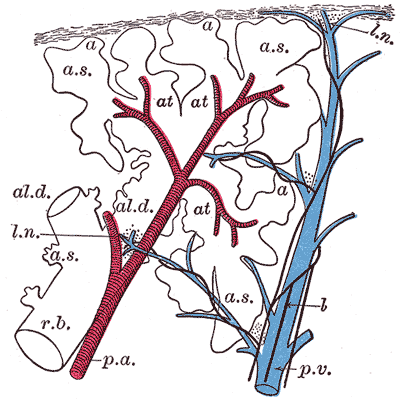
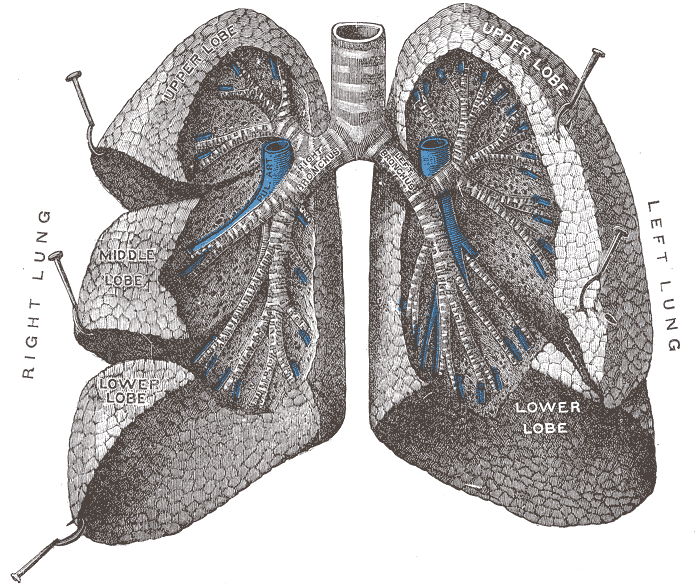
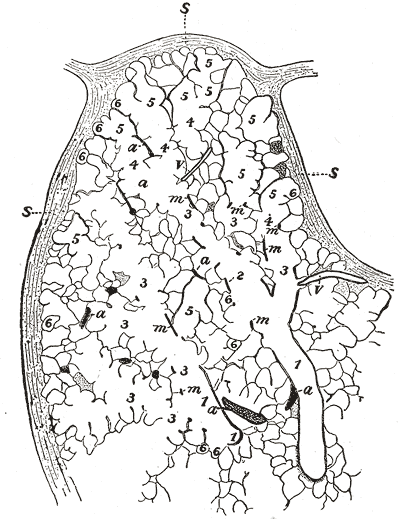
Gray's Anatomy (1918) plate, public domain
The alveoli are the lungs' microscopic air sacs — several hundred million tiny, thin-walled bubbles clustered at the ends of the bronchioles like grapes. Each is wrapped in a net of capillaries. Oxygen crosses their paper-thin walls into the blood while carbon dioxide crosses back out; together their surface covers about the area of a tennis court packed into the chest.
Key facts
- An adult has an estimated 300-500 million alveoli.
- The wall between air and blood is less than a thousandth of a millimetre thick in places.
- A soapy substance called surfactant coats the sacs and stops them collapsing at the end of each breath.
- Resident immune cells (alveolar macrophages) patrol the sacs, clearing inhaled particles.
What can go wrong
In pneumonia, alveoli fill with fluid and pus, blocking gas exchange in that region. In emphysema, their walls break down into larger, inefficient spaces, reducing the surface for oxygen uptake. Fluid leaking into alveoli in heart failure or severe inflammation causes pulmonary edema and marked breathlessness. In premature babies, lack of surfactant makes the sacs stiff and prone to collapse.
Related procedures & tests
Related symptoms
Frequently asked questions
How does oxygen get from an alveolus into the blood?
Oxygen dissolves through the thin alveolar wall and the capillary wall into the plasma and then into red blood cells, driven by the higher concentration of oxygen in the air sac.
What is surfactant?
A detergent-like coating made by alveolar cells that lowers surface tension, keeping the tiny sacs open and making breathing less effortful.
Educational information only. This atlas explains normal anatomy and describes conditions in general terms; it is not medical advice and does not replace assessment by a qualified clinician. If you have symptoms that worry you, seek medical care.