- Physical Examination
- Surgical Examination
- Ophthalmology
- Clinical Skills
- Orthopedics
- Surgery Videos
- Laparoscopy
- Pediatrics
- Funny Videos
- Cardiothoracic Surgery
- Nursing Videos
- Plastic Surgery
- Otorhinolaryngology
- Histology and Histopathology
- Neurosurgery
- Dermatology
- Pediatric Surgery
- Urology
- Dentistry
- Oncology and Cancers
- Anatomy Videos
- Health and Fitness
- Radiology
- Anaesthesia
- Physical Therapy
- Pharmacology
- Interventional Radiology
- Cardiology
- Endocrinology
- Gynecology
- Emergency Medicine
- Psychiatry and Psychology
- Childbirth Videos
- General Medical Videos
- Nephrology
- Physiology
- Diet and Food Health
- Diabetes Mellitus
- Neurology
- Women Health
- Osteoporosis
- Gastroenterology
- Pulmonology
- Hematology
- Rheumatology
- Toxicology
- Nuclear Medicine
- Infectious Diseases
- Vascular Disease
- Reproductive Health
- Burns and Wound Healing
- Kidney Zone Podcast
- Other
Bronchi
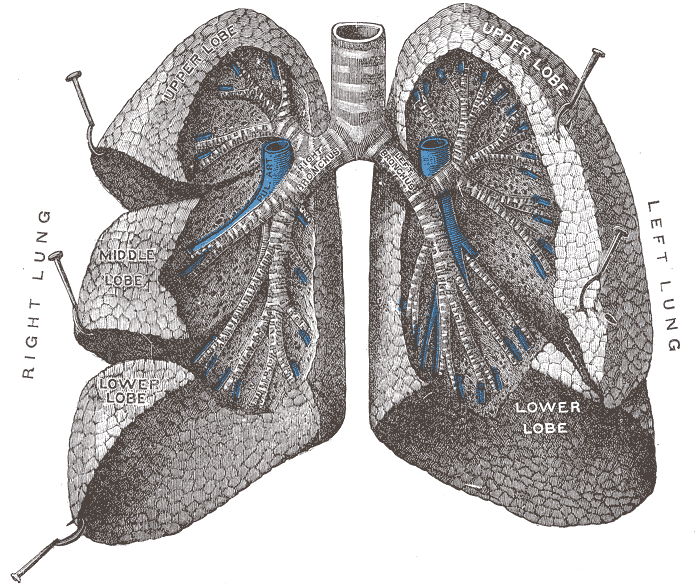
Gray's Anatomy (1918) plate, public domain
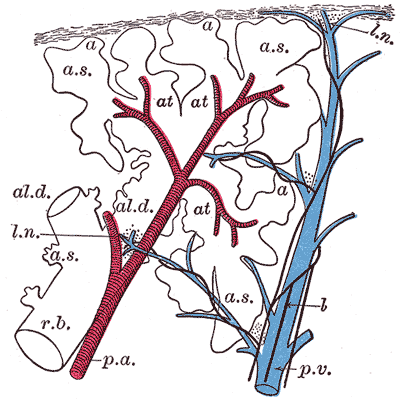
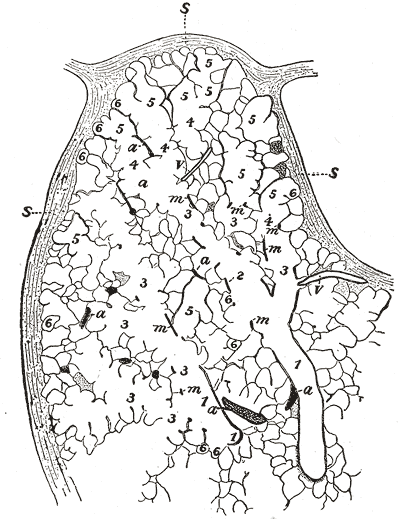
The bronchi are the branching airways that carry air from the trachea deep into the lungs. The right main bronchus is wider, shorter and more vertical than the left — which is why inhaled objects more often end up on the right. Each main bronchus divides into lobar bronchi (three on the right, two on the left), then into ever-smaller branches, forming the bronchial tree.
Key facts
- The bronchial tree branches about 16-23 times between the trachea and the air sacs.
- Larger bronchi have cartilage plates in their walls; smaller ones rely on surrounding lung tissue to stay open.
- Smooth muscle in bronchial walls can tighten the airways — the mechanism behind wheeze in asthma.
- Each branch supplies a defined segment of lung, which lets surgeons remove one segment while sparing the rest.
What can go wrong
Inflammation of the bronchi (bronchitis) causes cough and phlegm; in chronic bronchitis the lining glands enlarge and cough becomes persistent. In bronchiectasis, damaged bronchi stay permanently widened and pool mucus, leading to repeated infections. Asthma narrows bronchi reversibly through muscle spasm and swelling. A camera inspection of the bronchi is called bronchoscopy.
Related conditions
Related procedures & tests
Related symptoms
Watch: related videos
Frequently asked questions
Why do inhaled objects usually go to the right lung?
The right main bronchus is wider and continues the line of the trachea more directly than the angled left bronchus, so objects tend to follow it.
What is the difference between bronchi and bronchioles?
Bronchi are the larger, cartilage-supported branches; bronchioles are the small final branches under about a millimetre wide that lead into the air sacs.
Educational information only. This atlas explains normal anatomy and describes conditions in general terms; it is not medical advice and does not replace assessment by a qualified clinician. If you have symptoms that worry you, seek medical care.