- Physical Examination
- Surgical Examination
- Ophthalmology
- Clinical Skills
- Orthopedics
- Surgery Videos
- Laparoscopy
- Pediatrics
- Funny Videos
- Cardiothoracic Surgery
- Nursing Videos
- Plastic Surgery
- Otorhinolaryngology
- Histology and Histopathology
- Neurosurgery
- Dermatology
- Pediatric Surgery
- Urology
- Dentistry
- Oncology and Cancers
- Anatomy Videos
- Health and Fitness
- Radiology
- Anaesthesia
- Physical Therapy
- Pharmacology
- Interventional Radiology
- Cardiology
- Endocrinology
- Gynecology
- Emergency Medicine
- Psychiatry and Psychology
- Childbirth Videos
- General Medical Videos
- Nephrology
- Physiology
- Diet and Food Health
- Diabetes Mellitus
- Neurology
- Women Health
- Osteoporosis
- Gastroenterology
- Pulmonology
- Hematology
- Rheumatology
- Toxicology
- Nuclear Medicine
- Infectious Diseases
- Vascular Disease
- Reproductive Health
- Burns and Wound Healing
- Kidney Zone Podcast
- Other
Diaphragm
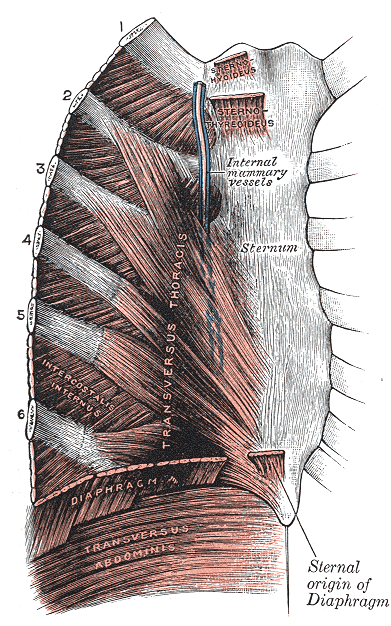
Gray's Anatomy (1918) plate, public domain
The diaphragm is the dome-shaped sheet of muscle and tendon separating the chest from the abdomen, and it is the main muscle of breathing. When it contracts it flattens downward, drawing air into the lungs; when it relaxes it recoils upward as air leaves. It has openings for the aorta, the vena cava and the esophagus, and it also helps with coughing, vomiting and bearing down.
Key facts
- The diaphragm does about three-quarters of the work of quiet breathing.
- Its right dome sits higher than the left because the liver pushes up beneath it.
- It is supplied by the phrenic nerves, which arise in the neck — which is why diaphragm irritation can cause shoulder-tip pain.
- Hiccups are involuntary spasm-like contractions of the diaphragm.
What can go wrong
Weakness or paralysis of one side of the diaphragm (from phrenic nerve injury, surgery or neurological disease) causes breathlessness that is worse lying flat. A hernia through its openings can let stomach slide into the chest (hiatus hernia), contributing to reflux. Irritation under the diaphragm — from gallbladder inflammation or bleeding, for example — often presents as shoulder-tip pain via the shared nerve supply.
Related conditions
Related procedures & tests
Related symptoms
Related muscles
Frequently asked questions
Why do we get hiccups?
Hiccups are sudden involuntary contractions of the diaphragm followed by abrupt closure of the vocal cords, which makes the characteristic sound; most bouts settle on their own.
Can you control the diaphragm voluntarily?
Yes — unlike most automatic breathing control, you can consciously flatten it to take a deep breath, which is the basis of diaphragmatic breathing exercises.
Educational information only. This atlas explains normal anatomy and describes conditions in general terms; it is not medical advice and does not replace assessment by a qualified clinician. If you have symptoms that worry you, seek medical care.