- Physical Examination
- Surgical Examination
- Ophthalmology
- Clinical Skills
- Orthopedics
- Surgery Videos
- Laparoscopy
- Pediatrics
- Funny Videos
- Cardiothoracic Surgery
- Nursing Videos
- Plastic Surgery
- Otorhinolaryngology
- Histology and Histopathology
- Neurosurgery
- Dermatology
- Pediatric Surgery
- Urology
- Dentistry
- Oncology and Cancers
- Anatomy Videos
- Health and Fitness
- Radiology
- Anaesthesia
- Physical Therapy
- Pharmacology
- Interventional Radiology
- Cardiology
- Endocrinology
- Gynecology
- Emergency Medicine
- Psychiatry and Psychology
- Childbirth Videos
- General Medical Videos
- Nephrology
- Physiology
- Diet and Food Health
- Diabetes Mellitus
- Neurology
- Women Health
- Osteoporosis
- Gastroenterology
- Pulmonology
- Hematology
- Rheumatology
- Toxicology
- Nuclear Medicine
- Infectious Diseases
- Vascular Disease
- Reproductive Health
- Burns and Wound Healing
- Kidney Zone Podcast
- Other
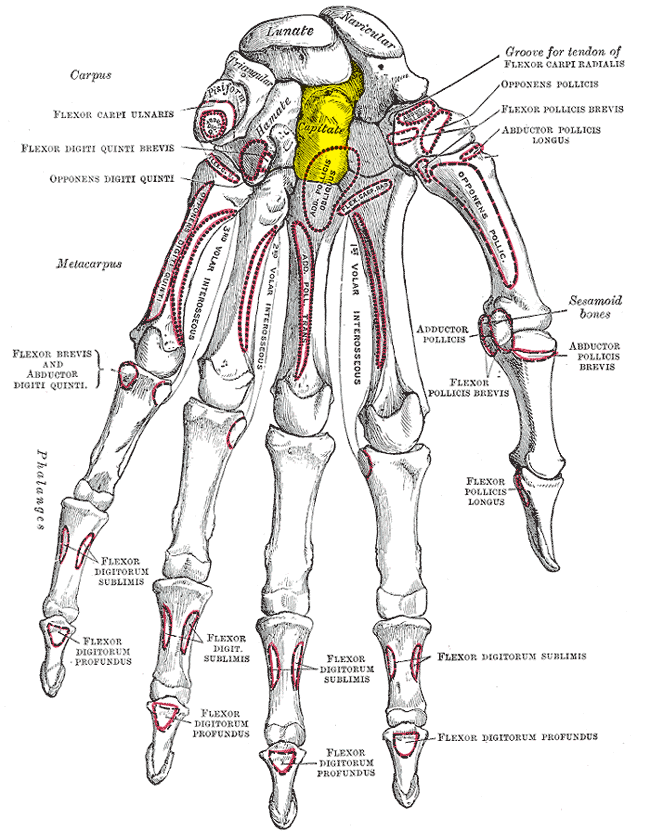
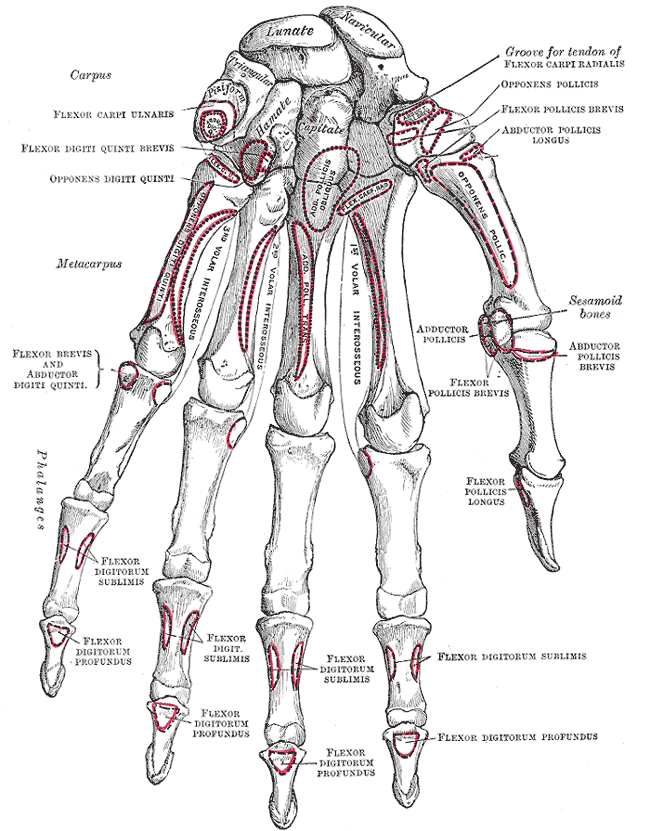
Fifth Metacarpal
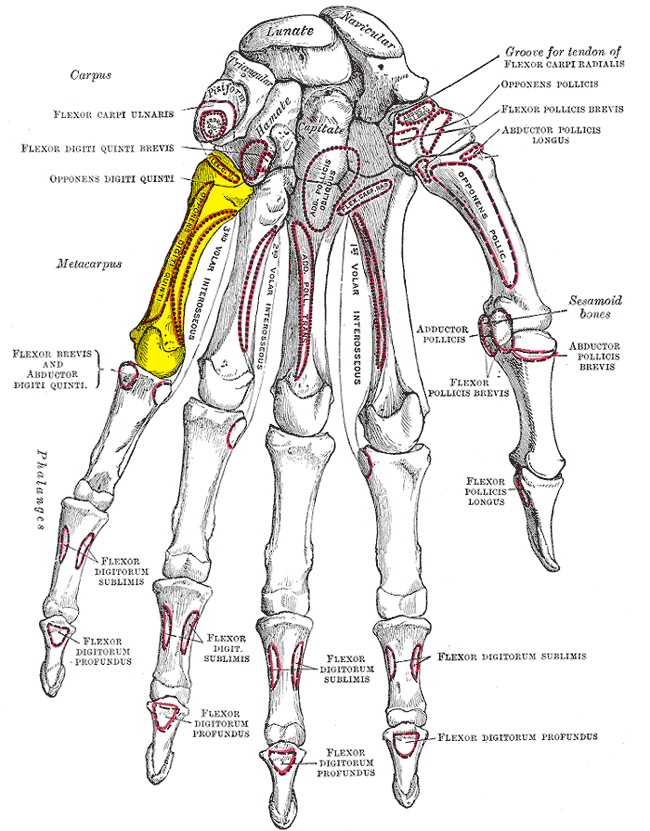
Gray's Anatomy (1918) plate, public domain
The fifth metacarpal is the little finger's palm bone — the most mobile of the four finger metacarpals at its base, which helps the palm cup. It is also the most famous: the fracture of its neck from a punch is the classic 'boxer's fracture'. The hypothenar muscles that move the little finger attach around its base.
Key facts
- It supports the little finger.
- Its neck fracture is the classic boxer's fracture.
- Its base is the most mobile of the finger metacarpals.
- The little finger's muscles (hypothenar group) attach at its base.
- Its head is the little-finger knuckle.
What can go wrong
Neck fractures of the fifth metacarpal usually result from a fist hitting a hard surface; most heal with buddy strapping or a splint once rotation is confirmed normal, and the knuckle may sit slightly lower afterwards. Fractures at its base from falls can involve the wrist joint and need closer assessment.
Related procedures & tests
Related symptoms
Related muscles
Frequently asked questions
Why is it called a boxer's fracture?
Because the force of a punch lands through the little-finger knuckle, bending the metacarpal neck until it snaps. Ironically it is commoner in unskilled punching — trained boxers more often injure the index and middle rays.
Will the knuckle come back after a boxer's fracture?
The knuckle often stays slightly less prominent because the head heals tilted a little forwards. This cosmetic change is common and usually causes no functional problem.
Educational information only. This atlas explains normal anatomy and describes conditions in general terms; it is not medical advice and does not replace assessment by a qualified clinician. If you have symptoms that worry you, seek medical care.