- Physical Examination
- Surgical Examination
- Ophthalmology
- Clinical Skills
- Orthopedics
- Surgery Videos
- Laparoscopy
- Pediatrics
- Funny Videos
- Cardiothoracic Surgery
- Nursing Videos
- Plastic Surgery
- Otorhinolaryngology
- Histology and Histopathology
- Neurosurgery
- Dermatology
- Pediatric Surgery
- Urology
- Dentistry
- Oncology and Cancers
- Anatomy Videos
- Health and Fitness
- Radiology
- Anaesthesia
- Physical Therapy
- Pharmacology
- Interventional Radiology
- Cardiology
- Endocrinology
- Gynecology
- Emergency Medicine
- Psychiatry and Psychology
- Childbirth Videos
- General Medical Videos
- Nephrology
- Physiology
- Diet and Food Health
- Diabetes Mellitus
- Neurology
- Women Health
- Osteoporosis
- Gastroenterology
- Pulmonology
- Hematology
- Rheumatology
- Toxicology
- Nuclear Medicine
- Infectious Diseases
- Vascular Disease
- Reproductive Health
- Burns and Wound Healing
- Kidney Zone Podcast
- Other
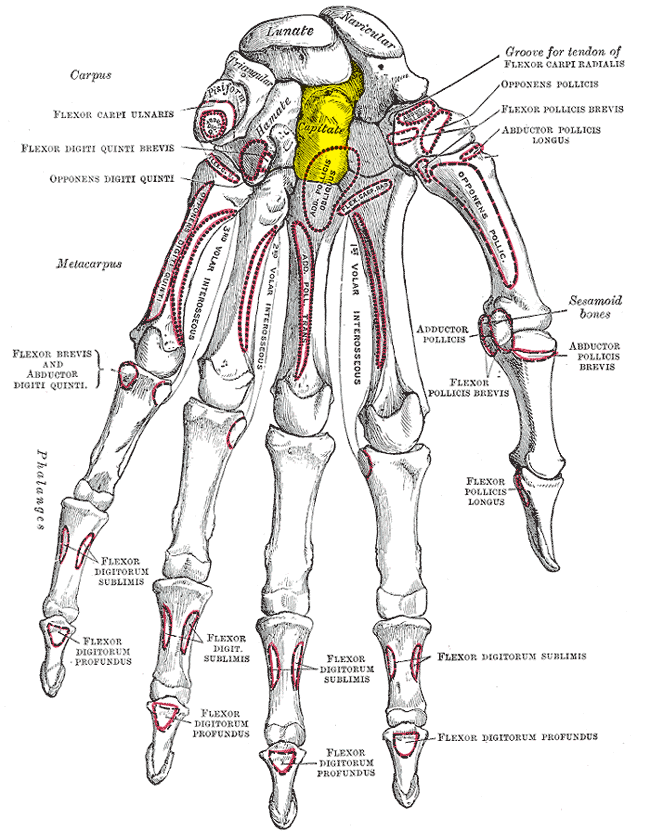
Carpals
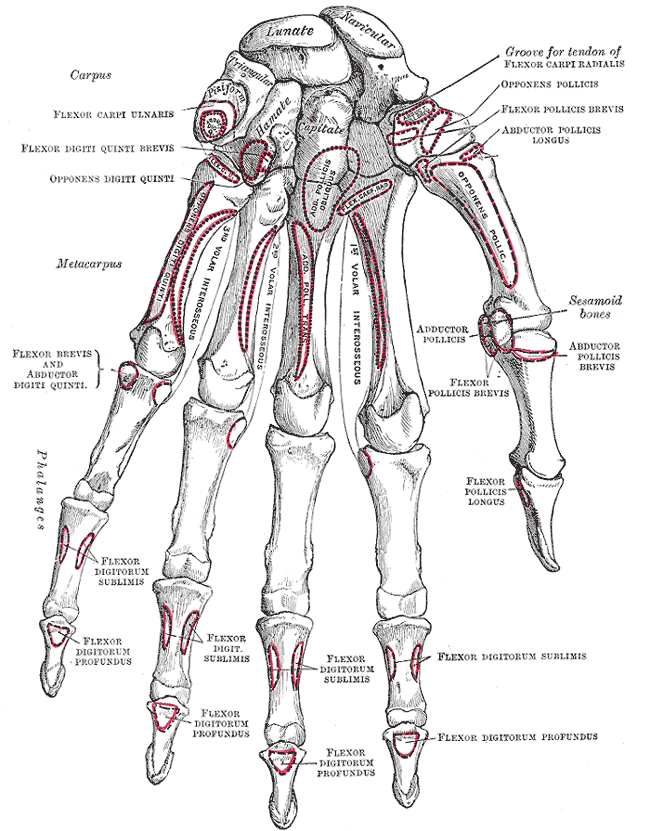
Gray's Anatomy (1918) plate, public domain
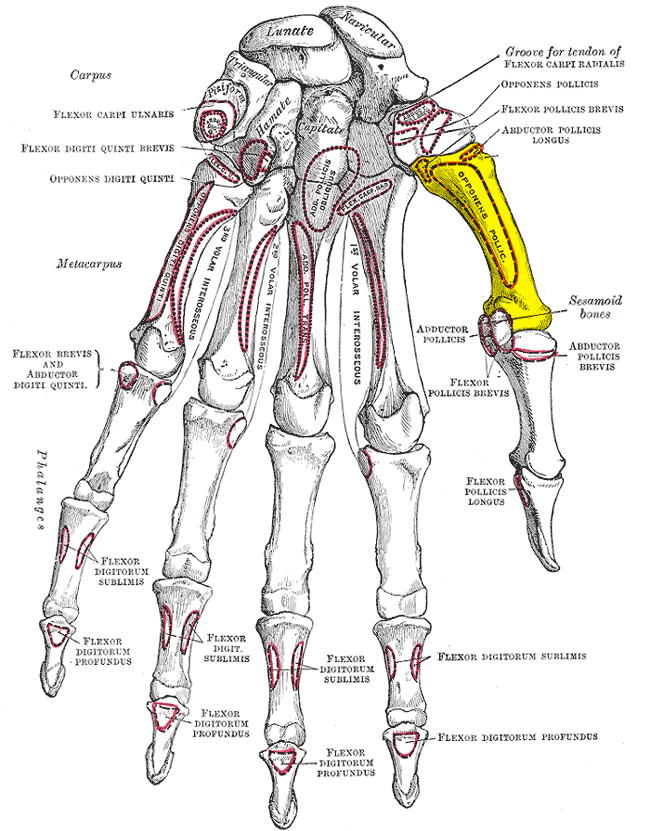
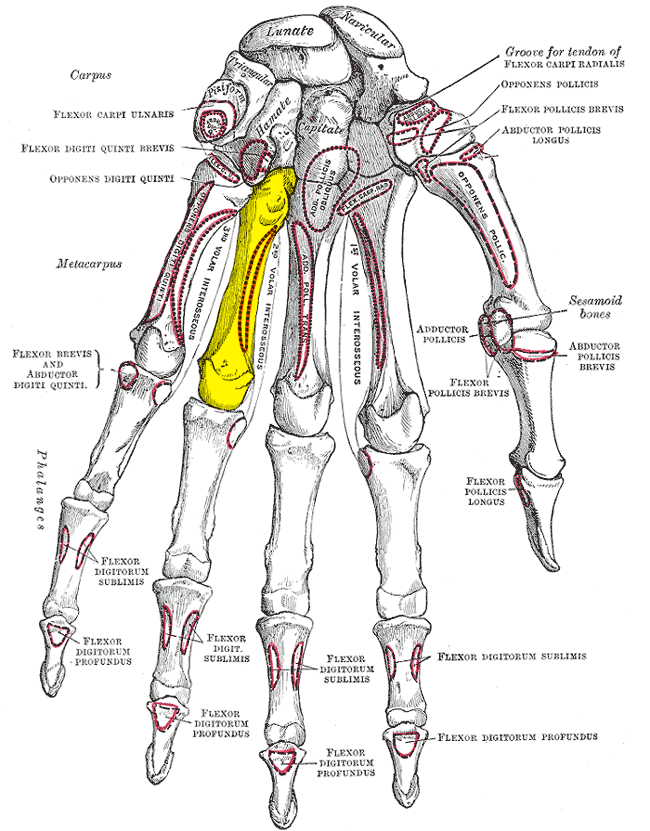
The carpals are the eight small bones of the wrist, arranged in two rows of four between the forearm and the palm. They are bound tightly by ligaments into a flexible arch — its hollow forms the carpal tunnel, carrying the finger tendons and the median nerve into the hand. The eight are the scaphoid, lunate, triquetrum and pisiform (near row) and trapezium, trapezoid, capitate and hamate (far row).
Key facts
- There are eight carpal bones, in two rows of four.
- They act as a flexible bridge between forearm and hand.
- Their arch forms the floor of the carpal tunnel.
- Only the scaphoid and lunate meet the radius directly at the wrist joint.
- They are named mostly for their shapes (boat, moon, pea, table and so on).
What can go wrong
The scaphoid is the carpal bone most often fractured, and the lunate the one most often dislocated in wrist injuries. Pressure on the median nerve in the carpal tunnel produces carpal tunnel syndrome — tingling and numbness in the thumb and fingers, often worse at night. Arthritis can develop in the wrist joints, especially after old scaphoid injuries.
Related procedures & tests
Related symptoms
Frequently asked questions
Why does the wrist have eight small bones instead of one?
A single rigid bone could not give the wrist its combination of strength and supple movement. Eight bones sharing the load and gliding slightly against each other spread forces while permitting bending in several planes.
What runs through the carpal tunnel?
Nine finger tendons and the median nerve, packed into a tight channel roofed by a strong ligament. Anything that swells inside the tunnel can squeeze the nerve.
Educational information only. This atlas explains normal anatomy and describes conditions in general terms; it is not medical advice and does not replace assessment by a qualified clinician. If you have symptoms that worry you, seek medical care.