- Physical Examination
- Surgical Examination
- Ophthalmology
- Clinical Skills
- Orthopedics
- Surgery Videos
- Laparoscopy
- Pediatrics
- Funny Videos
- Cardiothoracic Surgery
- Nursing Videos
- Plastic Surgery
- Otorhinolaryngology
- Histology and Histopathology
- Neurosurgery
- Dermatology
- Pediatric Surgery
- Urology
- Dentistry
- Oncology and Cancers
- Anatomy Videos
- Health and Fitness
- Radiology
- Anaesthesia
- Physical Therapy
- Pharmacology
- Interventional Radiology
- Cardiology
- Endocrinology
- Gynecology
- Emergency Medicine
- Psychiatry and Psychology
- Childbirth Videos
- General Medical Videos
- Nephrology
- Physiology
- Diet and Food Health
- Diabetes Mellitus
- Neurology
- Women Health
- Osteoporosis
- Gastroenterology
- Pulmonology
- Hematology
- Rheumatology
- Toxicology
- Nuclear Medicine
- Infectious Diseases
- Vascular Disease
- Reproductive Health
- Burns and Wound Healing
- Kidney Zone Podcast
- Other
Fourth Metacarpal
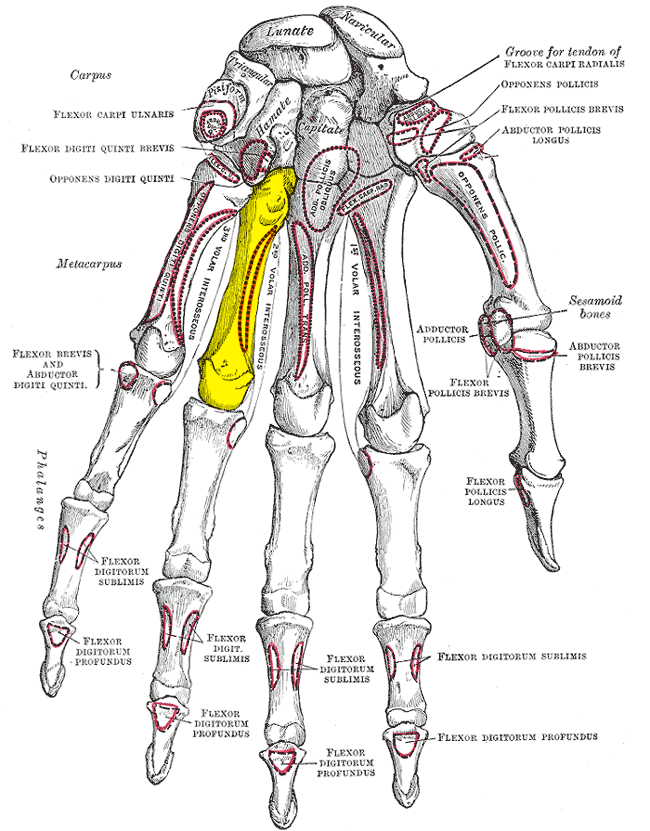
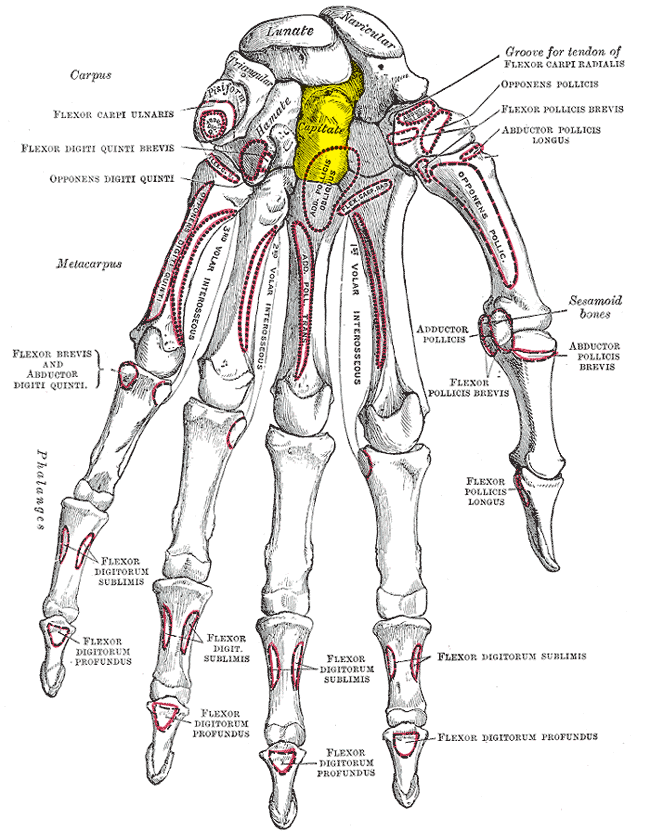
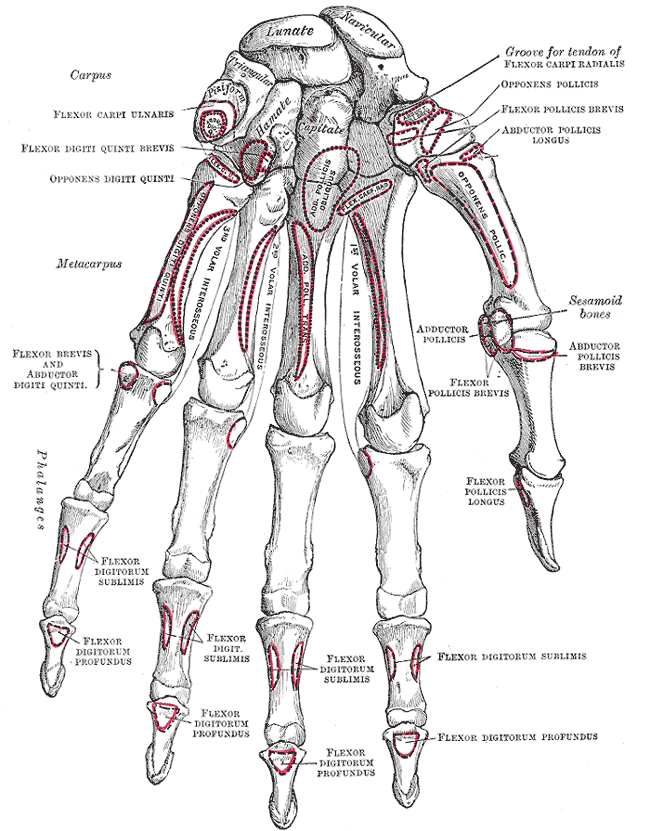
Gray's Anatomy (1918) plate, public domain
The fourth metacarpal is the ring finger's palm bone. On the little-finger side of the hand the metacarpals become progressively more mobile at their bases, so together with the fifth it can fold slightly to cup the palm around objects. Its shaft carries interosseous muscles that spread and close the fingers.
Key facts
- It supports the ring finger.
- Its base joint has a modest amount of movement for palm cupping.
- It is slimmer than the central metacarpals.
- The ring finger's knuckle is its head.
- It shares the palm's deep transverse ligament with its neighbours.
What can go wrong
Fourth metacarpal fractures behave like those of its neighbours — direct blows and twisting injuries are typical — and moderate angulation is usually tolerated because the ray's base mobility compensates. Rotation remains the feature that must be checked.
Related procedures & tests
Related symptoms
Related muscles
Frequently asked questions
Why can the outer metacarpals bend more than the inner ones?
Their wrist joints are shallower and their ligaments looser, letting the palm's edges fold inwards. This cupping adapts the hand to objects of different shapes.
How much angulation is acceptable in a metacarpal fracture?
It depends on the bone: the mobile outer rays tolerate more than the fixed central ones. The decisive tests are finger rotation and function, not a single angle number.
Educational information only. This atlas explains normal anatomy and describes conditions in general terms; it is not medical advice and does not replace assessment by a qualified clinician. If you have symptoms that worry you, seek medical care.