- Physical Examination
- Surgical Examination
- Ophthalmology
- Clinical Skills
- Orthopedics
- Surgery Videos
- Laparoscopy
- Pediatrics
- Funny Videos
- Cardiothoracic Surgery
- Nursing Videos
- Plastic Surgery
- Otorhinolaryngology
- Histology and Histopathology
- Neurosurgery
- Dermatology
- Pediatric Surgery
- Urology
- Dentistry
- Oncology and Cancers
- Anatomy Videos
- Health and Fitness
- Radiology
- Anaesthesia
- Physical Therapy
- Pharmacology
- Interventional Radiology
- Cardiology
- Endocrinology
- Gynecology
- Emergency Medicine
- Psychiatry and Psychology
- Childbirth Videos
- General Medical Videos
- Nephrology
- Physiology
- Diet and Food Health
- Diabetes Mellitus
- Neurology
- Women Health
- Osteoporosis
- Gastroenterology
- Pulmonology
- Hematology
- Rheumatology
- Toxicology
- Nuclear Medicine
- Infectious Diseases
- Vascular Disease
- Reproductive Health
- Burns and Wound Healing
- Kidney Zone Podcast
- Other
Glossopharyngeal Nerve
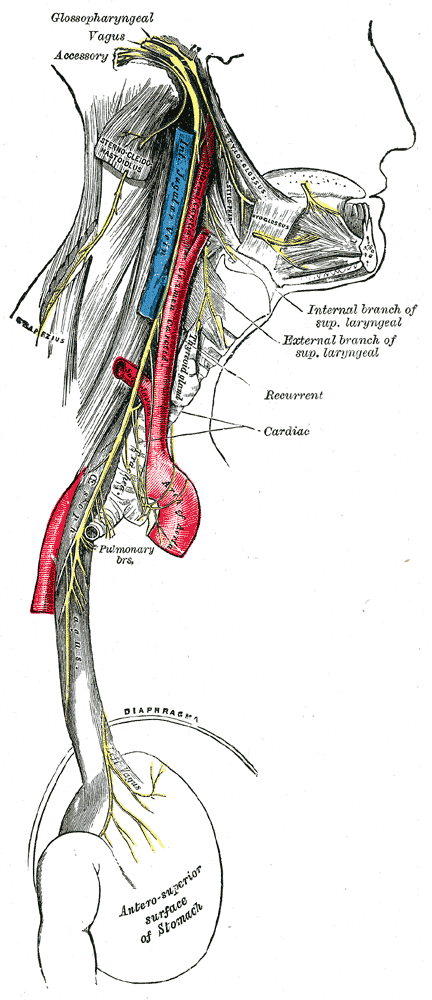
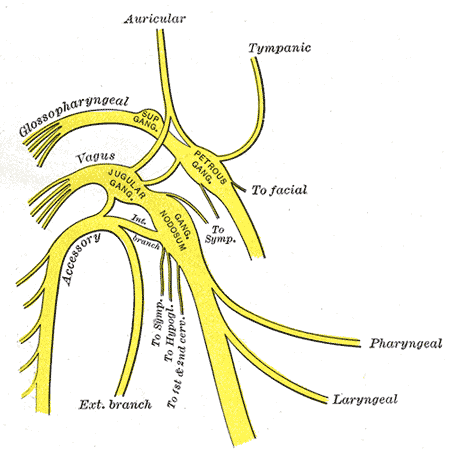
Gray's Anatomy (1918) plate, public domain
The glossopharyngeal nerve (cranial nerve IX) serves the back of the tongue and throat. It carries taste and general sensation from the rear third of the tongue, sensation from the tonsil and pharynx (driving the gag reflex with nerve X), supplies one throat muscle for swallowing, drives the parotid salivary gland, and monitors blood pressure through sensors in the carotid artery.
Key facts
- Its name means 'tongue-pharynx' — its territory in Greek.
- It is the sensory arm of the gag reflex.
- It supplies the parotid gland with saliva-driving fibres.
- Its carotid sinus branch reports blood pressure to the brainstem.
- It leaves the skull through the jugular foramen with nerves X and XI.
What can go wrong
Glossopharyngeal neuralgia is a rare condition of sharp throat, tongue-base or ear pains triggered by swallowing. The nerve can also be injured in skull-base surgery or tonsil surgery. Problems with the gag and swallowing reflexes usually involve this nerve together with the vagus.
Related symptoms
Frequently asked questions
Why does throat pain sometimes hurt the ear?
The glossopharyngeal nerve supplies both the throat and part of the ear, so the brain can misattribute throat pain to the ear — one reason persistent earache with a normal ear is checked in the throat.
What does its blood-pressure sensor do?
Stretch receptors in the carotid sinus report pressure changes via this nerve to the brainstem, which adjusts heart rate and vessel tone — a moment-to-moment blood-pressure control loop.
Educational information only. This atlas explains normal anatomy and describes conditions in general terms; it is not medical advice and does not replace assessment by a qualified clinician. If you have symptoms that worry you, seek medical care.