- Physical Examination
- Surgical Examination
- Ophthalmology
- Clinical Skills
- Orthopedics
- Surgery Videos
- Laparoscopy
- Pediatrics
- Funny Videos
- Cardiothoracic Surgery
- Nursing Videos
- Plastic Surgery
- Otorhinolaryngology
- Histology and Histopathology
- Neurosurgery
- Dermatology
- Pediatric Surgery
- Urology
- Dentistry
- Oncology and Cancers
- Anatomy Videos
- Health and Fitness
- Radiology
- Anaesthesia
- Physical Therapy
- Pharmacology
- Interventional Radiology
- Cardiology
- Endocrinology
- Gynecology
- Emergency Medicine
- Psychiatry and Psychology
- Childbirth Videos
- General Medical Videos
- Nephrology
- Physiology
- Diet and Food Health
- Diabetes Mellitus
- Neurology
- Women Health
- Osteoporosis
- Gastroenterology
- Pulmonology
- Hematology
- Rheumatology
- Toxicology
- Nuclear Medicine
- Infectious Diseases
- Vascular Disease
- Reproductive Health
- Burns and Wound Healing
- Kidney Zone Podcast
- Other
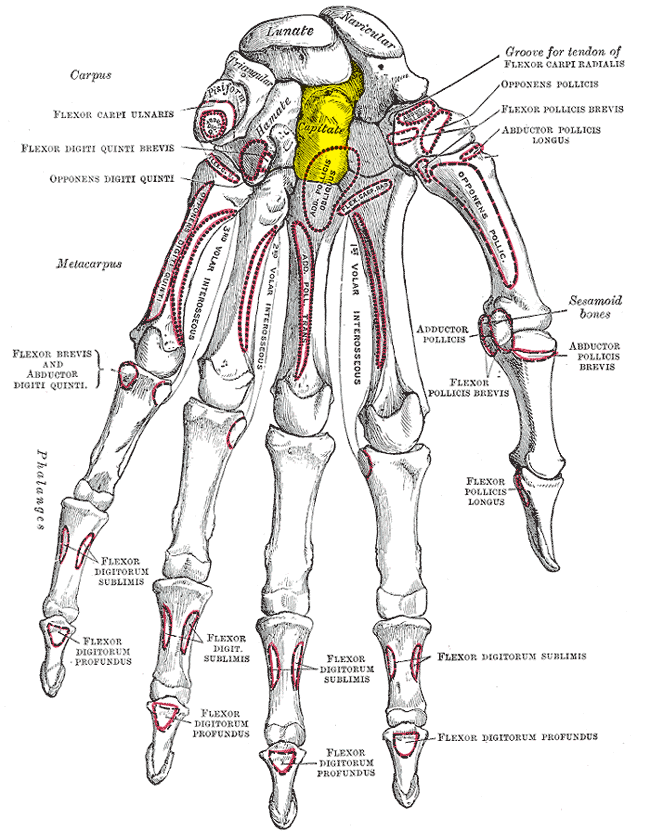
Hamate
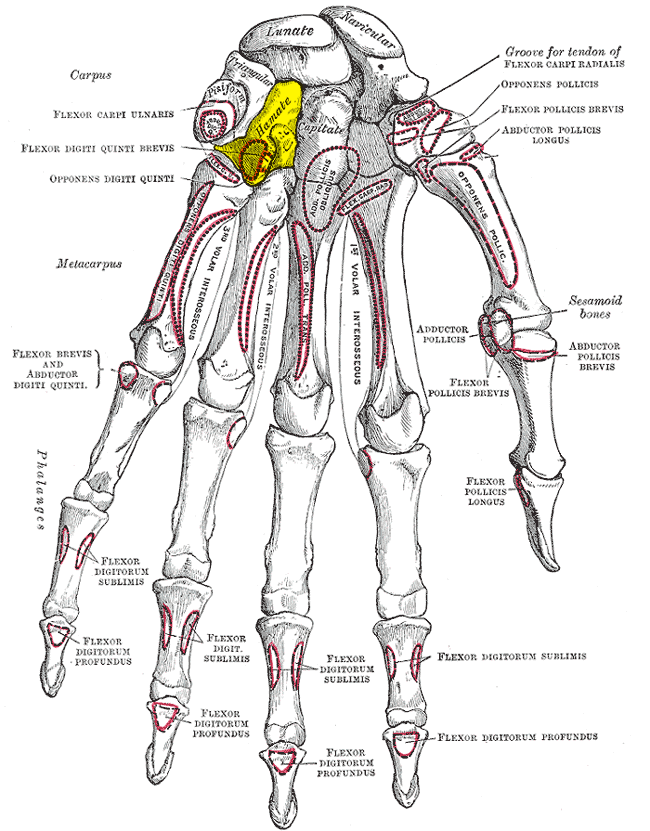
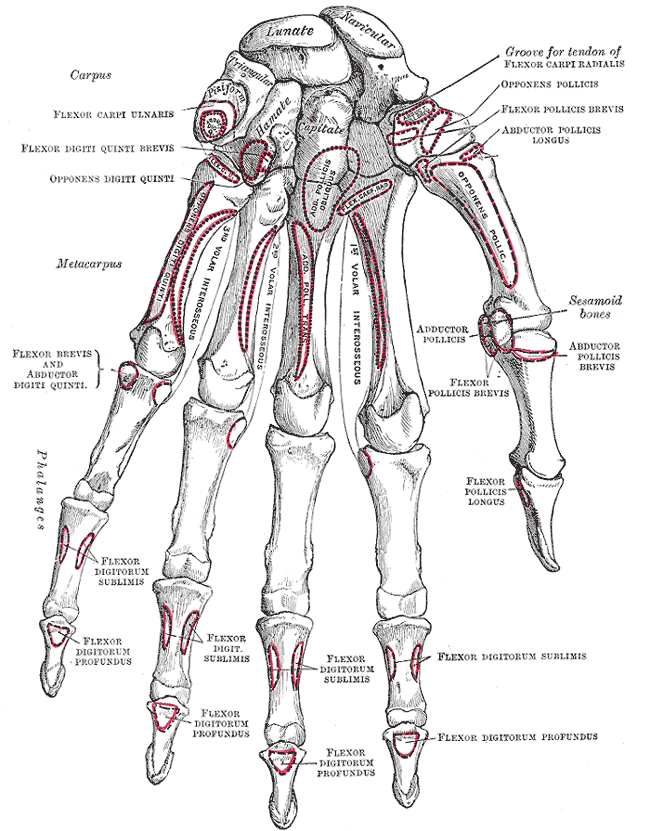
Gray's Anatomy (1918) plate, public domain
The hamate is the wedge-shaped carpal bone on the little-finger side of the wrist's far row, under the ring and little fingers. It has a distinctive hook (the hook of hamate) projecting into the palm, which forms one wall of the channel for the ulnar nerve and gives attachment to the ligament roofing the carpal tunnel.
Key facts
- The hamate is named for its hook (hamulus).
- The hook can be felt deep in the heel of the hand on the little-finger side.
- It forms the inner wall of Guyon's canal, carrying the ulnar nerve and artery.
- The flexor tendons of the little finger glide around it.
- It supports the ring and little-finger metacarpals.
What can go wrong
The hook of the hamate can fracture in racquet and club sports — a golf club or bat striking the ground transmits force through the handle into the heel of the hand — causing deep aching on that side and sometimes ulnar nerve symptoms. It is easily missed on ordinary X-rays and is usually confirmed on CT.
Related procedures & tests
Related symptoms
Related muscles
Frequently asked questions
Why do golfers and baseball players injure the hamate?
The butt of the club or bat rests against the heel of the hand exactly over the hook of the hamate; a mishit that jars the handle can crack the hook.
What is Guyon's canal?
A narrow passage at the wrist between the pisiform and the hook of hamate, through which the ulnar nerve and artery enter the hand. Compression there numbs the ring and little fingers.
Educational information only. This atlas explains normal anatomy and describes conditions in general terms; it is not medical advice and does not replace assessment by a qualified clinician. If you have symptoms that worry you, seek medical care.