- Physical Examination
- Surgical Examination
- Ophthalmology
- Clinical Skills
- Orthopedics
- Surgery Videos
- Laparoscopy
- Pediatrics
- Funny Videos
- Cardiothoracic Surgery
- Nursing Videos
- Plastic Surgery
- Otorhinolaryngology
- Histology and Histopathology
- Neurosurgery
- Dermatology
- Pediatric Surgery
- Urology
- Dentistry
- Oncology and Cancers
- Anatomy Videos
- Health and Fitness
- Radiology
- Anaesthesia
- Physical Therapy
- Pharmacology
- Interventional Radiology
- Cardiology
- Endocrinology
- Gynecology
- Emergency Medicine
- Psychiatry and Psychology
- Childbirth Videos
- General Medical Videos
- Nephrology
- Physiology
- Diet and Food Health
- Diabetes Mellitus
- Neurology
- Women Health
- Osteoporosis
- Gastroenterology
- Pulmonology
- Hematology
- Rheumatology
- Toxicology
- Nuclear Medicine
- Infectious Diseases
- Vascular Disease
- Reproductive Health
- Burns and Wound Healing
- Kidney Zone Podcast
- Other
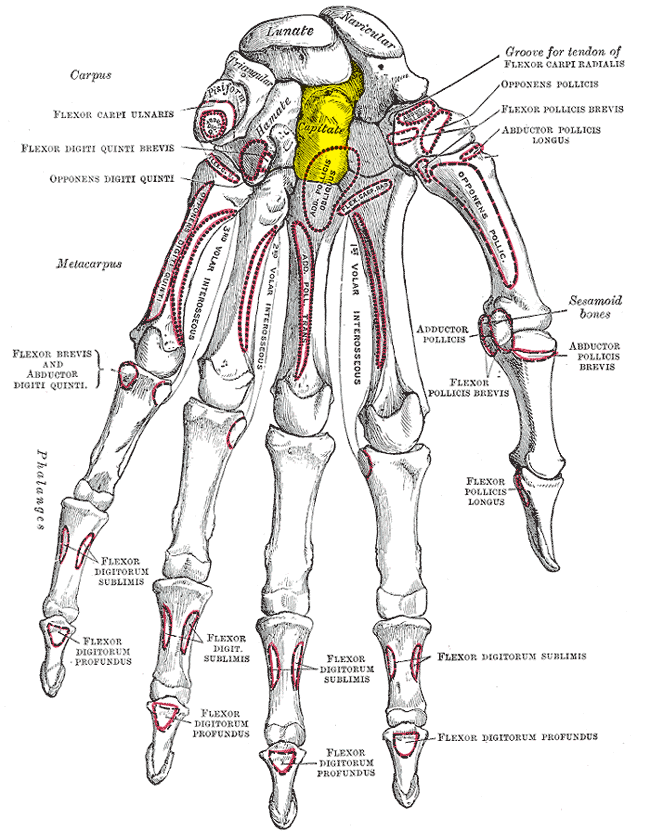
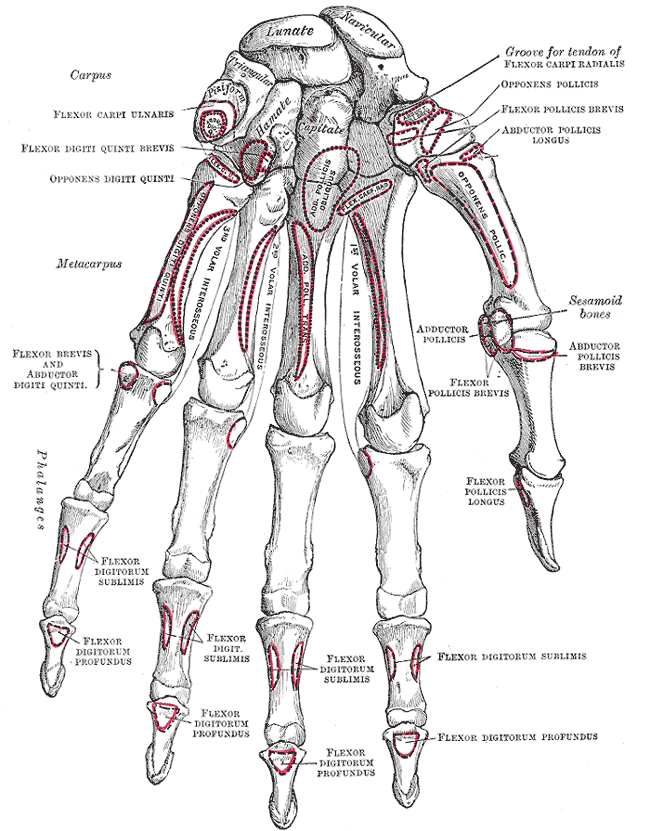
Hand Phalanges
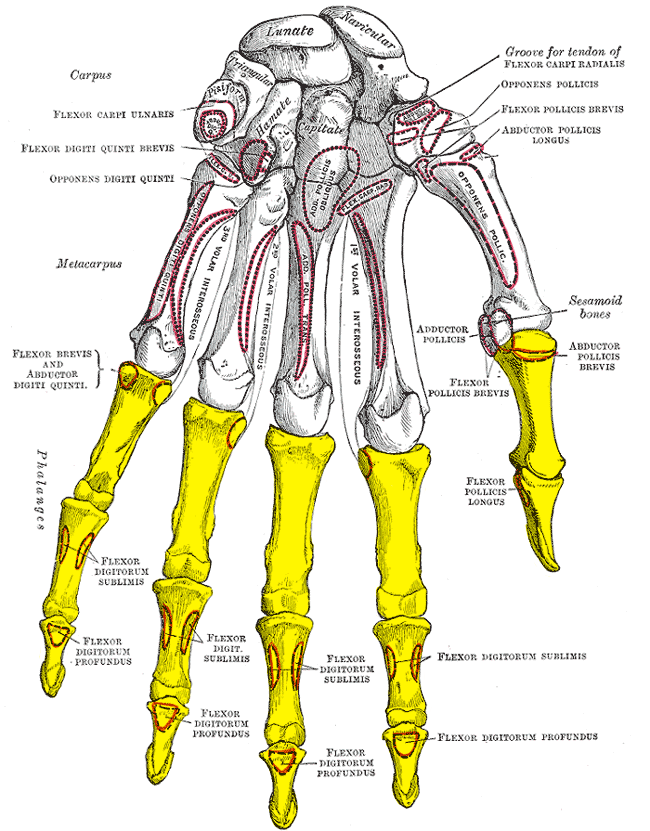
Gray's Anatomy (1918) plate, public domain
The phalanges are the bones of the fingers and thumb: three in each finger (proximal, middle, distal) and two in the thumb — fourteen per hand. The distal phalanges support the nails and the sensitive fingertips. Their joints work with an intricate system of tendons, pulleys and ligaments that give the hand both power grip and fine precision.
Key facts
- There are 14 phalanges in each hand.
- Fingers have three each; the thumb has two.
- The distal phalanx underpins the nail and fingertip pulp.
- Flexor and extensor tendons balance across each joint.
- Finger joints are hinge joints with strong side (collateral) ligaments.
What can go wrong
Fingertip injuries are the commonest hand trauma — crushes can fracture the distal phalanx and trap blood under the nail. The proximal phalanx can fracture in falls and sport, and healing must protect against stiffness and rotation. Dislocations of the finger joints, especially backwards at the middle joint, are common in ball sports.
Related procedures & tests
Related symptoms
Related muscles
Frequently asked questions
Why does the thumb have only two phalanges?
The thumb traded length for strength and positioning: its missing segment is effectively made up by its highly mobile metacarpal, which gives the thumb its reach across the palm.
Why do finger injuries stiffen so fast?
Finger joints are small, tightly ligamented and surrounded by tendons in narrow tunnels; swelling after injury quickly organises into stiffness, which is why early protected movement is emphasised in hand rehabilitation.
Educational information only. This atlas explains normal anatomy and describes conditions in general terms; it is not medical advice and does not replace assessment by a qualified clinician. If you have symptoms that worry you, seek medical care.