- Physical Examination
- Surgical Examination
- Ophthalmology
- Clinical Skills
- Orthopedics
- Surgery Videos
- Laparoscopy
- Pediatrics
- Funny Videos
- Cardiothoracic Surgery
- Nursing Videos
- Plastic Surgery
- Otorhinolaryngology
- Histology and Histopathology
- Neurosurgery
- Dermatology
- Pediatric Surgery
- Urology
- Dentistry
- Oncology and Cancers
- Anatomy Videos
- Health and Fitness
- Radiology
- Anaesthesia
- Physical Therapy
- Pharmacology
- Interventional Radiology
- Cardiology
- Endocrinology
- Gynecology
- Emergency Medicine
- Psychiatry and Psychology
- Childbirth Videos
- General Medical Videos
- Nephrology
- Physiology
- Diet and Food Health
- Diabetes Mellitus
- Neurology
- Women Health
- Osteoporosis
- Gastroenterology
- Pulmonology
- Hematology
- Rheumatology
- Toxicology
- Nuclear Medicine
- Infectious Diseases
- Vascular Disease
- Reproductive Health
- Burns and Wound Healing
- Kidney Zone Podcast
- Other
Hyoid Bone
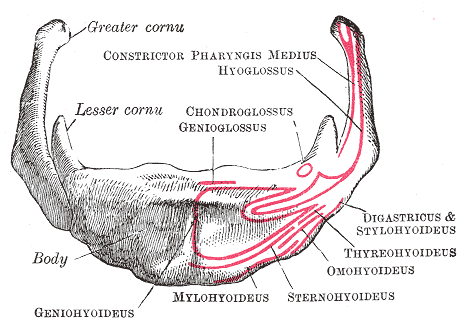
Gray's Anatomy (1918) plate, public domain
The hyoid is a small U-shaped bone in the front of the neck, just above the Adam's apple. It is unique in the body: it joins no other bone, but hangs suspended by muscles and ligaments. It anchors the tongue and provides the moving base that swallowing and speech depend on.
Key facts
- The hyoid is the only bone in the body that articulates with no other bone.
- It is suspended by muscles from the jaw, skull and tongue above and the chest below.
- It anchors the tongue and moves up and down during swallowing.
- It has a body, two greater horns and two lesser horns.
- Voice and speech muscles use it as their foundation.
What can go wrong
The hyoid is rarely injured on its own, though it can be fractured by direct neck trauma — a finding doctors treat as a marker of a significant force to the neck. Because so many swallowing muscles attach to it, problems with the muscles around the hyoid can contribute to swallowing difficulty.
Related symptoms
Related muscles
Frequently asked questions
If the hyoid touches no other bone, what holds it in place?
Muscles and ligaments alone: it is slung between the jaw and skull above and the breastbone and shoulder blades below, like a hammock. That mobility is what lets it move freely during swallowing and speech.
Why is the hyoid important in swallowing?
When you swallow, muscles pull the hyoid up and forwards; this tucks the voice box under the tongue and helps close off the airway while food passes into the gullet.
Educational information only. This atlas explains normal anatomy and describes conditions in general terms; it is not medical advice and does not replace assessment by a qualified clinician. If you have symptoms that worry you, seek medical care.