- Physical Examination
- Surgical Examination
- Ophthalmology
- Clinical Skills
- Orthopedics
- Surgery Videos
- Laparoscopy
- Pediatrics
- Funny Videos
- Cardiothoracic Surgery
- Nursing Videos
- Plastic Surgery
- Otorhinolaryngology
- Histology and Histopathology
- Neurosurgery
- Dermatology
- Pediatric Surgery
- Urology
- Dentistry
- Oncology and Cancers
- Anatomy Videos
- Health and Fitness
- Radiology
- Anaesthesia
- Physical Therapy
- Pharmacology
- Interventional Radiology
- Cardiology
- Endocrinology
- Gynecology
- Emergency Medicine
- Psychiatry and Psychology
- Childbirth Videos
- General Medical Videos
- Nephrology
- Physiology
- Diet and Food Health
- Diabetes Mellitus
- Neurology
- Women Health
- Osteoporosis
- Gastroenterology
- Pulmonology
- Hematology
- Rheumatology
- Toxicology
- Nuclear Medicine
- Infectious Diseases
- Vascular Disease
- Reproductive Health
- Burns and Wound Healing
- Kidney Zone Podcast
- Other
Hypoglossal Nerve
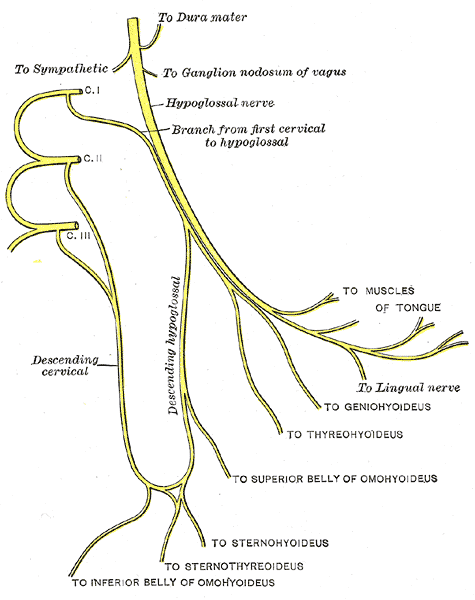
Gray's Anatomy (1918) plate, public domain
The hypoglossal nerve (cranial nerve XII) is the motor nerve of the tongue. Arising from the medulla, it exits the skull through its own canal above the occipital condyle, curves down and forwards under the jaw, and supplies all the muscles that move the tongue (except one, supplied by the vagus) — essential for speech, chewing and swallowing.
Key facts
- Its name means 'under the tongue', its final position.
- It is a purely motor nerve.
- It supplies the tongue's intrinsic muscles and most extrinsic ones.
- It exits through the hypoglossal canal in the occipital bone.
- A damaged nerve makes the tongue deviate towards the injured side.
What can go wrong
Hypoglossal damage — from skull-base tumours, surgery in the neck, or stroke — wastes and weakens one side of the tongue, so it points towards the weak side and speech and chewing become clumsy. Bilateral problems seriously impair swallowing and airway protection.
Related symptoms
Frequently asked questions
Why does the tongue point towards the weak side?
Each side's main protruding muscle (genioglossus) pushes the tongue forwards and across. If one side fails, the healthy side pushes unopposed, driving the tip towards the weak side.
What is the clinical test for this nerve?
Asking the person to stick out their tongue and watching for deviation, wasting or rippling movements — a standard part of the cranial nerve examination.
Educational information only. This atlas explains normal anatomy and describes conditions in general terms; it is not medical advice and does not replace assessment by a qualified clinician. If you have symptoms that worry you, seek medical care.