- Physical Examination
- Surgical Examination
- Ophthalmology
- Clinical Skills
- Orthopedics
- Surgery Videos
- Laparoscopy
- Pediatrics
- Funny Videos
- Cardiothoracic Surgery
- Nursing Videos
- Plastic Surgery
- Otorhinolaryngology
- Histology and Histopathology
- Neurosurgery
- Dermatology
- Pediatric Surgery
- Urology
- Dentistry
- Oncology and Cancers
- Anatomy Videos
- Health and Fitness
- Radiology
- Anaesthesia
- Physical Therapy
- Pharmacology
- Interventional Radiology
- Cardiology
- Endocrinology
- Gynecology
- Emergency Medicine
- Psychiatry and Psychology
- Childbirth Videos
- General Medical Videos
- Nephrology
- Physiology
- Diet and Food Health
- Diabetes Mellitus
- Neurology
- Women Health
- Osteoporosis
- Gastroenterology
- Pulmonology
- Hematology
- Rheumatology
- Toxicology
- Nuclear Medicine
- Infectious Diseases
- Vascular Disease
- Reproductive Health
- Burns and Wound Healing
- Kidney Zone Podcast
- Other
Hypothalamus
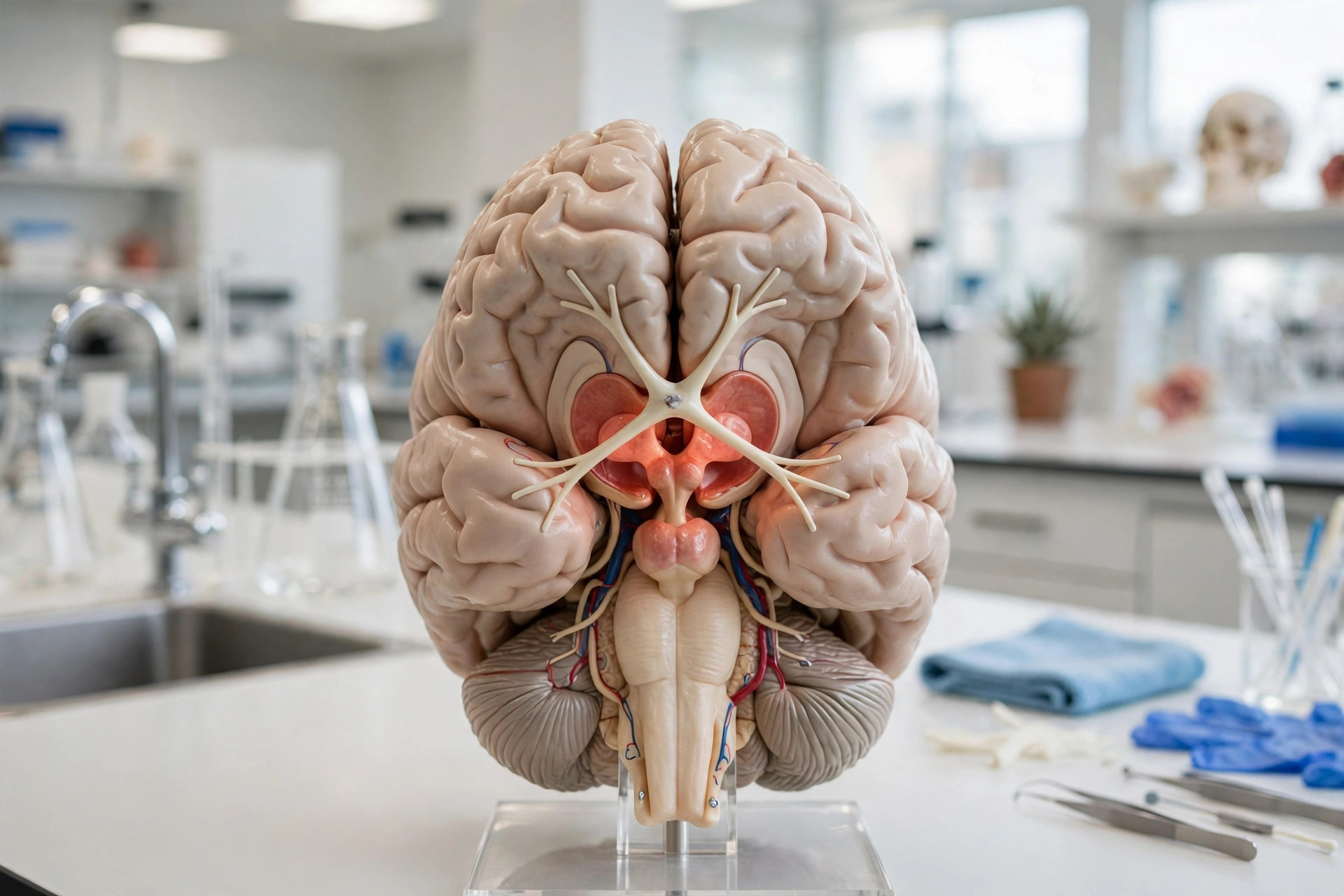
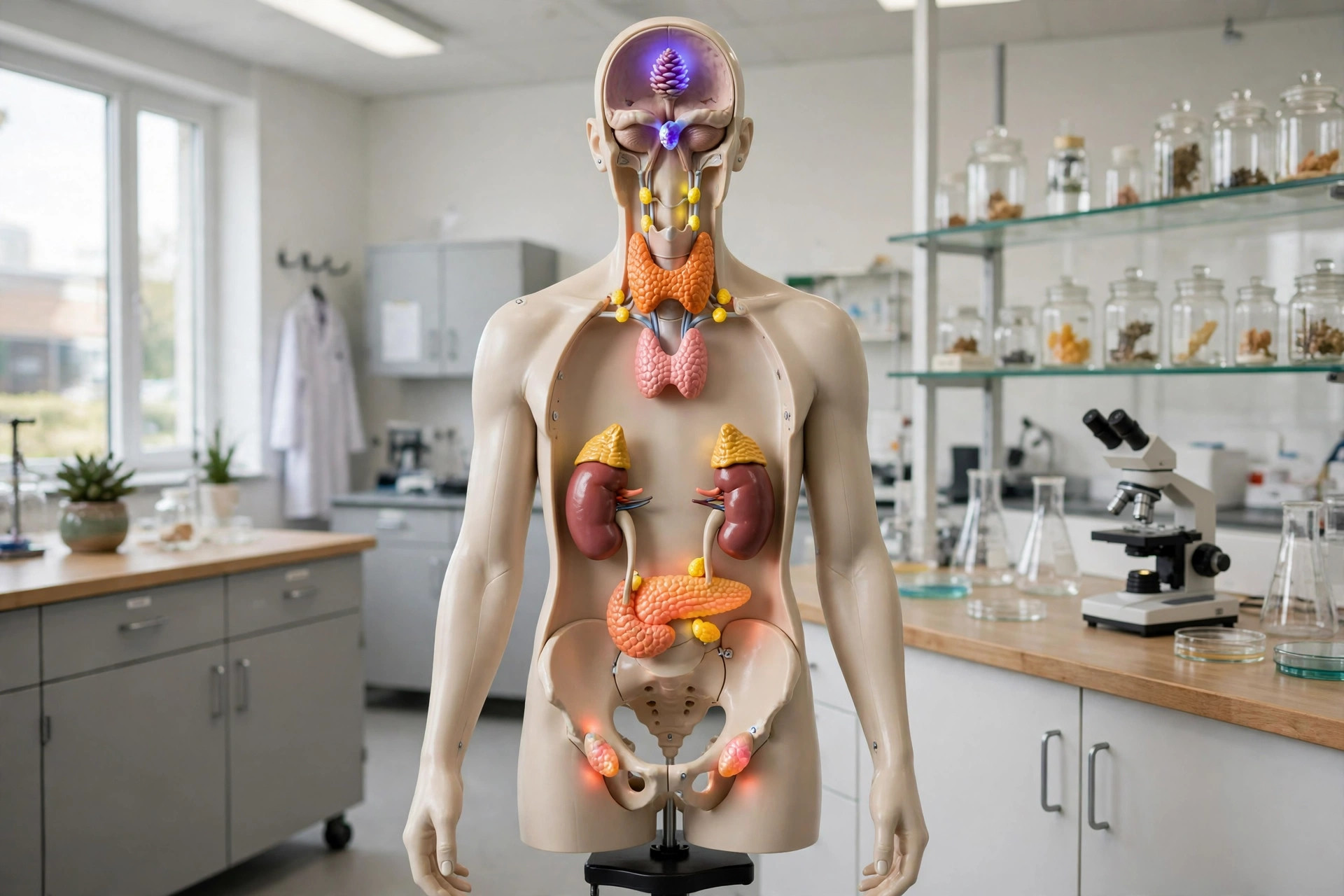
AI-generated anatomical illustration
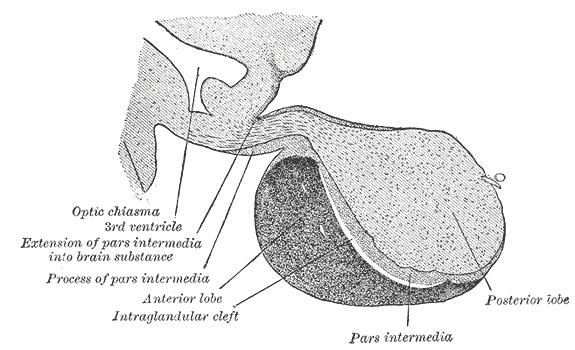
The hypothalamus is a small region at the base of the brain, below the thalamus, that links the nervous system to the hormone system. It monitors blood temperature, osmolality, glucose and hormone levels, and responds by driving hunger, thirst, sleep, temperature control and the pituitary gland. Its releasing hormones instruct the pituitary, and it makes ADH (vasopressin) and oxytocin, which are released from the pituitary's posterior lobe.
Key facts
- Though only about the size of an almond (roughly 4 g), it coordinates most of the body's automatic regulation.
- Specialised neurons sample the blood directly where the blood-brain barrier is leaky, sensing its chemistry.
- It generates the daily (circadian) rhythm via its suprachiasmatic nucleus, which tracks light from the eyes.
- Its connection to the pituitary is by both a private blood network and nerve fibres — two channels of control.
What can go wrong
Hypothalamic damage — from tumours (such as craniopharyngioma), inflammation, surgery or radiotherapy — can disturb temperature, appetite (causing marked weight gain), sleep, thirst and pituitary output. Failure of ADH release or action causes diabetes insipidus, with large volumes of dilute urine and intense thirst — a very different condition from the diabetes of blood sugar.
Related procedures & tests
Related symptoms
Frequently asked questions
How does the hypothalamus control the pituitary?
It secretes releasing and inhibiting hormones into a private portal blood system reaching the anterior pituitary, and sends nerve fibres that release ADH and oxytocin from the posterior pituitary.
What is diabetes insipidus?
A condition of passing large amounts of very dilute urine due to lack of ADH or kidney resistance to it — unrelated to blood sugar, despite the similar name.
Educational information only. This atlas explains normal anatomy and describes conditions in general terms; it is not medical advice and does not replace assessment by a qualified clinician. If you have symptoms that worry you, seek medical care.