- Physical Examination
- Surgical Examination
- Ophthalmology
- Clinical Skills
- Orthopedics
- Surgery Videos
- Laparoscopy
- Pediatrics
- Funny Videos
- Cardiothoracic Surgery
- Nursing Videos
- Plastic Surgery
- Otorhinolaryngology
- Histology and Histopathology
- Neurosurgery
- Dermatology
- Pediatric Surgery
- Urology
- Dentistry
- Oncology and Cancers
- Anatomy Videos
- Health and Fitness
- Radiology
- Anaesthesia
- Physical Therapy
- Pharmacology
- Interventional Radiology
- Cardiology
- Endocrinology
- Gynecology
- Emergency Medicine
- Psychiatry and Psychology
- Childbirth Videos
- General Medical Videos
- Nephrology
- Physiology
- Diet and Food Health
- Diabetes Mellitus
- Neurology
- Women Health
- Osteoporosis
- Gastroenterology
- Pulmonology
- Hematology
- Rheumatology
- Toxicology
- Nuclear Medicine
- Infectious Diseases
- Vascular Disease
- Reproductive Health
- Burns and Wound Healing
- Kidney Zone Podcast
- Other
Pancreatic Islets
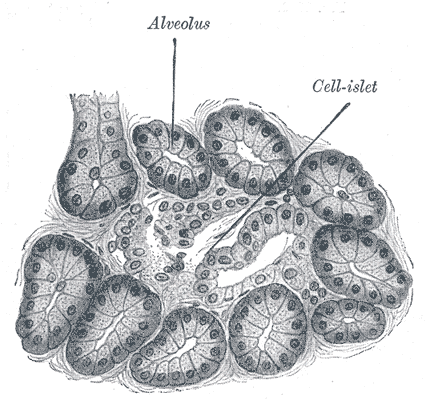
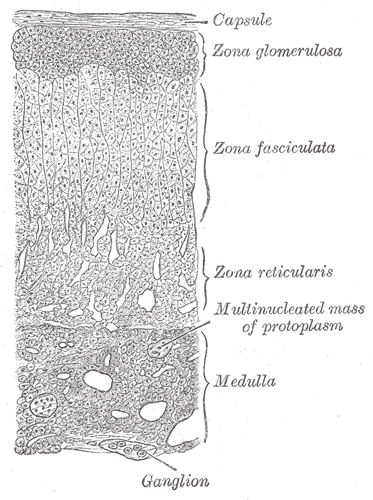
Gray's Anatomy (1918) plate, public domain
The pancreatic islets (of Langerhans) are the endocrine islands scattered through the pancreas — 1-2 million clusters making up a small fraction of the gland. Their beta cells make insulin, alpha cells make glucagon, and delta cells make somatostatin; together they hold blood glucose in a narrow range. Insulin lowers glucose by driving it into cells and storage; glucagon raises it by releasing glucose from the liver.
Key facts
- Beta cells sense glucose directly and release insulin within minutes of a meal.
- Islet blood flow is disproportionately rich, so hormones reach the circulation quickly.
- Insulin and glucagon act as a paired thermostat, each restraining the other through local signalling.
- The islets' nerve supply fine-tunes secretion in anticipation of food — the cephalic phase.
What can go wrong
In type 1 diabetes the immune system destroys beta cells, causing absolute insulin deficiency. In type 2 diabetes the body resists insulin and beta cells gradually fail to keep up, so glucose rises. Rare islet tumours overproduce hormones — insulinomas cause hypoglycaemia attacks, glucagonomas a distinctive rash and diabetes. Islet and pancreas transplantation are specialised options in some diabetes care.
Related conditions
Related procedures & tests
Related symptoms
Frequently asked questions
How much of the pancreas is endocrine?
Only about 1-2% by volume — yet that small fraction controls the fuel supply for the entire body, which is why islet failure has such wide effects.
What is the difference between type 1 and type 2 diabetes at the islet?
In type 1 the beta cells are destroyed by autoimmunity, so insulin is absent; in type 2 the cells survive but cannot overcome the body's insulin resistance.
Educational information only. This atlas explains normal anatomy and describes conditions in general terms; it is not medical advice and does not replace assessment by a qualified clinician. If you have symptoms that worry you, seek medical care.