- Physical Examination
- Surgical Examination
- Ophthalmology
- Clinical Skills
- Orthopedics
- Surgery Videos
- Laparoscopy
- Pediatrics
- Funny Videos
- Cardiothoracic Surgery
- Nursing Videos
- Plastic Surgery
- Otorhinolaryngology
- Histology and Histopathology
- Neurosurgery
- Dermatology
- Pediatric Surgery
- Urology
- Dentistry
- Oncology and Cancers
- Anatomy Videos
- Health and Fitness
- Radiology
- Anaesthesia
- Physical Therapy
- Pharmacology
- Interventional Radiology
- Cardiology
- Endocrinology
- Gynecology
- Emergency Medicine
- Psychiatry and Psychology
- Childbirth Videos
- General Medical Videos
- Nephrology
- Physiology
- Diet and Food Health
- Diabetes Mellitus
- Neurology
- Women Health
- Osteoporosis
- Gastroenterology
- Pulmonology
- Hematology
- Rheumatology
- Toxicology
- Nuclear Medicine
- Infectious Diseases
- Vascular Disease
- Reproductive Health
- Burns and Wound Healing
- Kidney Zone Podcast
- Other
Parathyroid Glands
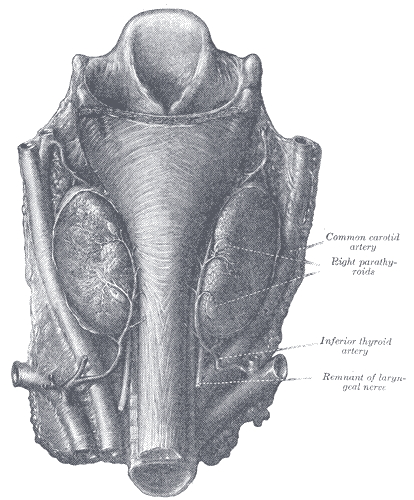
Gray's Anatomy (1918) plate, public domain
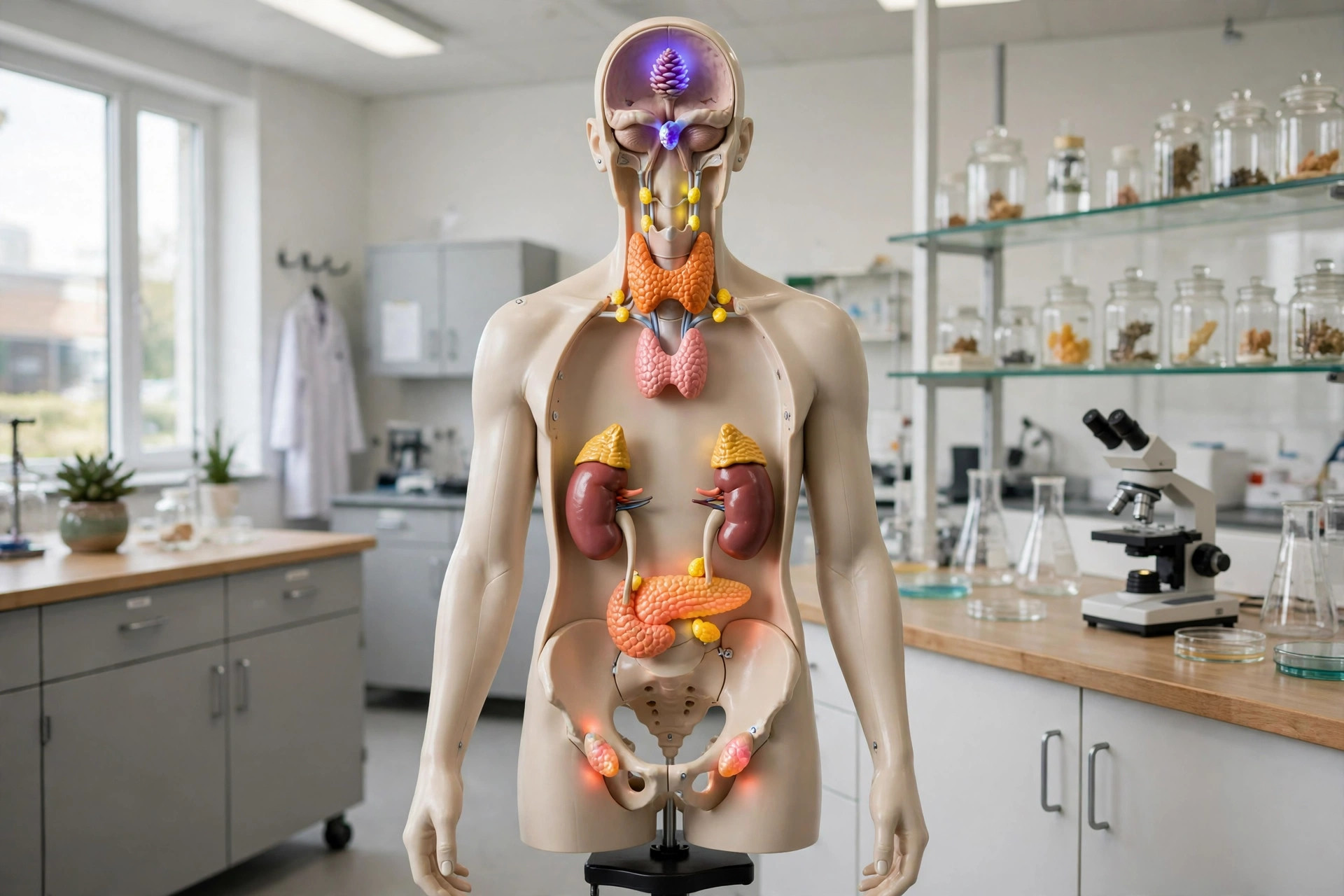
The parathyroid glands are typically four tiny glands, each the size of a grain of rice, embedded in or behind the thyroid. They secrete parathyroid hormone (PTH), the body's chief regulator of blood calcium: PTH releases calcium from bone, increases its absorption from food (via vitamin D activation) and reduces its loss in urine. Calcium is kept in a narrow range because nerves, muscles and clotting depend on it.
Key facts
- Most people have four glands, but the number varies from three to six, and their positions vary too.
- They sense calcium directly through a calcium-sensing receptor — a thermostat for blood calcium.
- PTH acts within minutes to hours, making it the fine-tuner; vitamin D is the slower, longer-acting partner.
- Their blood supply and closeness to the thyroid make them vulnerable during thyroid surgery.
What can go wrong
Overactivity (hyperparathyroidism) — usually from one benign overgrown gland — raises blood calcium, causing thirst, frequent urination, kidney stones, bone thinning and vague fatigue; it is a common finding on routine blood tests. Underactivity (hypoparathyroidism), usually after neck surgery, lowers calcium, causing tingling, cramps and muscle spasms. Both are diagnosed with calcium and PTH blood tests.
Related conditions
Related procedures & tests
Related symptoms
Frequently asked questions
Why is calcium so tightly controlled?
Calcium carries nerve and muscle signals and enables clotting; even modest deviations cause symptoms, so PTH adjusts bone, gut and kidney handling continuously.
What is the usual cause of high calcium?
In outpatients, primary hyperparathyroidism — one overactive parathyroid gland — is the commonest cause; certain cancers and medicines are other important causes clinicians check for.
Educational information only. This atlas explains normal anatomy and describes conditions in general terms; it is not medical advice and does not replace assessment by a qualified clinician. If you have symptoms that worry you, seek medical care.