- Physical Examination
- Surgical Examination
- Ophthalmology
- Clinical Skills
- Orthopedics
- Surgery Videos
- Laparoscopy
- Pediatrics
- Funny Videos
- Cardiothoracic Surgery
- Nursing Videos
- Plastic Surgery
- Otorhinolaryngology
- Histology and Histopathology
- Neurosurgery
- Dermatology
- Pediatric Surgery
- Urology
- Dentistry
- Oncology and Cancers
- Anatomy Videos
- Health and Fitness
- Radiology
- Anaesthesia
- Physical Therapy
- Pharmacology
- Interventional Radiology
- Cardiology
- Endocrinology
- Gynecology
- Emergency Medicine
- Psychiatry and Psychology
- Childbirth Videos
- General Medical Videos
- Nephrology
- Physiology
- Diet and Food Health
- Diabetes Mellitus
- Neurology
- Women Health
- Osteoporosis
- Gastroenterology
- Pulmonology
- Hematology
- Rheumatology
- Toxicology
- Nuclear Medicine
- Infectious Diseases
- Vascular Disease
- Reproductive Health
- Burns and Wound Healing
- Kidney Zone Podcast
- Other
Adrenal Glands
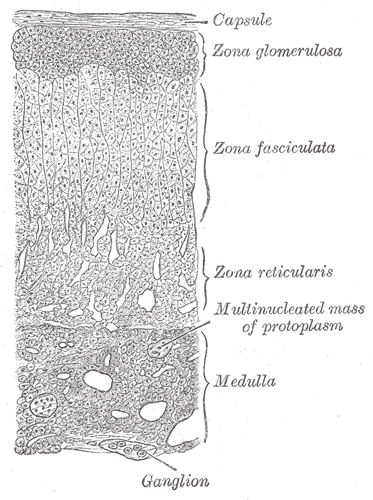
Gray's Anatomy (1918) plate, public domain
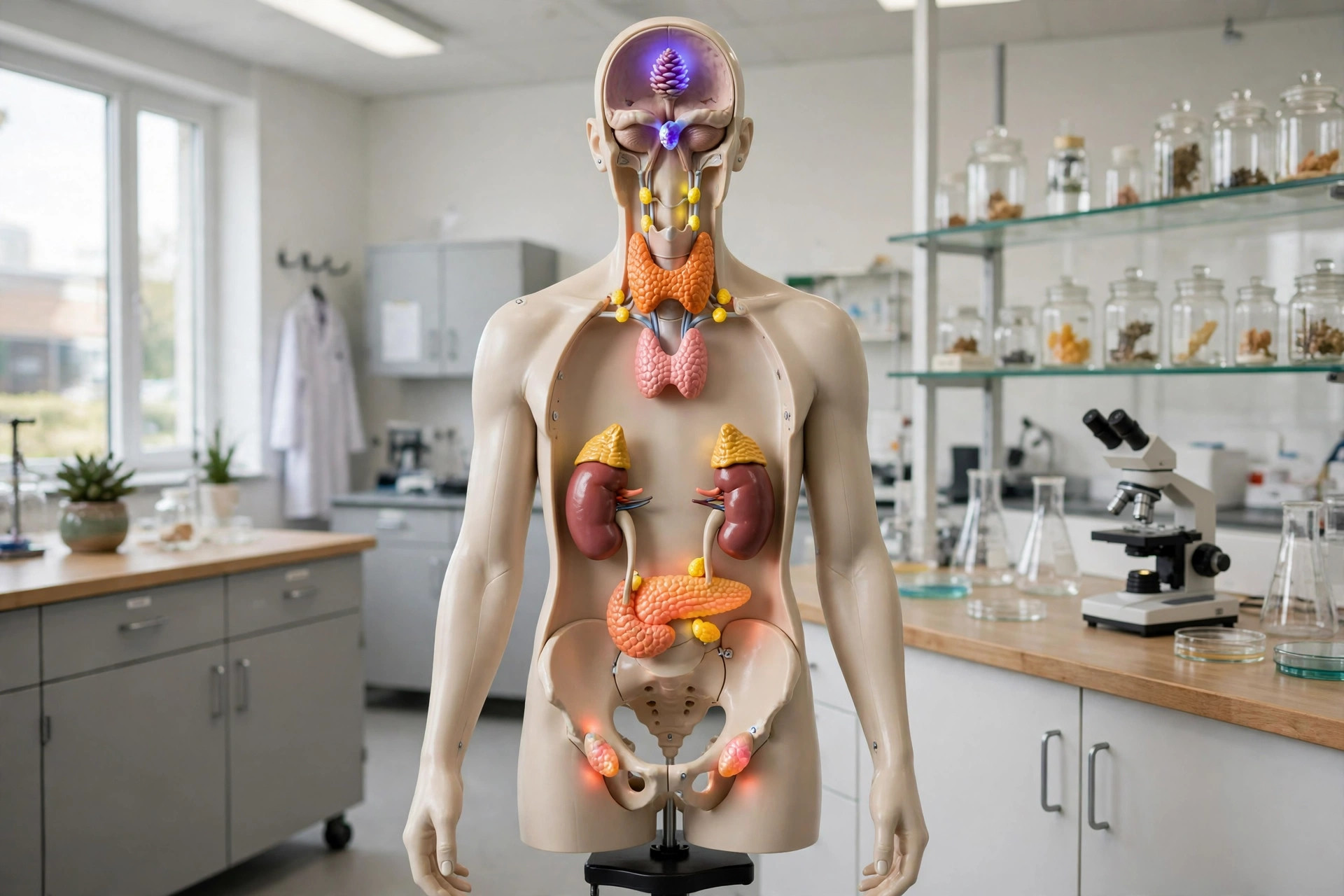
The adrenal (suprarenal) glands cap the top of each kidney like a cocked hat. Each has two layers with different jobs: the outer cortex makes steroid hormones — cortisol (stress and metabolism), aldosterone (salt and blood pressure) and androgens — while the inner medulla makes adrenaline and noradrenaline for the fight-or-flight response. The cortex is essential for life; the medulla amplifies the sympathetic nervous system.
Key facts
- The right gland is pyramidal, the left crescent-shaped, each only about 5 cm long.
- The cortex has three zones named for their products: salt (aldosterone), sugar (cortisol) and sex steroids.
- Adrenaline from the medulla reaches the blood like a hormone, while noradrenaline also serves as a nerve transmitter.
- The glands receive a rich arterial supply from three sources but drain by a single vein each.
What can go wrong
Adrenal disorders include overproduction — cortisol excess (Cushing's syndrome), aldosterone excess (Conn's syndrome, a cause of hypertension) and adrenaline-secreting tumours (phaeochromocytoma, causing episodic palpitations and sweating) — and failure (Addison's disease), where cortisol deficiency causes fatigue, weight loss, low blood pressure and skin darkening and can be life-threatening in illness. Incidental adrenal lumps (incidentalomas) are common on scans and are assessed for hormone activity and growth.
Related conditions
Related procedures & tests
Related symptoms
Frequently asked questions
What does cortisol do?
It mobilises energy during stress, maintains blood pressure and blood sugar, dampens inflammation and follows a daily rhythm — highest in the early morning.
What is an adrenal incidentaloma?
An adrenal lump found by chance on a scan done for another reason. Most are benign and inactive, but clinicians check hormone production and size to decide on follow-up.
Educational information only. This atlas explains normal anatomy and describes conditions in general terms; it is not medical advice and does not replace assessment by a qualified clinician. If you have symptoms that worry you, seek medical care.