- Physical Examination
- Surgical Examination
- Ophthalmology
- Clinical Skills
- Orthopedics
- Surgery Videos
- Laparoscopy
- Pediatrics
- Funny Videos
- Cardiothoracic Surgery
- Nursing Videos
- Plastic Surgery
- Otorhinolaryngology
- Histology and Histopathology
- Neurosurgery
- Dermatology
- Pediatric Surgery
- Urology
- Dentistry
- Oncology and Cancers
- Anatomy Videos
- Health and Fitness
- Radiology
- Anaesthesia
- Physical Therapy
- Pharmacology
- Interventional Radiology
- Cardiology
- Endocrinology
- Gynecology
- Emergency Medicine
- Psychiatry and Psychology
- Childbirth Videos
- General Medical Videos
- Nephrology
- Physiology
- Diet and Food Health
- Diabetes Mellitus
- Neurology
- Women Health
- Osteoporosis
- Gastroenterology
- Pulmonology
- Hematology
- Rheumatology
- Toxicology
- Nuclear Medicine
- Infectious Diseases
- Vascular Disease
- Reproductive Health
- Burns and Wound Healing
- Kidney Zone Podcast
- Other
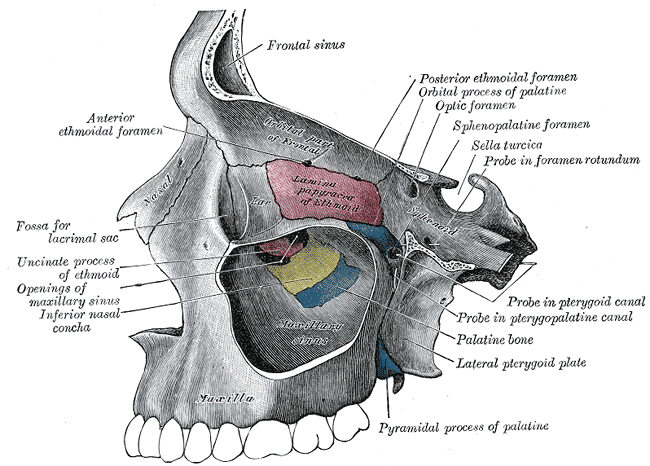
Lacrimal Bone
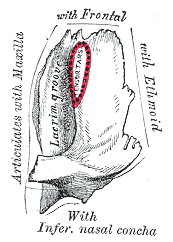
Gray's Anatomy (1918) plate, public domain
The lacrimal bones are the smallest and most fragile bones of the face. Each sits in the front part of the inner wall of the eye socket and carries a groove that helps form the channel carrying tears from the eye into the nose — which is why your nose runs when you cry.
Key facts
- The lacrimal bone is the smallest facial bone.
- It forms part of the inner wall of the eye socket.
- Its groove joins the maxilla to form the nasolacrimal canal for tears.
- Tears drain through this channel into the nose — the link between crying and a runny nose.
- It is named after lacrima, the Latin word for a tear.
What can go wrong
The lacrimal bone itself rarely causes problems, but the tear channel it helps form can block — a common cause of a watery eye, especially in babies, whose drainage channel sometimes opens late, and in older adults, where it can narrow. Blockage can also let the tear sac become infected.
Related symptoms
Related muscles
Frequently asked questions
Why does crying make your nose run?
Tears produced by the lacrimal gland drain from the inner corner of the eye through the nasolacrimal canal — partly formed by this bone — into the nose, adding to the nose's normal moisture.
Why do babies often have a watery eye?
The tear drainage channel sometimes has a thin membrane at its lower end at birth that has not yet opened; in most babies it opens on its own during the first year.
Educational information only. This atlas explains normal anatomy and describes conditions in general terms; it is not medical advice and does not replace assessment by a qualified clinician. If you have symptoms that worry you, seek medical care.