- Physical Examination
- Surgical Examination
- Ophthalmology
- Clinical Skills
- Orthopedics
- Surgery Videos
- Laparoscopy
- Pediatrics
- Funny Videos
- Cardiothoracic Surgery
- Nursing Videos
- Plastic Surgery
- Otorhinolaryngology
- Histology and Histopathology
- Neurosurgery
- Dermatology
- Pediatric Surgery
- Urology
- Dentistry
- Oncology and Cancers
- Anatomy Videos
- Health and Fitness
- Radiology
- Anaesthesia
- Physical Therapy
- Pharmacology
- Interventional Radiology
- Cardiology
- Endocrinology
- Gynecology
- Emergency Medicine
- Psychiatry and Psychology
- Childbirth Videos
- General Medical Videos
- Nephrology
- Physiology
- Diet and Food Health
- Diabetes Mellitus
- Neurology
- Women Health
- Osteoporosis
- Gastroenterology
- Pulmonology
- Hematology
- Rheumatology
- Toxicology
- Nuclear Medicine
- Infectious Diseases
- Vascular Disease
- Reproductive Health
- Burns and Wound Healing
- Kidney Zone Podcast
- Other
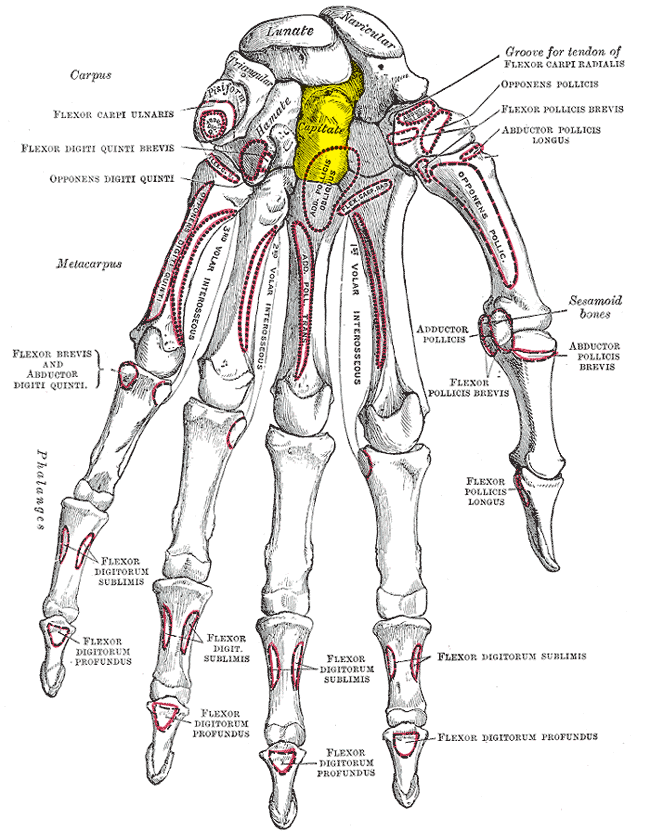
Lunate
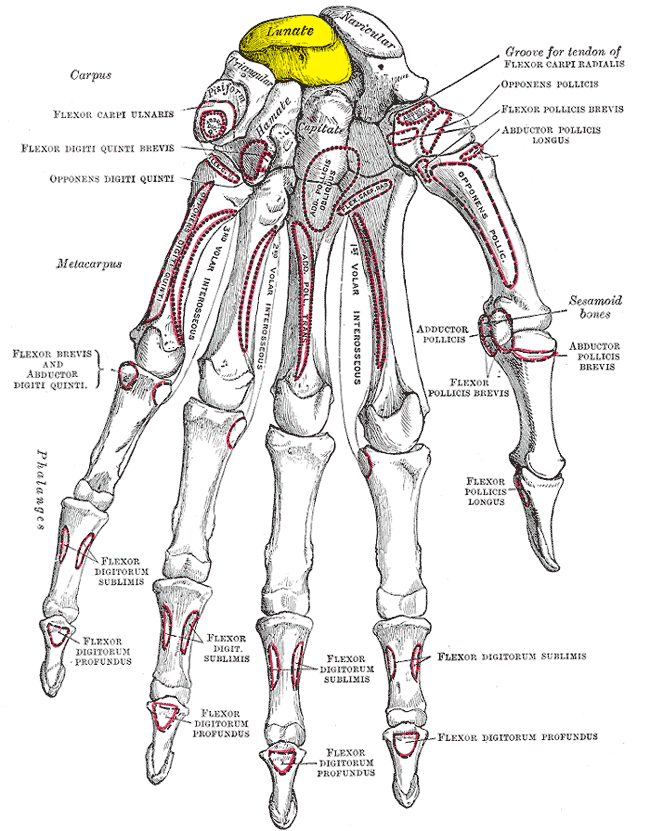
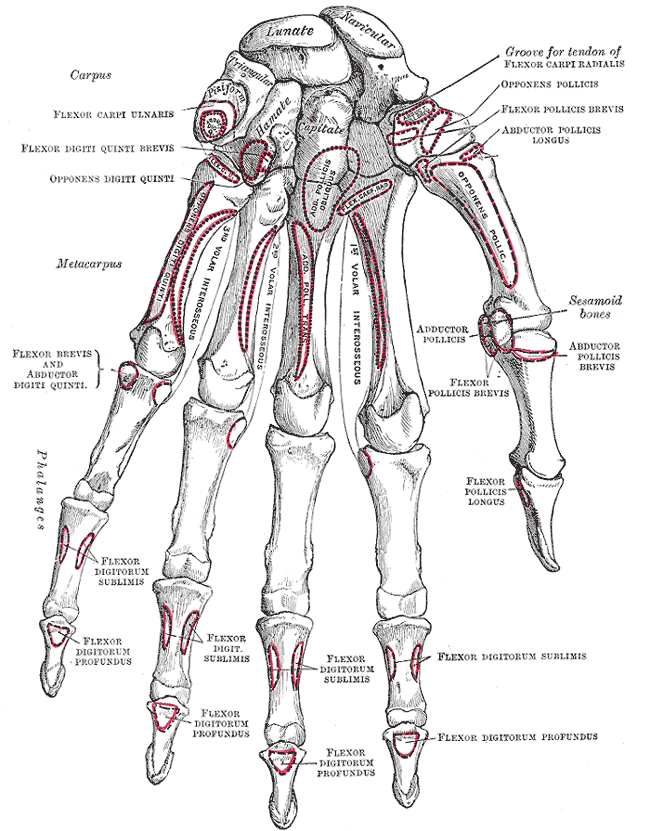
Gray's Anatomy (1918) plate, public domain
The lunate is the crescent- (moon-) shaped carpal bone next to the scaphoid in the wrist's near row. Together with the scaphoid it forms the socket surface that meets the radius at the wrist joint. It is stabilised by strong ligaments to its neighbours, and it is the carpal bone that most often dislocates in severe wrist injuries.
Key facts
- The lunate's name comes from its crescent-moon shape.
- It is one of only two carpals that meet the radius at the wrist joint.
- It sits at the centre of the wrist's load path.
- It is the carpal most commonly dislocated.
- Its blood supply can be vulnerable in some people.
What can go wrong
In high-energy wrist injuries the lunate can be forced out of place (lunate or perilunate dislocation), an emergency for the wrist's nerves and blood flow. Rarely, its blood supply fails and the bone softens and collapses (Kienböck's disease), causing wrist pain and stiffness in young adults.
Related procedures & tests
Related symptoms
Frequently asked questions
Why does the lunate dislocate more than the other carpals?
It sits at the keystone position of the wrist's near row, directly in line with the load from the hand; in a severe fall the forces that tear the wrist's ligaments tend to push it out of its seat.
What is Kienböck's disease?
A rare condition in which the lunate loses its blood supply and gradually collapses, causing wrist pain, swelling and loss of grip, usually in young and middle-aged adults.
Educational information only. This atlas explains normal anatomy and describes conditions in general terms; it is not medical advice and does not replace assessment by a qualified clinician. If you have symptoms that worry you, seek medical care.