- Physical Examination
- Surgical Examination
- Ophthalmology
- Clinical Skills
- Orthopedics
- Surgery Videos
- Laparoscopy
- Pediatrics
- Funny Videos
- Cardiothoracic Surgery
- Nursing Videos
- Plastic Surgery
- Otorhinolaryngology
- Histology and Histopathology
- Neurosurgery
- Dermatology
- Pediatric Surgery
- Urology
- Dentistry
- Oncology and Cancers
- Anatomy Videos
- Health and Fitness
- Radiology
- Anaesthesia
- Physical Therapy
- Pharmacology
- Interventional Radiology
- Cardiology
- Endocrinology
- Gynecology
- Emergency Medicine
- Psychiatry and Psychology
- Childbirth Videos
- General Medical Videos
- Nephrology
- Physiology
- Diet and Food Health
- Diabetes Mellitus
- Neurology
- Women Health
- Osteoporosis
- Gastroenterology
- Pulmonology
- Hematology
- Rheumatology
- Toxicology
- Nuclear Medicine
- Infectious Diseases
- Vascular Disease
- Reproductive Health
- Burns and Wound Healing
- Kidney Zone Podcast
- Other
Maxilla
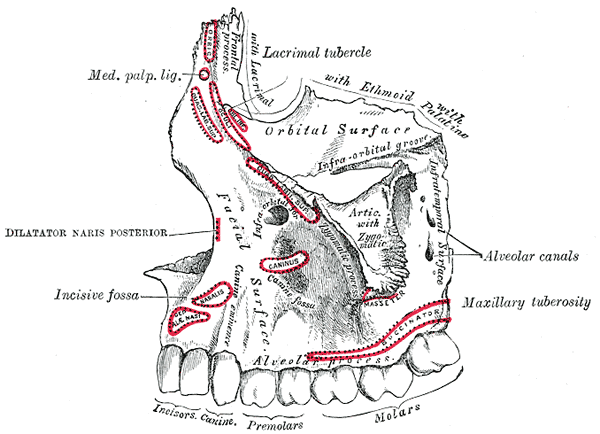
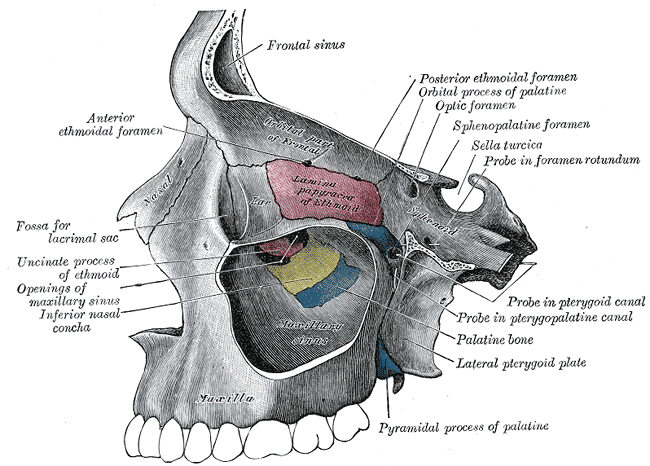
Gray's Anatomy (1918) plate, public domain
The maxilla is the upper jaw: two fused bones that hold the upper teeth, form the floor of the eye sockets and the sides and floor of the nose, and make up the front of the hard palate. Each maxilla contains a large air space — the maxillary sinus, the biggest of the sinuses.
Key facts
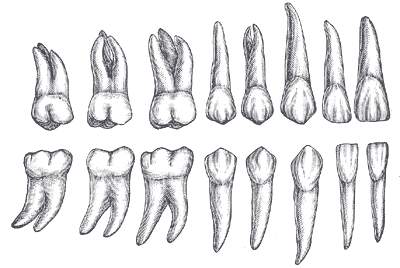
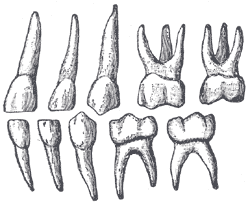
- The maxilla holds all the upper teeth in its alveolar process.
- It forms the floor of the eye socket and part of the cheek.
- The two maxillae meet in the midline to form most of the hard palate.
- Each contains a maxillary sinus that drains into the nose.
- Its infraorbital canal carries the nerve giving feeling to the cheek and upper teeth.
What can go wrong
The maxillary sinuses are the sinuses most often infected, causing cheek pain that can feel like toothache. The maxilla can fracture in facial injuries, sometimes shifting the bite or the eye's support. Dental infections of upper teeth can occasionally spread into the sinus above them.
Related procedures & tests
Related symptoms
Related muscles
Watch: related videos
Frequently asked questions
Why does sinus trouble feel like toothache?
The floor of the maxillary sinus lies immediately above the roots of the upper back teeth, and both share the same nerve supply — so an inflamed sinus is often felt as pain in the teeth, and vice versa.
Is the maxilla one bone or two?
Two: a left and a right maxilla, fused in the midline of the palate and face. Together they anchor the whole upper dental arch to the skull.
Educational information only. This atlas explains normal anatomy and describes conditions in general terms; it is not medical advice and does not replace assessment by a qualified clinician. If you have symptoms that worry you, seek medical care.