- Physical Examination
- Surgical Examination
- Ophthalmology
- Clinical Skills
- Orthopedics
- Surgery Videos
- Laparoscopy
- Pediatrics
- Funny Videos
- Cardiothoracic Surgery
- Nursing Videos
- Plastic Surgery
- Otorhinolaryngology
- Histology and Histopathology
- Neurosurgery
- Dermatology
- Pediatric Surgery
- Urology
- Dentistry
- Oncology and Cancers
- Anatomy Videos
- Health and Fitness
- Radiology
- Anaesthesia
- Physical Therapy
- Pharmacology
- Interventional Radiology
- Cardiology
- Endocrinology
- Gynecology
- Emergency Medicine
- Psychiatry and Psychology
- Childbirth Videos
- General Medical Videos
- Nephrology
- Physiology
- Diet and Food Health
- Diabetes Mellitus
- Neurology
- Women Health
- Osteoporosis
- Gastroenterology
- Pulmonology
- Hematology
- Rheumatology
- Toxicology
- Nuclear Medicine
- Infectious Diseases
- Vascular Disease
- Reproductive Health
- Burns and Wound Healing
- Kidney Zone Podcast
- Other
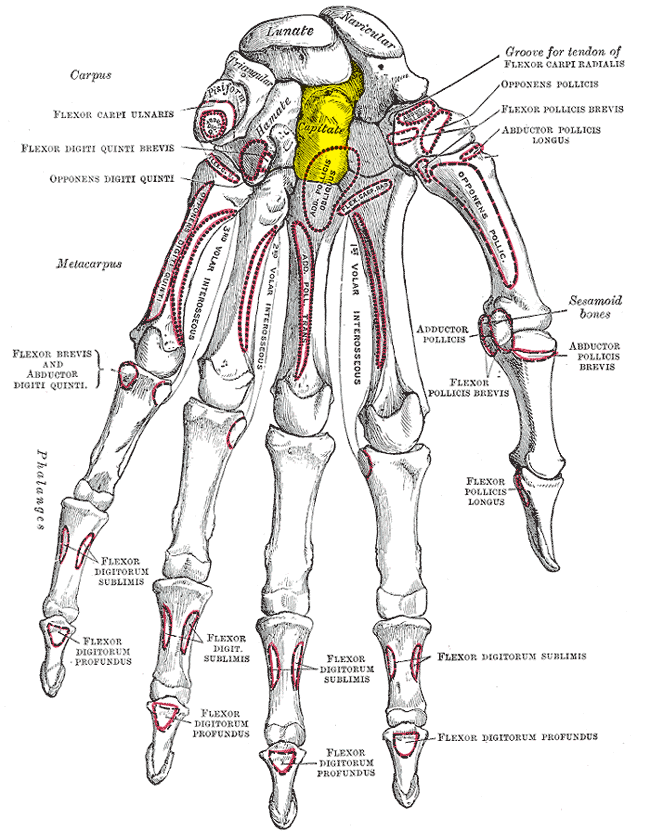
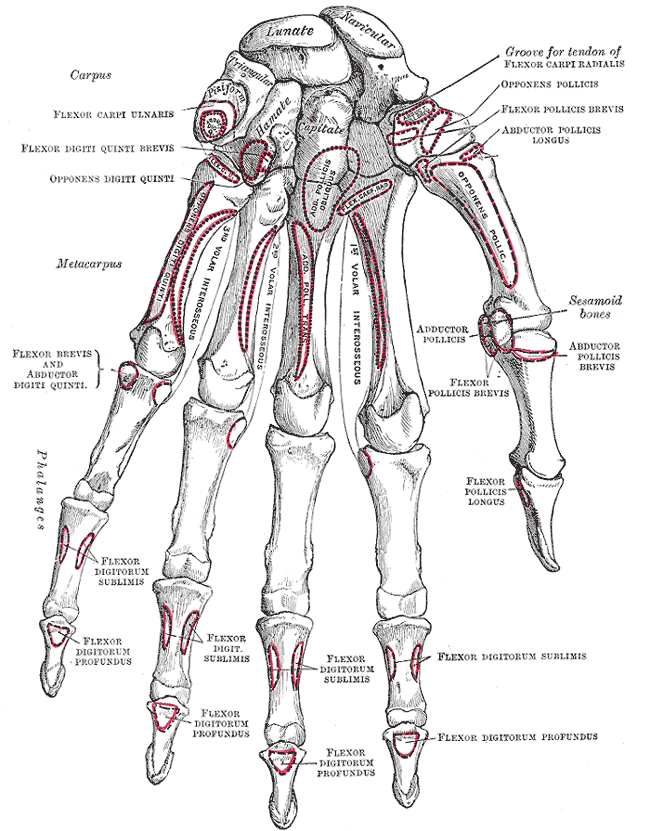
Metacarpals
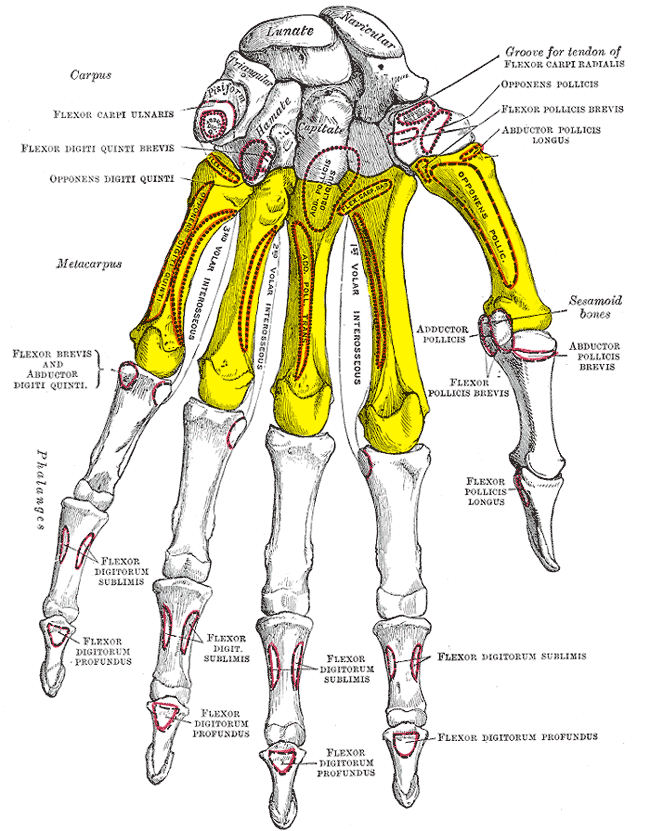
Gray's Anatomy (1918) plate, public domain
The metacarpals are the five long bones of the palm, one for each finger and thumb. Each has a base at the wrist, a shaft, and a rounded head that forms a knuckle. The thumb's metacarpal is shorter, stouter and rotated, while the four finger metacarpals are bound together by ligaments into the palm's framework; the outer ones (thumb and little finger sides) move more, cupping the palm for grip.
Key facts
- There are five metacarpals, numbered 1 (thumb) to 5 (little finger).
- Their heads form the knuckles of a clenched fist.
- The palm's deep muscles (interossei and lumbricals) attach between them.
- The 4th and 5th metacarpals move slightly, letting the palm cup.
- The 2nd and 3rd form the hand's rigid central column.
What can go wrong
Metacarpals are frequently fractured — the neck of the little-finger metacarpal in the classic 'boxer's fracture' from punching. Most heal with splinting if the finger still aligns and rotates correctly; displaced, rotated or open fractures may need pinning or plating. Arthritis at the thumb base involves the first metacarpal's joint with the trapezium.
Related procedures & tests
Related symptoms
Related muscles
Frequently asked questions
What is a boxer's fracture?
A break of the neck of the fifth metacarpal — the little finger's palm bone — usually from a clenched fist striking a hard object. Despite the name, it happens more often in fights and falls than in boxing.
Why do doctors check finger rotation after a hand fracture?
If a metacarpal heals even slightly rotated, the finger will cross over its neighbour when making a fist. Alignment is judged by watching all the fingertips point towards the same spot at the wrist.
Educational information only. This atlas explains normal anatomy and describes conditions in general terms; it is not medical advice and does not replace assessment by a qualified clinician. If you have symptoms that worry you, seek medical care.