- Physical Examination
- Surgical Examination
- Ophthalmology
- Clinical Skills
- Orthopedics
- Surgery Videos
- Laparoscopy
- Pediatrics
- Funny Videos
- Cardiothoracic Surgery
- Nursing Videos
- Plastic Surgery
- Otorhinolaryngology
- Histology and Histopathology
- Neurosurgery
- Dermatology
- Pediatric Surgery
- Urology
- Dentistry
- Oncology and Cancers
- Anatomy Videos
- Health and Fitness
- Radiology
- Anaesthesia
- Physical Therapy
- Pharmacology
- Interventional Radiology
- Cardiology
- Endocrinology
- Gynecology
- Emergency Medicine
- Psychiatry and Psychology
- Childbirth Videos
- General Medical Videos
- Nephrology
- Physiology
- Diet and Food Health
- Diabetes Mellitus
- Neurology
- Women Health
- Osteoporosis
- Gastroenterology
- Pulmonology
- Hematology
- Rheumatology
- Toxicology
- Nuclear Medicine
- Infectious Diseases
- Vascular Disease
- Reproductive Health
- Burns and Wound Healing
- Kidney Zone Podcast
- Other
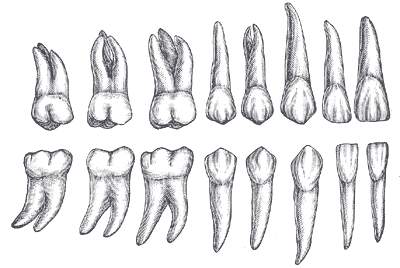
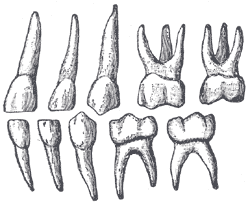
Molars
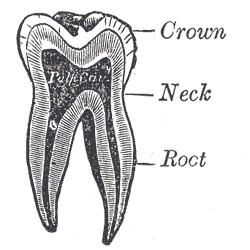
Gray's Anatomy (1918) plate, public domain
The molars are the broad, strong teeth at the back of the mouth — up to twelve in adults, including the wisdom teeth. Their wide crowns carry several cusps for grinding food, and they bear the greatest chewing forces. Upper molars usually have three roots, lower molars two, anchoring them firmly in the jaw.
Key facts
- Molars do the heavy grinding work of chewing.
- Their crowns have four or five cusps for crushing food.
- The first permanent molars erupt at about age 6, behind the baby teeth.
- They withstand the highest bite forces in the mouth.
- Deep grooves (fissures) on their crowns are common sites for decay.
What can go wrong
The fissures of molars trap plaque easily, so they are the teeth most often protected with sealants in children and the most commonly filled. First molars are sometimes lost early if decay is advanced, which can let neighbouring teeth drift. Impacted or infected wisdom teeth (the third molars) are a frequent reason for dental surgery.
Related symptoms
Watch: related videos
Frequently asked questions
Why do children get sealants on molars?
The grooves on a new molar's chewing surface are narrow and deep — too fine for toothbrush bristles to clean — so a thin protective coating is painted on to keep plaque and acid out of them.
Which teeth bear the most force?
The molars. Bite force increases towards the back of the mouth because the jaw works like a lever, and molars sit closest to the joint and muscles.
Educational information only. This atlas explains normal anatomy and describes conditions in general terms; it is not medical advice and does not replace assessment by a qualified clinician. If you have symptoms that worry you, seek medical care.