- Physical Examination
- Surgical Examination
- Ophthalmology
- Clinical Skills
- Orthopedics
- Surgery Videos
- Laparoscopy
- Pediatrics
- Funny Videos
- Cardiothoracic Surgery
- Nursing Videos
- Plastic Surgery
- Otorhinolaryngology
- Histology and Histopathology
- Neurosurgery
- Dermatology
- Pediatric Surgery
- Urology
- Dentistry
- Oncology and Cancers
- Anatomy Videos
- Health and Fitness
- Radiology
- Anaesthesia
- Physical Therapy
- Pharmacology
- Interventional Radiology
- Cardiology
- Endocrinology
- Gynecology
- Emergency Medicine
- Psychiatry and Psychology
- Childbirth Videos
- General Medical Videos
- Nephrology
- Physiology
- Diet and Food Health
- Diabetes Mellitus
- Neurology
- Women Health
- Osteoporosis
- Gastroenterology
- Pulmonology
- Hematology
- Rheumatology
- Toxicology
- Nuclear Medicine
- Infectious Diseases
- Vascular Disease
- Reproductive Health
- Burns and Wound Healing
- Kidney Zone Podcast
- Other
Pisiform
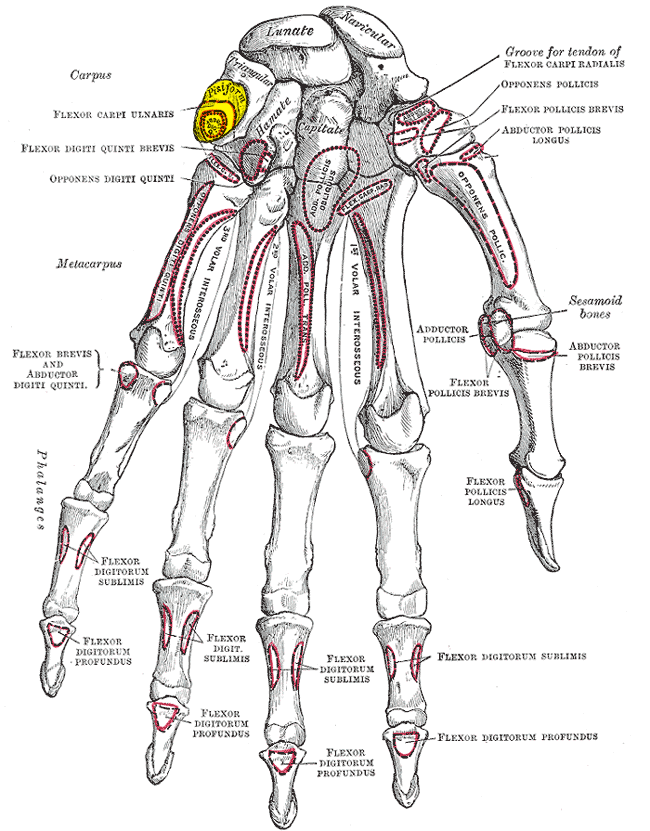
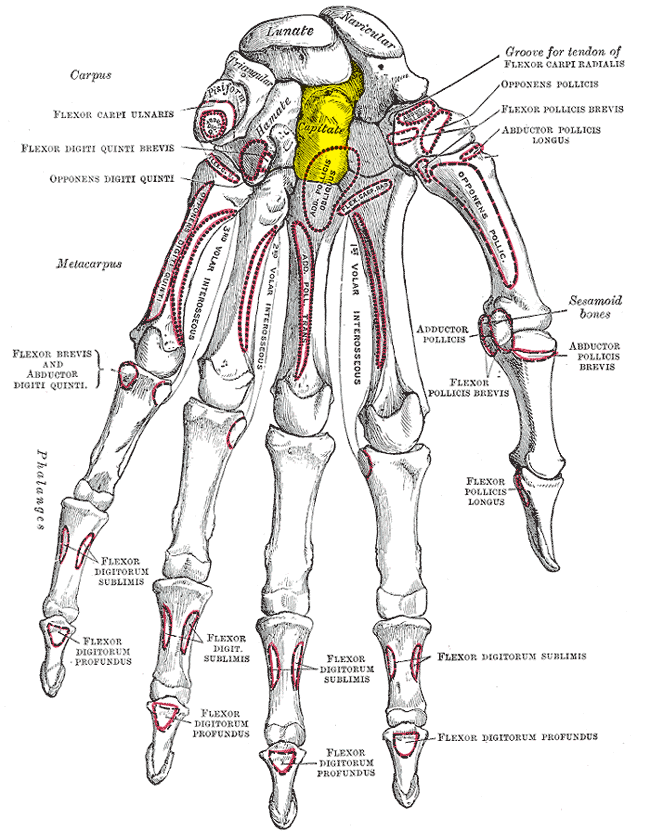
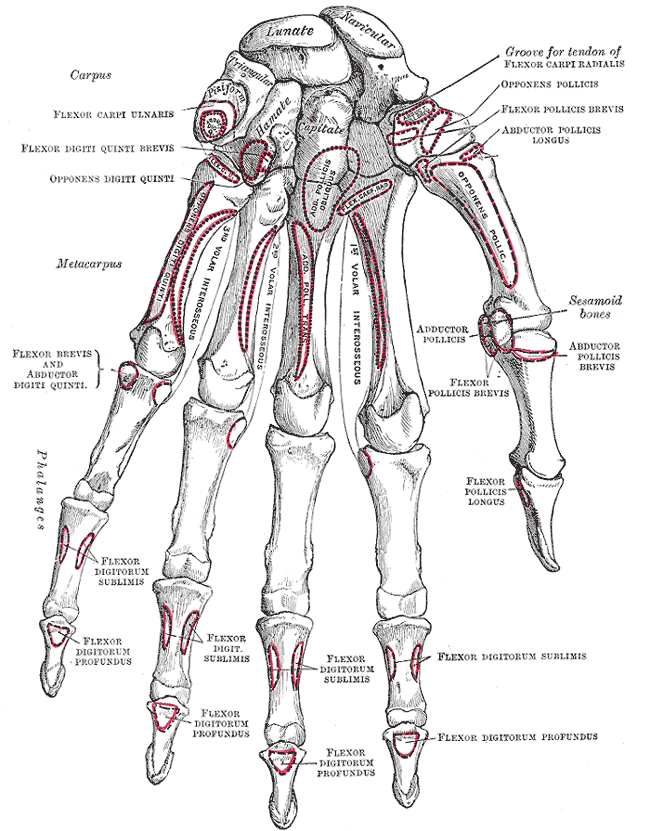
Gray's Anatomy (1918) plate, public domain
The pisiform is a pea-sized bone embedded in the tendon of the flexor carpi ulnaris muscle at the front of the wrist — a sesamoid bone, formed inside a tendon like the kneecap. It sits on the triquetrum and acts as a small pulley, increasing the leverage of the wrist's flexor muscle on the little-finger side.
Key facts
- The pisiform is a sesamoid bone, formed within a tendon.
- It is the smallest carpal bone.
- It can be felt as a small bump at the heel of the hand on the little-finger side.
- It increases the mechanical advantage of the flexor carpi ulnaris.
- The ulnar nerve passes just beside it in Guyon's canal.
What can go wrong
The pisiform can be bruised or fractured by a fall onto the heel of the hand, though this is uncommon. More famously, the ulnar nerve passing right next to it can be compressed — classically in cyclists leaning on handlebars — causing numbness in the ring and little fingers.
Related procedures & tests
Related symptoms
Related muscles
Frequently asked questions
Why is there a bone inside a tendon?
Sesamoid bones grow where a tendon wraps around a joint; they protect the tendon from wear and improve its leverage, like the kneecap does for the thigh muscle.
Can you live without a pisiform?
Yes — it is occasionally removed for arthritis or persistent pain, with surprisingly little loss of wrist function, because its role is a modest mechanical one.
Educational information only. This atlas explains normal anatomy and describes conditions in general terms; it is not medical advice and does not replace assessment by a qualified clinician. If you have symptoms that worry you, seek medical care.