- Physical Examination
- Surgical Examination
- Ophthalmology
- Clinical Skills
- Orthopedics
- Surgery Videos
- Laparoscopy
- Pediatrics
- Funny Videos
- Cardiothoracic Surgery
- Nursing Videos
- Plastic Surgery
- Otorhinolaryngology
- Histology and Histopathology
- Neurosurgery
- Dermatology
- Pediatric Surgery
- Urology
- Dentistry
- Oncology and Cancers
- Anatomy Videos
- Health and Fitness
- Radiology
- Anaesthesia
- Physical Therapy
- Pharmacology
- Interventional Radiology
- Cardiology
- Endocrinology
- Gynecology
- Emergency Medicine
- Psychiatry and Psychology
- Childbirth Videos
- General Medical Videos
- Nephrology
- Physiology
- Diet and Food Health
- Diabetes Mellitus
- Neurology
- Women Health
- Osteoporosis
- Gastroenterology
- Pulmonology
- Hematology
- Rheumatology
- Toxicology
- Nuclear Medicine
- Infectious Diseases
- Vascular Disease
- Reproductive Health
- Burns and Wound Healing
- Kidney Zone Podcast
- Other
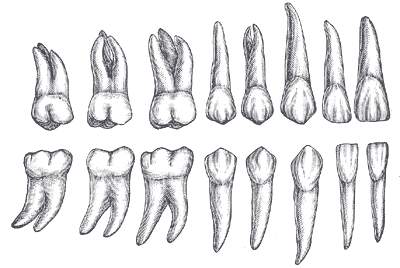
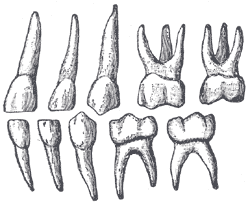
Premolars
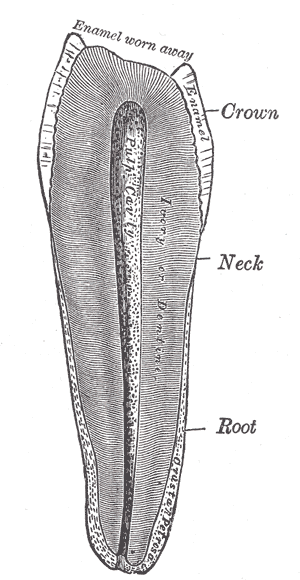
Gray's Anatomy (1918) plate, public domain
The premolars — also called bicuspids — are the eight teeth between the canines and the molars. They have a flattened crown with (usually) two points, and they do the first stage of crushing food before the molars grind it. They replace the baby molars as the permanent set develops, appearing at about age 10 to 12.
Key facts
- There are eight premolars, two in each quarter of the mouth.
- Most have one root; upper first premolars often have two.
- They bridge the tearing action of canines and the grinding of molars.
- They only exist in the permanent set — children do not have premolars.
- They are common teeth to remove for orthodontic space-making, when needed.
What can go wrong
Premolars can develop decay in the grooves of their crowns like other back teeth. Because upper first premolars often have two slender roots, they are among the more delicate teeth to extract. Occasionally a premolar develops an extra cusp or root variation that a dentist notes on X-ray.
Related symptoms
Watch: related videos
Frequently asked questions
Why are they called bicuspids?
Bicuspid means 'two points' — most premolar crowns carry two cusps, one towards the cheek and one towards the tongue, which crush food between them.
Do children have premolars?
No. Children have baby molars in the equivalent positions; when those fall out, the permanent premolars erupt in their place, which is why premolars are sometimes called replacement teeth.
Educational information only. This atlas explains normal anatomy and describes conditions in general terms; it is not medical advice and does not replace assessment by a qualified clinician. If you have symptoms that worry you, seek medical care.