- Physical Examination
- Surgical Examination
- Ophthalmology
- Clinical Skills
- Orthopedics
- Surgery Videos
- Laparoscopy
- Pediatrics
- Funny Videos
- Cardiothoracic Surgery
- Nursing Videos
- Plastic Surgery
- Otorhinolaryngology
- Histology and Histopathology
- Neurosurgery
- Dermatology
- Pediatric Surgery
- Urology
- Dentistry
- Oncology and Cancers
- Anatomy Videos
- Health and Fitness
- Radiology
- Anaesthesia
- Physical Therapy
- Pharmacology
- Interventional Radiology
- Cardiology
- Endocrinology
- Gynecology
- Emergency Medicine
- Psychiatry and Psychology
- Childbirth Videos
- General Medical Videos
- Nephrology
- Physiology
- Diet and Food Health
- Diabetes Mellitus
- Neurology
- Women Health
- Osteoporosis
- Gastroenterology
- Pulmonology
- Hematology
- Rheumatology
- Toxicology
- Nuclear Medicine
- Infectious Diseases
- Vascular Disease
- Reproductive Health
- Burns and Wound Healing
- Kidney Zone Podcast
- Other
Radius
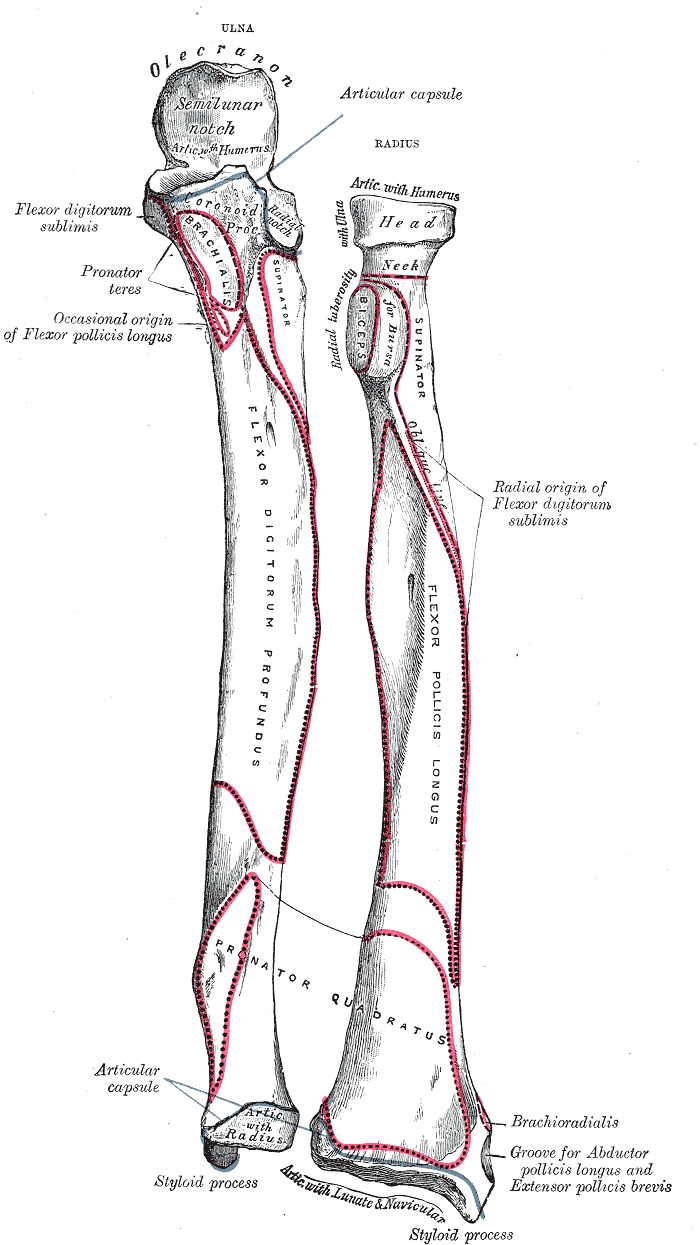
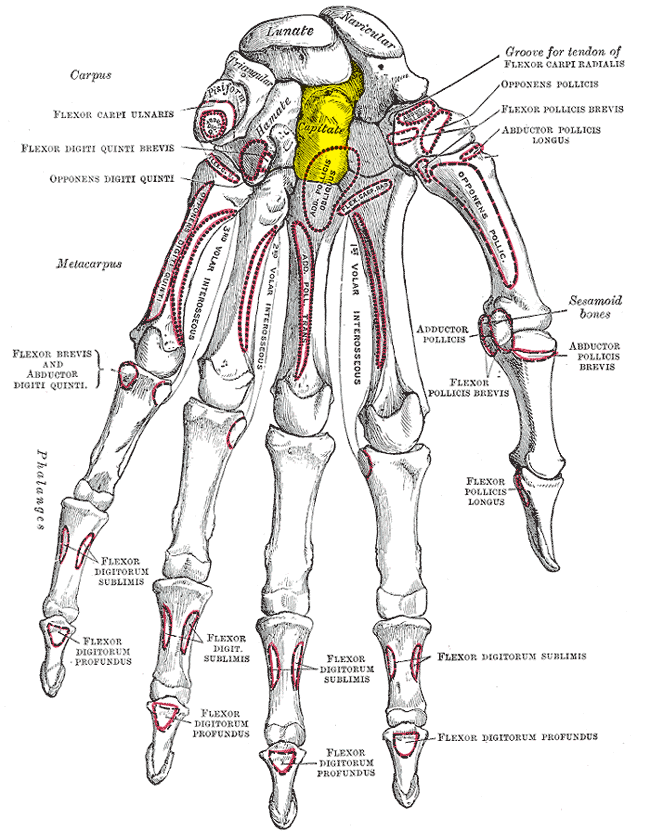
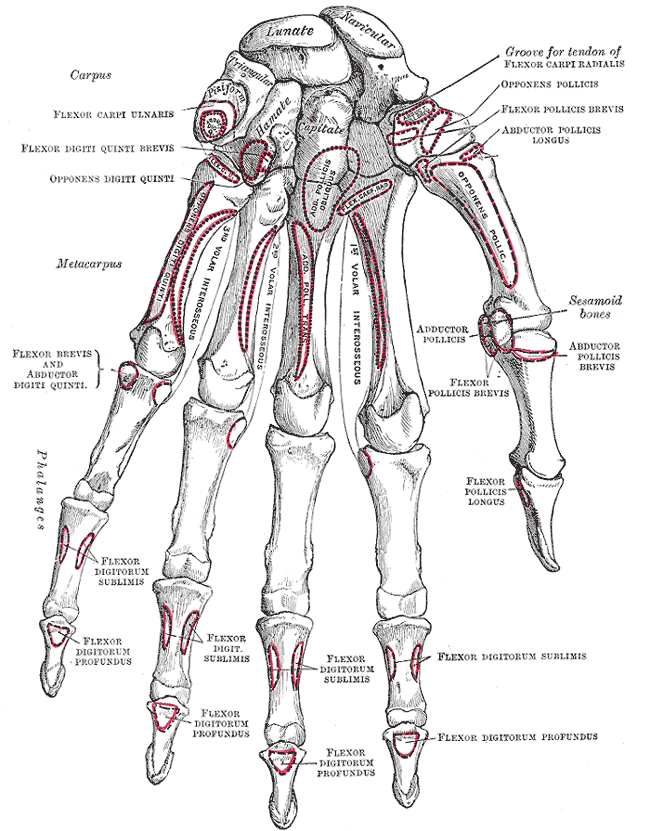
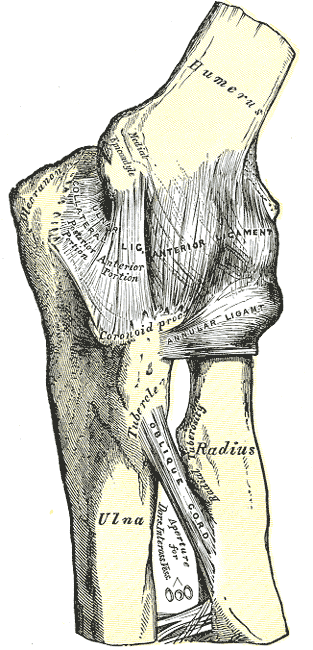
Gray's Anatomy (1918) plate, public domain
The radius is the forearm bone on the thumb side. Small at the elbow, where its disc-shaped head rotates against the humerus to turn the palm up and down, it widens massively at the wrist, where it carries most of the load between hand and arm. It rotates around the ulna during pronation and supination.
Key facts
- The radius is the lateral forearm bone — on the thumb side.
- Its head rotates to produce turning movements of the forearm.
- Its broad lower end forms most of the wrist joint with the hand bones.
- Roughly four-fifths of the load from the hand passes through the radius at the wrist.
- The radial pulse is felt where the radial artery crosses it at the wrist.
What can go wrong
The wrist end of the radius is one of the commonest fracture sites in the body — the Colles' fracture of a fall onto an outstretched hand, especially in older adults. In children, the radius head can slip partly out of its ligament at the elbow from a pull on the arm ('pulled elbow'). Shaft fractures often involve the ulna too.
Related procedures & tests
Related symptoms
Related muscles
Frequently asked questions
Which forearm bone turns when you turn a doorknob?
The radius. It swings around the relatively fixed ulna, crossing over it as the palm turns down (pronation) and uncrossing as the palm turns up (supination).
Why is the wrist pulse taken on the radius side?
The radial artery runs over the front of the radius near the wrist, close to the surface and against firm bone — an ideal place to feel and count the pulse.
Educational information only. This atlas explains normal anatomy and describes conditions in general terms; it is not medical advice and does not replace assessment by a qualified clinician. If you have symptoms that worry you, seek medical care.