- Physical Examination
- Surgical Examination
- Ophthalmology
- Clinical Skills
- Orthopedics
- Surgery Videos
- Laparoscopy
- Pediatrics
- Funny Videos
- Cardiothoracic Surgery
- Nursing Videos
- Plastic Surgery
- Otorhinolaryngology
- Histology and Histopathology
- Neurosurgery
- Dermatology
- Pediatric Surgery
- Urology
- Dentistry
- Oncology and Cancers
- Anatomy Videos
- Health and Fitness
- Radiology
- Anaesthesia
- Physical Therapy
- Pharmacology
- Interventional Radiology
- Cardiology
- Endocrinology
- Gynecology
- Emergency Medicine
- Psychiatry and Psychology
- Childbirth Videos
- General Medical Videos
- Nephrology
- Physiology
- Diet and Food Health
- Diabetes Mellitus
- Neurology
- Women Health
- Osteoporosis
- Gastroenterology
- Pulmonology
- Hematology
- Rheumatology
- Toxicology
- Nuclear Medicine
- Infectious Diseases
- Vascular Disease
- Reproductive Health
- Burns and Wound Healing
- Kidney Zone Podcast
- Other
Scaphoid
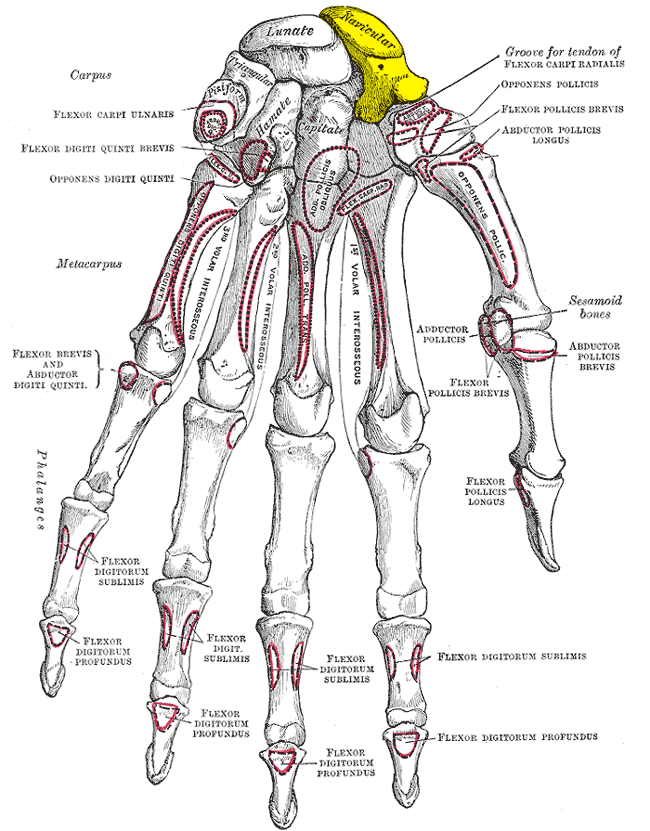
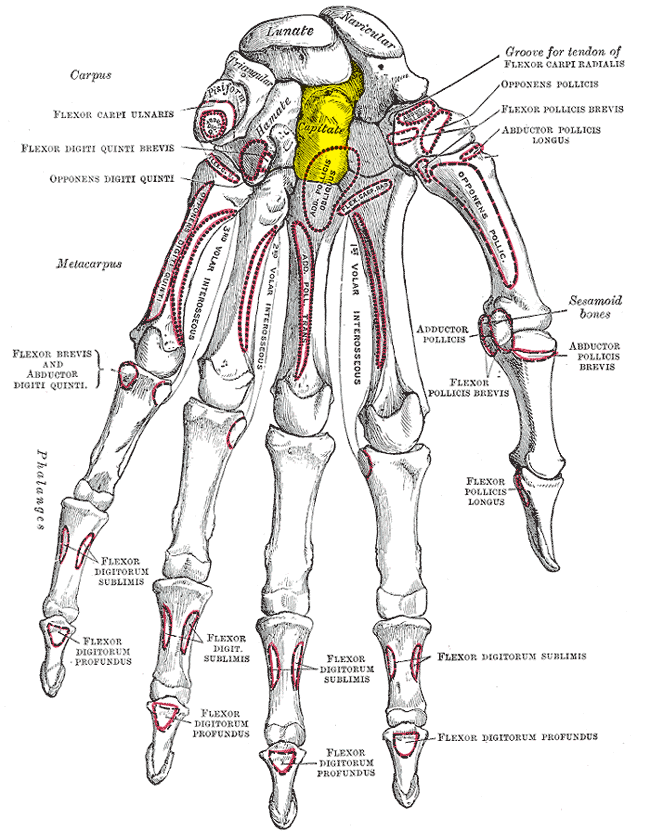
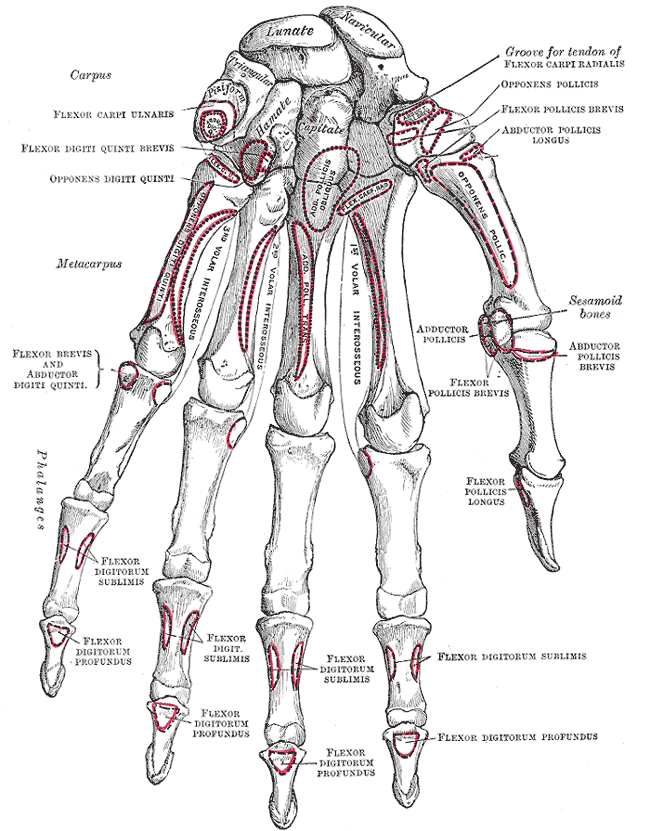
Gray's Anatomy (1918) plate, public domain
The scaphoid is the boat-shaped carpal bone at the base of the thumb, bridging the two rows of the wrist. It is the wrist bone most often fractured — classically by a fall onto an outstretched hand — and pain in the hollow at the thumb's base ('anatomical snuffbox') after such a fall is its signature sign. Its blood supply is fragile, entering at the far end.
Key facts
- The scaphoid is the most commonly fractured carpal bone.
- It links the two rows of wrist bones, so it takes great stress.
- Tenderness in the anatomical snuffbox suggests its fracture.
- Its blood flow runs backwards along the bone, so breaks can starve the near segment.
- It helps form the floor of the carpal tunnel's radial side.
What can go wrong
Scaphoid fractures are notorious for being invisible on early X-rays, so a suspicious injury is often splinted and re-checked. Because of its peculiar blood supply, the part of the bone nearer the forearm can lose its supply after a fracture and heal slowly or not at all (non-union), sometimes leading to wrist arthritis years later — the reason these injuries are taken seriously.
Related procedures & tests
Related symptoms
Watch: related videos
Frequently asked questions
Why do doctors X-ray a sore wrist even if it looks normal?
Because a scaphoid fracture may not show on the first X-ray but still matters: missed fractures can fail to heal properly. A normal first film with classic snuffbox tenderness is usually treated as a fracture until proven otherwise.
What is the anatomical snuffbox?
The hollow that appears at the base of the thumb when you spread your thumb out. The scaphoid forms its floor, which is why pressing there hurts when the bone is broken.
Educational information only. This atlas explains normal anatomy and describes conditions in general terms; it is not medical advice and does not replace assessment by a qualified clinician. If you have symptoms that worry you, seek medical care.