- Physical Examination
- Surgical Examination
- Ophthalmology
- Clinical Skills
- Orthopedics
- Surgery Videos
- Laparoscopy
- Pediatrics
- Funny Videos
- Cardiothoracic Surgery
- Nursing Videos
- Plastic Surgery
- Otorhinolaryngology
- Histology and Histopathology
- Neurosurgery
- Dermatology
- Pediatric Surgery
- Urology
- Dentistry
- Oncology and Cancers
- Anatomy Videos
- Health and Fitness
- Radiology
- Anaesthesia
- Physical Therapy
- Pharmacology
- Interventional Radiology
- Cardiology
- Endocrinology
- Gynecology
- Emergency Medicine
- Psychiatry and Psychology
- Childbirth Videos
- General Medical Videos
- Nephrology
- Physiology
- Diet and Food Health
- Diabetes Mellitus
- Neurology
- Women Health
- Osteoporosis
- Gastroenterology
- Pulmonology
- Hematology
- Rheumatology
- Toxicology
- Nuclear Medicine
- Infectious Diseases
- Vascular Disease
- Reproductive Health
- Burns and Wound Healing
- Kidney Zone Podcast
- Other
Sphenoid Bone
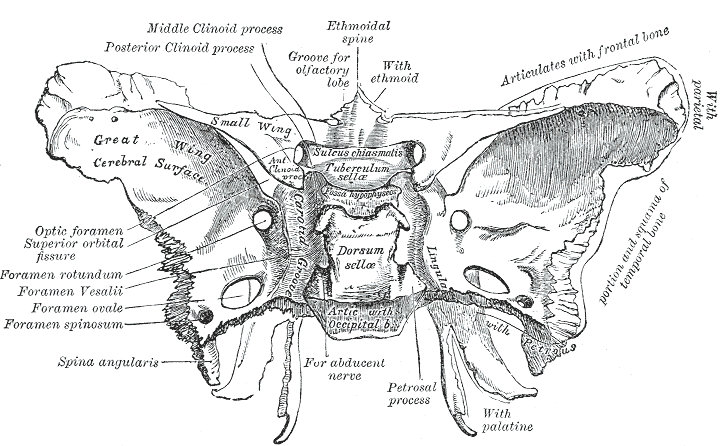
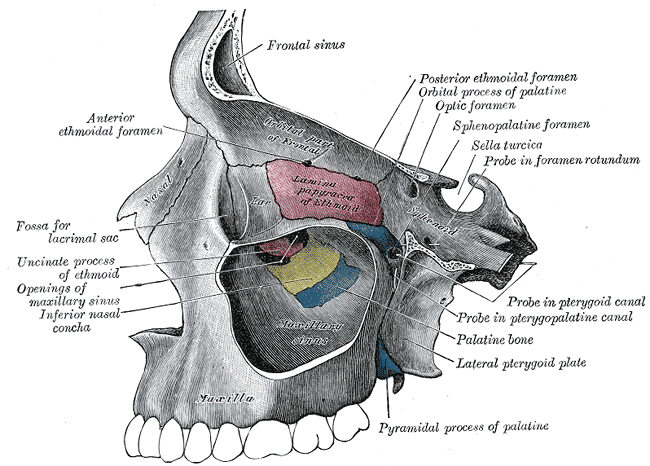
Gray's Anatomy (1918) plate, public domain
The sphenoid is a butterfly-shaped bone wedged at the centre of the skull base. It touches every other cranial bone, forms part of the eye socket and the temple, and its deep cup — the sella turcica — holds the pituitary gland. It contains the sphenoid sinuses, and many nerves and vessels pass through its holes.
Key facts
- The sphenoid is called the keystone bone of the skull because it joins all the other cranial bones.
- Its central cup, the sella turcica, cradles the pituitary gland.
- Its greater wings form part of the temple and the side wall of the eye socket.
- The optic canals and superior orbital fissures carry the nerves of sight and eye movement.
- The sphenoid sinuses drain into the back of the nose.
What can go wrong
Because the pituitary gland sits in this bone, pituitary surgery is often performed through the nose and the sphenoid sinus. Sphenoid sinusitis is less common than other sinus infections but can cause a deep headache. Fractures of the skull base can involve the sphenoid and the channels it carries.
Related procedures & tests
Related symptoms
Related muscles
Frequently asked questions
Why is the sphenoid called the keystone of the skull?
Like the keystone of an arch, it sits in the middle and locks the surrounding bones together — it articulates with the frontal, parietal, temporal, occipital and ethmoid bones and with several facial bones too.
How do surgeons reach the pituitary gland through this bone?
The sphenoid sinus is a hollow air space directly in front of the pituitary's bony cup, so instruments passed through the nose and sinus reach the gland with a short, straight route — an approach called transsphenoidal surgery.
Educational information only. This atlas explains normal anatomy and describes conditions in general terms; it is not medical advice and does not replace assessment by a qualified clinician. If you have symptoms that worry you, seek medical care.