- Physical Examination
- Surgical Examination
- Ophthalmology
- Clinical Skills
- Orthopedics
- Surgery Videos
- Laparoscopy
- Pediatrics
- Funny Videos
- Cardiothoracic Surgery
- Nursing Videos
- Plastic Surgery
- Otorhinolaryngology
- Histology and Histopathology
- Neurosurgery
- Dermatology
- Pediatric Surgery
- Urology
- Dentistry
- Oncology and Cancers
- Anatomy Videos
- Health and Fitness
- Radiology
- Anaesthesia
- Physical Therapy
- Pharmacology
- Interventional Radiology
- Cardiology
- Endocrinology
- Gynecology
- Emergency Medicine
- Psychiatry and Psychology
- Childbirth Videos
- General Medical Videos
- Nephrology
- Physiology
- Diet and Food Health
- Diabetes Mellitus
- Neurology
- Women Health
- Osteoporosis
- Gastroenterology
- Pulmonology
- Hematology
- Rheumatology
- Toxicology
- Nuclear Medicine
- Infectious Diseases
- Vascular Disease
- Reproductive Health
- Burns and Wound Healing
- Kidney Zone Podcast
- Other
Spleen
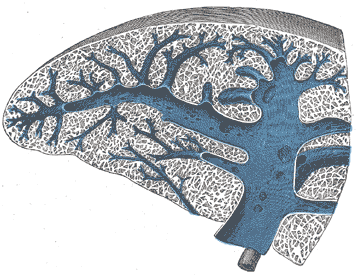
Gray's Anatomy (1918) plate, public domain
The spleen is a fist-sized, purple, sponge-like organ tucked under the left ribs. It filters the blood: its red pulp removes worn-out red cells and recycles their iron, while its white pulp is lymphoid tissue that mounts immune responses — especially against encapsulated bacteria — and produces antibodies. It also stores platelets and a reserve of blood cells. Despite this workload, people can live without it, with vaccination advice to cover its immune role.
Key facts
- The spleen filters about 5% of the blood volume every minute through its open circulation.
- It normally holds roughly a third of the body's platelets in reserve.
- Its capsule is thin and its tissue soft and vascular — which is why it is the organ most often injured by blunt abdominal trauma.
- An enlarged spleen can usually be felt only when it is at least two to three times normal size.
What can go wrong
The spleen enlarges (splenomegaly) in infections such as glandular fever, in blood cancers, in liver disease with portal hypertension and in some inherited blood disorders; an overactive spleen can lower blood counts. A ruptured spleen bleeds internally and is an emergency. After removal (splenectomy) or if the spleen stops working, people have lifelong higher risk from certain bacteria and are advised vaccinations and sometimes preventive antibiotics.
Related conditions
Related procedures & tests
Related symptoms
Watch: related videos
Frequently asked questions
Can you live without a spleen?
Yes — the liver and lymph nodes take over much of its work, but the risk of severe infection from certain bacteria rises, so vaccination and prompt treatment of fevers are important.
Why does glandular fever affect sport?
Infectious mononucleosis (glandular fever) often enlarges and softens the spleen, and contact sport during recovery risks rupture from a blow to the abdomen.
Educational information only. This atlas explains normal anatomy and describes conditions in general terms; it is not medical advice and does not replace assessment by a qualified clinician. If you have symptoms that worry you, seek medical care.