- Physical Examination
- Surgical Examination
- Ophthalmology
- Clinical Skills
- Orthopedics
- Surgery Videos
- Laparoscopy
- Pediatrics
- Funny Videos
- Cardiothoracic Surgery
- Nursing Videos
- Plastic Surgery
- Otorhinolaryngology
- Histology and Histopathology
- Neurosurgery
- Dermatology
- Pediatric Surgery
- Urology
- Dentistry
- Oncology and Cancers
- Anatomy Videos
- Health and Fitness
- Radiology
- Anaesthesia
- Physical Therapy
- Pharmacology
- Interventional Radiology
- Cardiology
- Endocrinology
- Gynecology
- Emergency Medicine
- Psychiatry and Psychology
- Childbirth Videos
- General Medical Videos
- Nephrology
- Physiology
- Diet and Food Health
- Diabetes Mellitus
- Neurology
- Women Health
- Osteoporosis
- Gastroenterology
- Pulmonology
- Hematology
- Rheumatology
- Toxicology
- Nuclear Medicine
- Infectious Diseases
- Vascular Disease
- Reproductive Health
- Burns and Wound Healing
- Kidney Zone Podcast
- Other
Thoracic Duct
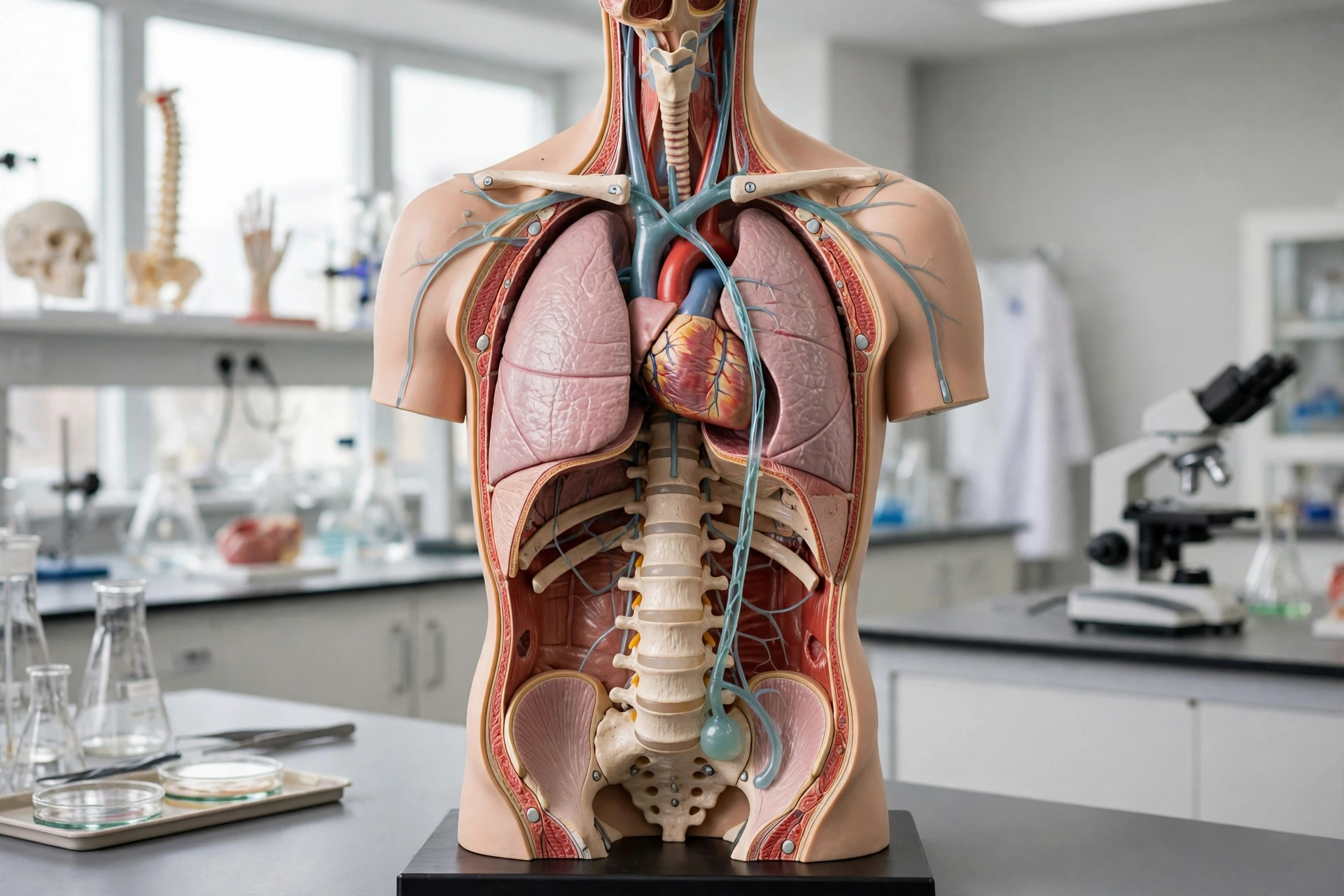
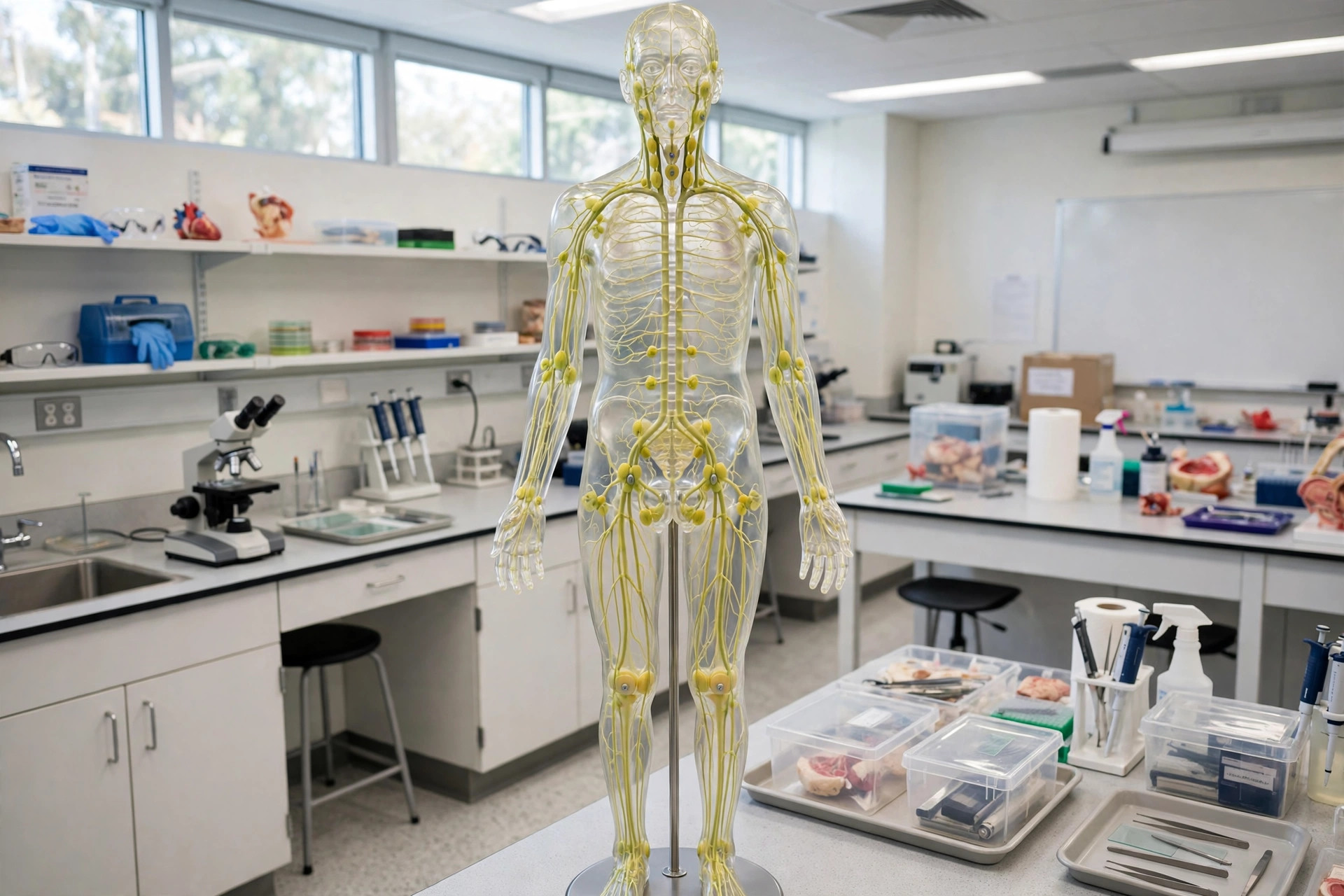
AI-generated anatomical illustration
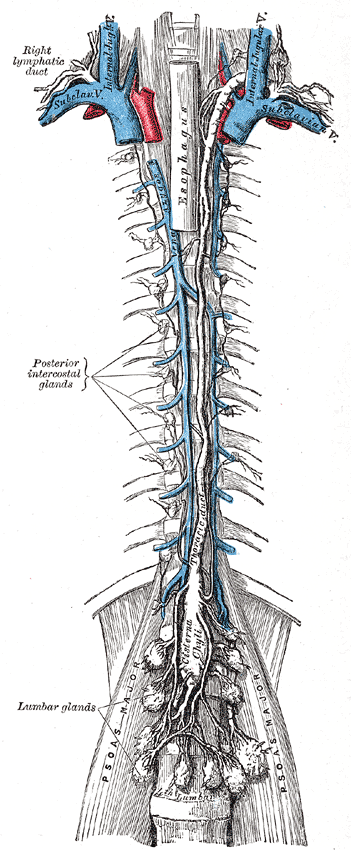
The thoracic duct is the body's largest lymphatic vessel, about 40 cm long, running from the abdomen up through the chest to drain into the junction of the left internal jugular and subclavian veins. It carries lymph from both legs, the abdomen, the left arm and the left side of the head, neck and chest — roughly three-quarters of the body's lymph — including the fat absorbed from the intestine, which gives its contents a milky appearance.
Key facts
- It begins as a sac (the cisterna chyli) in front of the upper lumbar spine.
- Its thin wall and beaded valves make it hard to see unless distended — a challenge in chest surgery.
- Flow through it rises after fatty meals because of the absorbed fat (chyle) from the gut.
- The smaller right lymphatic duct drains only the right upper quadrant of the body.
What can go wrong
The duct can be injured during neck or chest surgery, leaking chyle into the chest cavity (chylothorax) or neck, which may need dietary measures, drainage or repair. It can also be obstructed by tumours or enlarged nodes. Because it returns several litres of lymph a day, significant leaks deplete fluids, fats and immune cells quickly if not controlled.
Related procedures & tests
Related symptoms
Frequently asked questions
What is chyle?
The milky lymph from the intestine, rich in absorbed dietary fat (chylomicrons), that gives the thoracic duct's contents their creamy appearance after meals.
Why does the duct empty on the left?
Its embryonic development is asymmetric; the right side's drainage shrinks to a small duct serving only the right upper body, leaving the left-sided channel dominant.
Educational information only. This atlas explains normal anatomy and describes conditions in general terms; it is not medical advice and does not replace assessment by a qualified clinician. If you have symptoms that worry you, seek medical care.