- Physical Examination
- Surgical Examination
- Ophthalmology
- Clinical Skills
- Orthopedics
- Surgery Videos
- Laparoscopy
- Pediatrics
- Funny Videos
- Cardiothoracic Surgery
- Nursing Videos
- Plastic Surgery
- Otorhinolaryngology
- Histology and Histopathology
- Neurosurgery
- Dermatology
- Pediatric Surgery
- Urology
- Dentistry
- Oncology and Cancers
- Anatomy Videos
- Health and Fitness
- Radiology
- Anaesthesia
- Physical Therapy
- Pharmacology
- Interventional Radiology
- Cardiology
- Endocrinology
- Gynecology
- Emergency Medicine
- Psychiatry and Psychology
- Childbirth Videos
- General Medical Videos
- Nephrology
- Physiology
- Diet and Food Health
- Diabetes Mellitus
- Neurology
- Women Health
- Osteoporosis
- Gastroenterology
- Pulmonology
- Hematology
- Rheumatology
- Toxicology
- Nuclear Medicine
- Infectious Diseases
- Vascular Disease
- Reproductive Health
- Burns and Wound Healing
- Kidney Zone Podcast
- Other
Bone Marrow
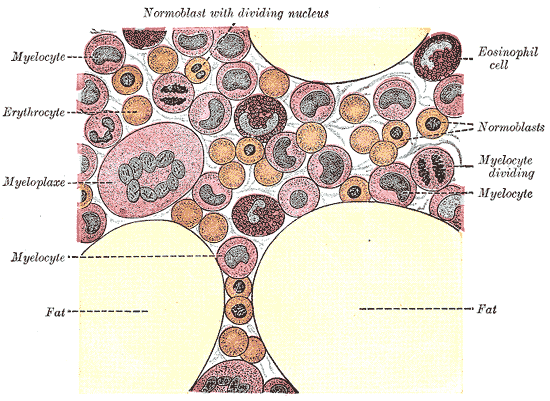
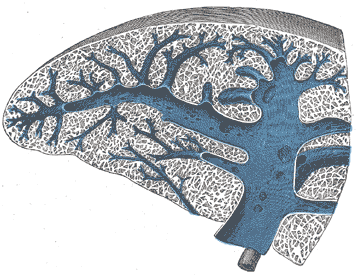
Gray's Anatomy (1918) plate, public domain
Bone marrow is the soft tissue inside bones where blood is made. Red marrow — filling the flat bones and the ends of long bones in adults — produces red cells, most white cells and platelets from stem cells, at a rate of hundreds of billions of cells a day. Yellow marrow is mostly fat. The marrow's B lymphocytes also mature there, making it a primary lymphoid organ as well as a blood factory.
Key facts
- Your marrow makes about 200 billion red cells and 100 billion white cells daily.
- In infants nearly all marrow is red; by adulthood it is confined mostly to the spine, pelvis, ribs, skull and sternum.
- Marrow stem cells can be harvested and transplanted to rebuild a blood system after high-dose chemotherapy.
- The sternum and pelvis are the usual biopsy sites because their marrow is accessible and representative.
What can go wrong
Marrow failure (aplastic anaemia) causes low counts of all cell lines; marrow infiltration by leukaemia, lymphoma or metastatic cancer crowds out normal production. Overproduction disorders (myeloproliferative neoplasms) cause excess red cells, white cells or platelets. A bone marrow biopsy examines the tissue directly when blood tests point to a marrow problem, and guides the diagnosis of blood cancers.
Related conditions
Related procedures & tests
Related symptoms
Watch: related videos
Frequently asked questions
What does a bone marrow biopsy involve?
Under local anaesthetic, a needle takes a fluid sample and a small core of marrow, usually from the back of the pelvis, for examination under the microscope and other tests.
Why do blood cancers affect the whole body?
Because malignant marrow cells circulate in the blood and infiltrate organs, and their overgrowth suppresses normal blood production, causing anaemia, infection risk and bleeding.
Educational information only. This atlas explains normal anatomy and describes conditions in general terms; it is not medical advice and does not replace assessment by a qualified clinician. If you have symptoms that worry you, seek medical care.