- Physical Examination
- Surgical Examination
- Ophthalmology
- Clinical Skills
- Orthopedics
- Surgery Videos
- Laparoscopy
- Pediatrics
- Funny Videos
- Cardiothoracic Surgery
- Nursing Videos
- Plastic Surgery
- Otorhinolaryngology
- Histology and Histopathology
- Neurosurgery
- Dermatology
- Pediatric Surgery
- Urology
- Dentistry
- Oncology and Cancers
- Anatomy Videos
- Health and Fitness
- Radiology
- Anaesthesia
- Physical Therapy
- Pharmacology
- Interventional Radiology
- Cardiology
- Endocrinology
- Gynecology
- Emergency Medicine
- Psychiatry and Psychology
- Childbirth Videos
- General Medical Videos
- Nephrology
- Physiology
- Diet and Food Health
- Diabetes Mellitus
- Neurology
- Women Health
- Osteoporosis
- Gastroenterology
- Pulmonology
- Hematology
- Rheumatology
- Toxicology
- Nuclear Medicine
- Infectious Diseases
- Vascular Disease
- Reproductive Health
- Burns and Wound Healing
- Kidney Zone Podcast
- Other
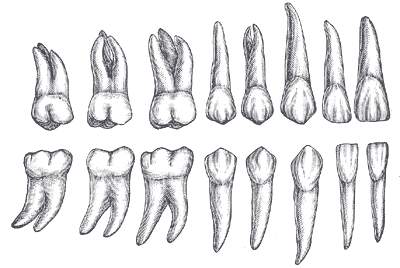
Teeth
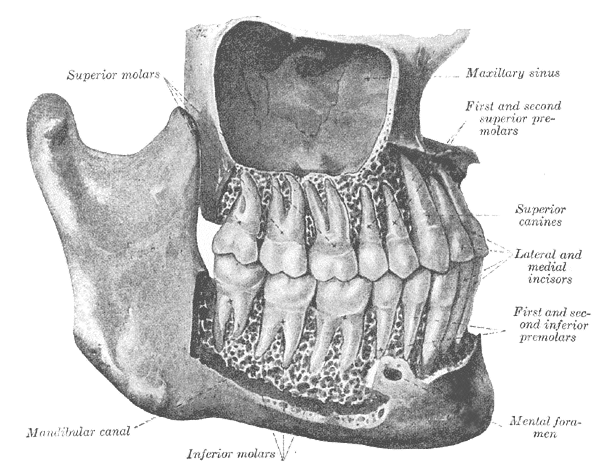
Gray's Anatomy (1918) plate, public domain
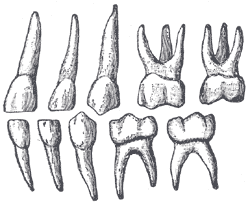
Teeth are the hardest structures in the body. Adults normally have 32 permanent teeth — incisors for cutting, canines for tearing, premolars and molars for crushing and grinding. Each tooth has a crown above the gum, roots anchored in the jaw, a hard enamel coat, dentine beneath, and a living pulp with nerves and vessels at its centre.
Key facts
- Enamel is the hardest substance in the human body.
- Adults have 32 permanent teeth; children have 20 primary (baby) teeth.
- Teeth are living structures — the pulp contains nerves and blood vessels.
- Roots are anchored by the periodontal ligament, which absorbs chewing forces.
- Teeth are not bones, though they are often grouped with the skeleton in teaching.
What can go wrong
Tooth decay (caries) is the commonest tooth problem: bacteria in plaque produce acid that erodes enamel. Gum disease affects the supporting tissues rather than the tooth itself. Teeth can crack or be knocked out in injuries — a knocked-out permanent tooth has the best chance if it is replaced quickly, so it needs urgent dental care.
Related symptoms
Frequently asked questions
Are teeth bones?
No. Teeth look and feel bone-like, but they are built differently: enamel and dentine have no living cells once formed, teeth cannot repair or remodel themselves like bone, and they sit in sockets rather than growing as part of the jaw.
How many sets of teeth do humans get?
Two: 20 primary (baby) teeth that appear in the first three years, and the permanent set of up to 32 that replaces them from about age 6 into the early twenties.
Educational information only. This atlas explains normal anatomy and describes conditions in general terms; it is not medical advice and does not replace assessment by a qualified clinician. If you have symptoms that worry you, seek medical care.