- Physical Examination
- Surgical Examination
- Ophthalmology
- Clinical Skills
- Orthopedics
- Surgery Videos
- Laparoscopy
- Pediatrics
- Funny Videos
- Cardiothoracic Surgery
- Nursing Videos
- Plastic Surgery
- Otorhinolaryngology
- Histology and Histopathology
- Neurosurgery
- Dermatology
- Pediatric Surgery
- Urology
- Dentistry
- Oncology and Cancers
- Anatomy Videos
- Health and Fitness
- Radiology
- Anaesthesia
- Physical Therapy
- Pharmacology
- Interventional Radiology
- Cardiology
- Endocrinology
- Gynecology
- Emergency Medicine
- Psychiatry and Psychology
- Childbirth Videos
- General Medical Videos
- Nephrology
- Physiology
- Diet and Food Health
- Diabetes Mellitus
- Neurology
- Women Health
- Osteoporosis
- Gastroenterology
- Pulmonology
- Hematology
- Rheumatology
- Toxicology
- Nuclear Medicine
- Infectious Diseases
- Vascular Disease
- Reproductive Health
- Burns and Wound Healing
- Kidney Zone Podcast
- Other
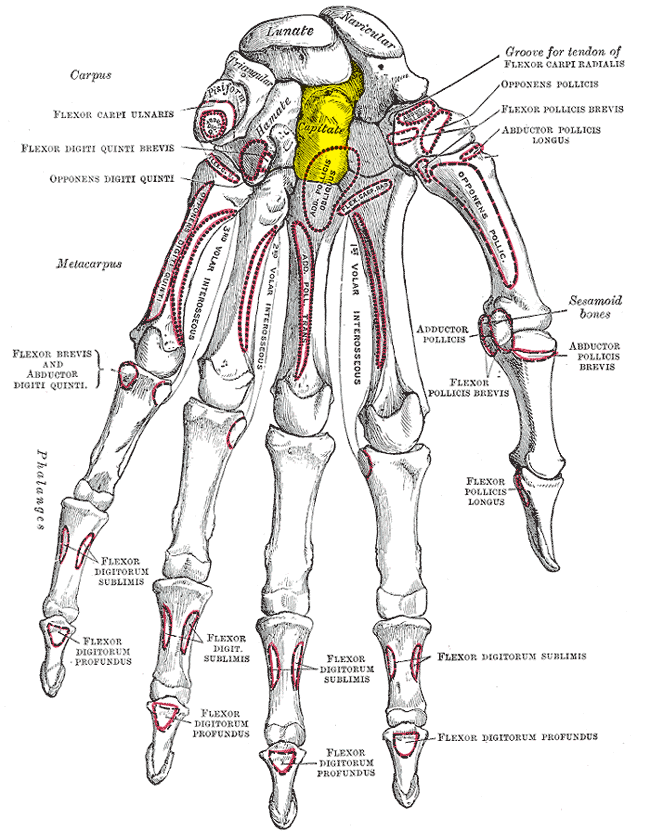
Third Metacarpal
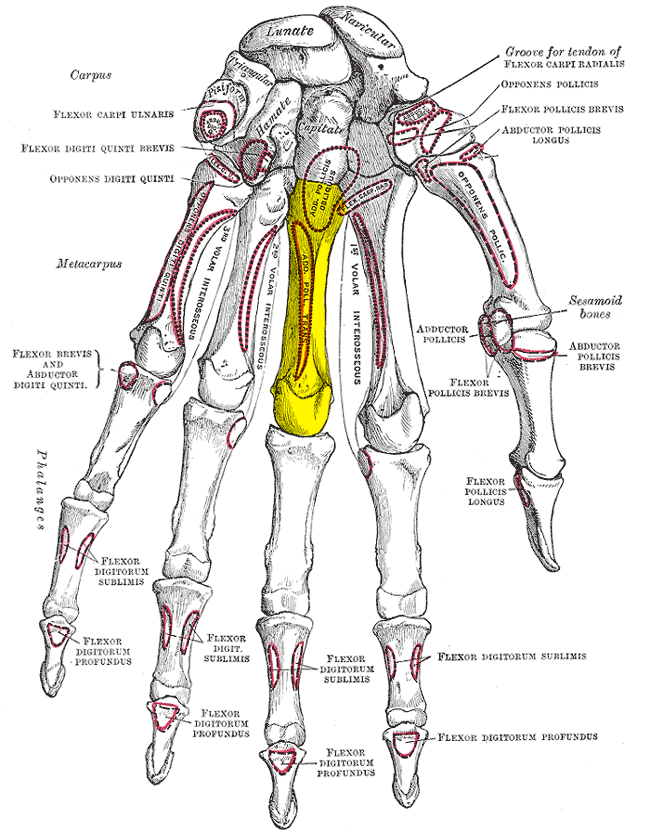
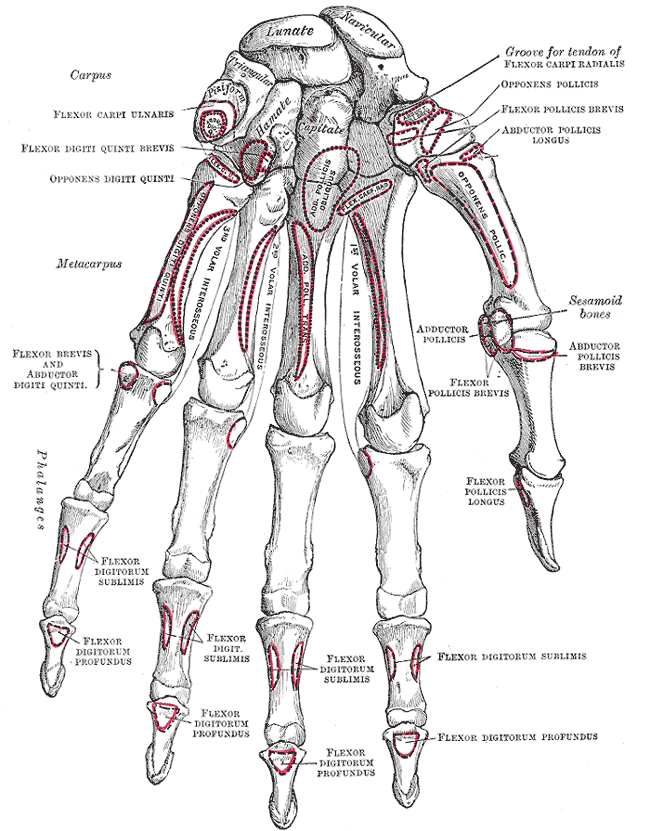
Gray's Anatomy (1918) plate, public domain
The third metacarpal is the middle finger's palm bone, and the central axis of the hand passes through it and the capitate behind it. A small spike (the styloid process) on its base is a distinguishing feature. Fractures of the middle metacarpals are checked carefully for rotational deformity, which shows as finger crossover in a fist.
Key facts
- It lies on the hand's central longitudinal axis.
- It is firmly fixed to the capitate bone of the wrist.
- A small styloid process marks its base on the thumb side.
- Its head is the middle knuckle — the highest point of a fist.
- The adductor pollicis muscle originates partly from its shaft.
What can go wrong
Third metacarpal fractures usually come from direct blows or axial loads through a fist. Because the ray is rigid, shortening or rotation is poorly tolerated: healed rotation shows as the middle finger overlapping a neighbour when gripping.
Related procedures & tests
Related symptoms
Related muscles
Frequently asked questions
Why is the third metacarpal the hand's axis?
It is the most firmly fixed metacarpal, in line with the capitate and the forearm. Movements of the other digits are organised around this stable centre line.
How is rotation checked after a metacarpal fracture?
The patient makes a gentle fist: all fingers should point towards the scaphoid tubercle at the wrist in parallel, without crossing over each other.
Educational information only. This atlas explains normal anatomy and describes conditions in general terms; it is not medical advice and does not replace assessment by a qualified clinician. If you have symptoms that worry you, seek medical care.