- Physical Examination
- Surgical Examination
- Ophthalmology
- Clinical Skills
- Orthopedics
- Surgery Videos
- Laparoscopy
- Pediatrics
- Funny Videos
- Cardiothoracic Surgery
- Nursing Videos
- Plastic Surgery
- Otorhinolaryngology
- Histology and Histopathology
- Neurosurgery
- Dermatology
- Pediatric Surgery
- Urology
- Dentistry
- Oncology and Cancers
- Anatomy Videos
- Health and Fitness
- Radiology
- Anaesthesia
- Physical Therapy
- Pharmacology
- Interventional Radiology
- Cardiology
- Endocrinology
- Gynecology
- Emergency Medicine
- Psychiatry and Psychology
- Childbirth Videos
- General Medical Videos
- Nephrology
- Physiology
- Diet and Food Health
- Diabetes Mellitus
- Neurology
- Women Health
- Osteoporosis
- Gastroenterology
- Pulmonology
- Hematology
- Rheumatology
- Toxicology
- Nuclear Medicine
- Infectious Diseases
- Vascular Disease
- Reproductive Health
- Burns and Wound Healing
- Kidney Zone Podcast
- Other
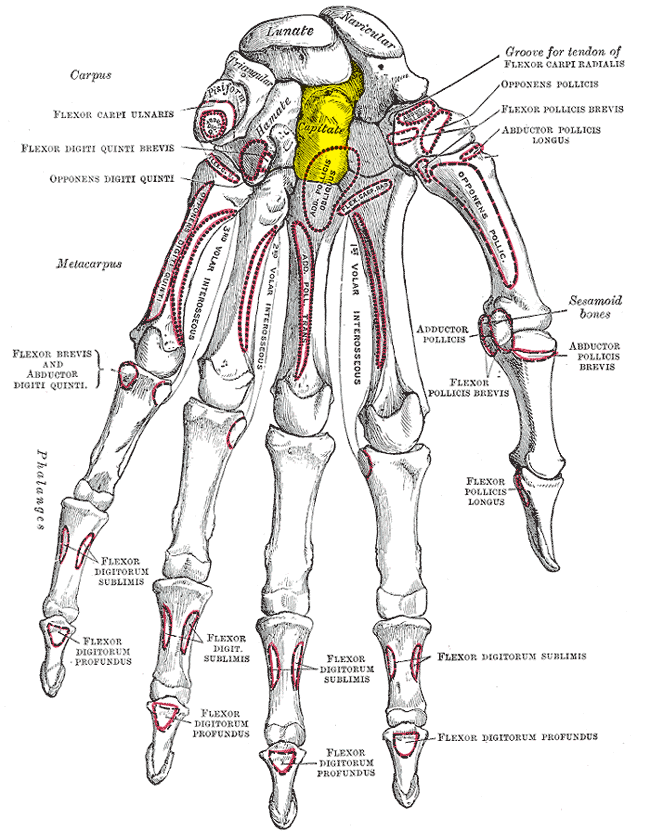
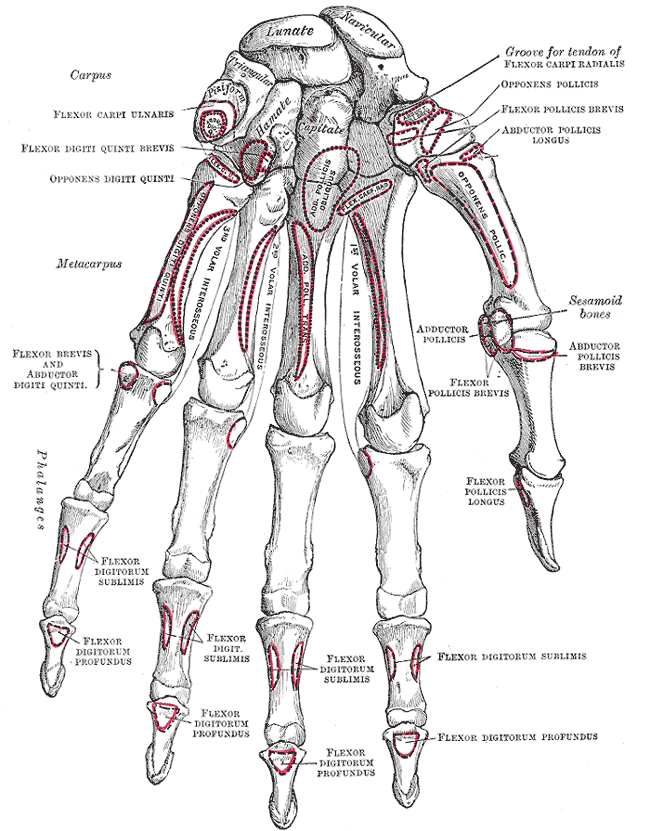
Trapezium
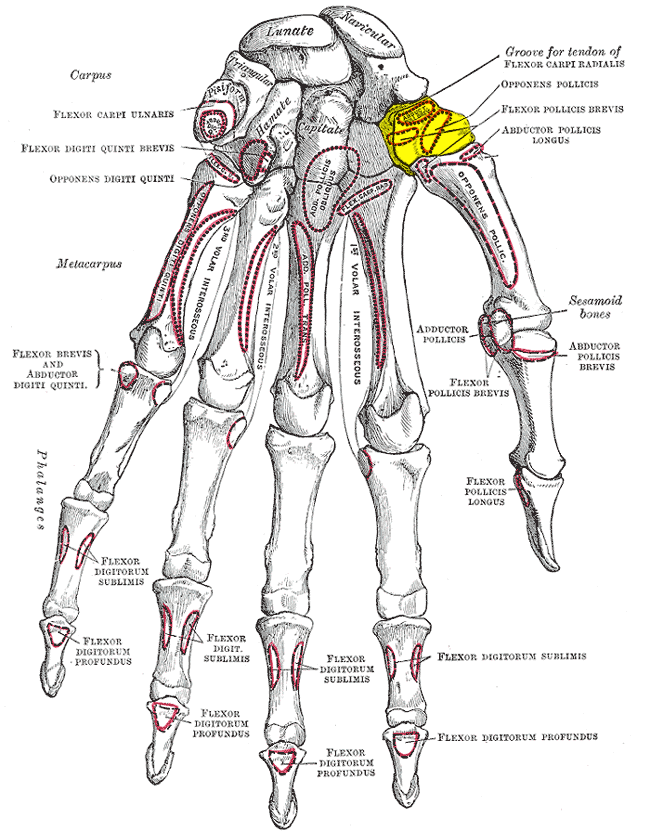
Gray's Anatomy (1918) plate, public domain
The trapezium is the four-sided carpal bone at the base of the thumb. Its saddle-shaped joint with the first metacarpal is the joint that gives the thumb its remarkable versatility — opposition, the movement that lets us grip and pinch. It also meets the scaphoid and the second metacarpal.
Key facts
- The trapezium forms the thumb's saddle joint, the key to opposition.
- It is named for its irregular four-sided shape.
- It sits directly under the thumb's metacarpal.
- Its groove helps hold the wrist flexor tendon and forms part of the carpal tunnel wall.
- Thumb-base arthritis develops at its joint more than anywhere else in the hand.
What can go wrong
Osteoarthritis of the trapezium–metacarpal (thumb base) joint is extremely common, particularly in women after midlife, causing aching at the thumb base, weak pinch and sometimes a visible bump. It is usually managed with splints, exercises and pain relief; surgery is an option for severe cases.
Related procedures & tests
Related symptoms
Related muscles
Frequently asked questions
What makes the thumb joint a 'saddle' joint?
Both surfaces are curved like a riding saddle — concave in one direction, convex in the other — so they rock in two planes. That two-way movement, combined with rotation, is what opposition is.
Why is thumb-base arthritis so common?
Pinching multiplies force at this small joint — the load at the thumb tip is amplified many times over at its base — so a lifetime of gripping wears its cartilage faster than in most joints.
Educational information only. This atlas explains normal anatomy and describes conditions in general terms; it is not medical advice and does not replace assessment by a qualified clinician. If you have symptoms that worry you, seek medical care.