- Physical Examination
- Surgical Examination
- Ophthalmology
- Clinical Skills
- Orthopedics
- Surgery Videos
- Laparoscopy
- Pediatrics
- Funny Videos
- Cardiothoracic Surgery
- Nursing Videos
- Plastic Surgery
- Otorhinolaryngology
- Histology and Histopathology
- Neurosurgery
- Dermatology
- Pediatric Surgery
- Urology
- Dentistry
- Oncology and Cancers
- Anatomy Videos
- Health and Fitness
- Radiology
- Anaesthesia
- Physical Therapy
- Pharmacology
- Interventional Radiology
- Cardiology
- Endocrinology
- Gynecology
- Emergency Medicine
- Psychiatry and Psychology
- Childbirth Videos
- General Medical Videos
- Nephrology
- Physiology
- Diet and Food Health
- Diabetes Mellitus
- Neurology
- Women Health
- Osteoporosis
- Gastroenterology
- Pulmonology
- Hematology
- Rheumatology
- Toxicology
- Nuclear Medicine
- Infectious Diseases
- Vascular Disease
- Reproductive Health
- Burns and Wound Healing
- Kidney Zone Podcast
- Other
Trapezoid
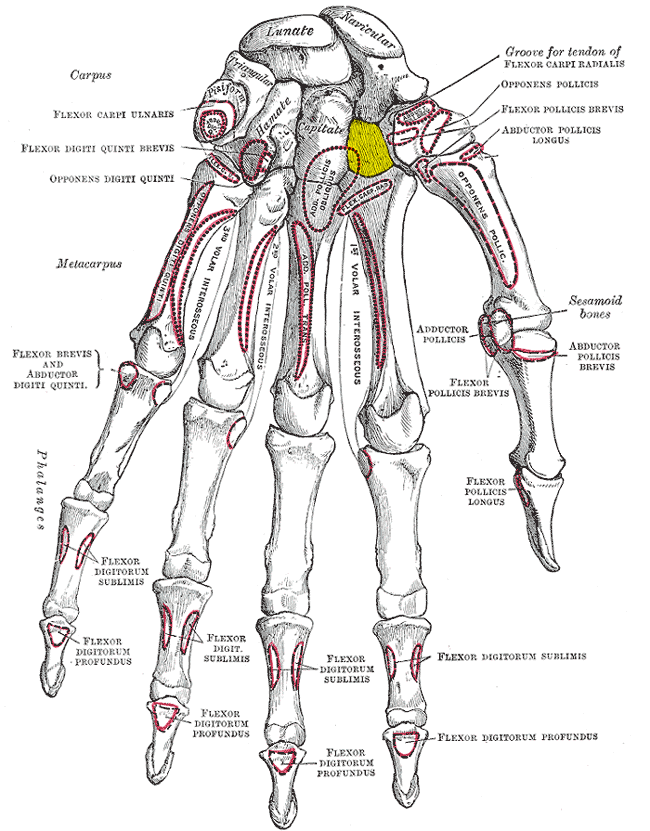
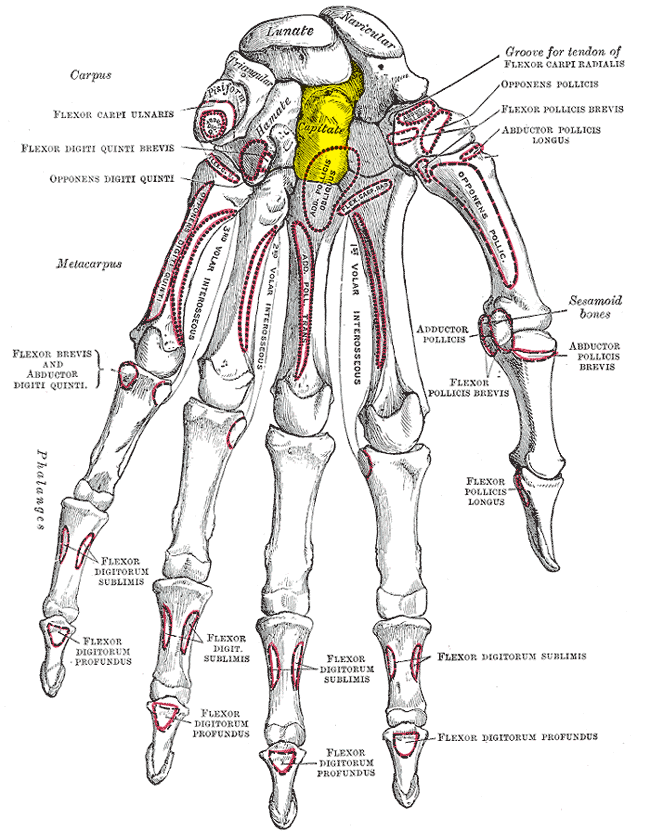
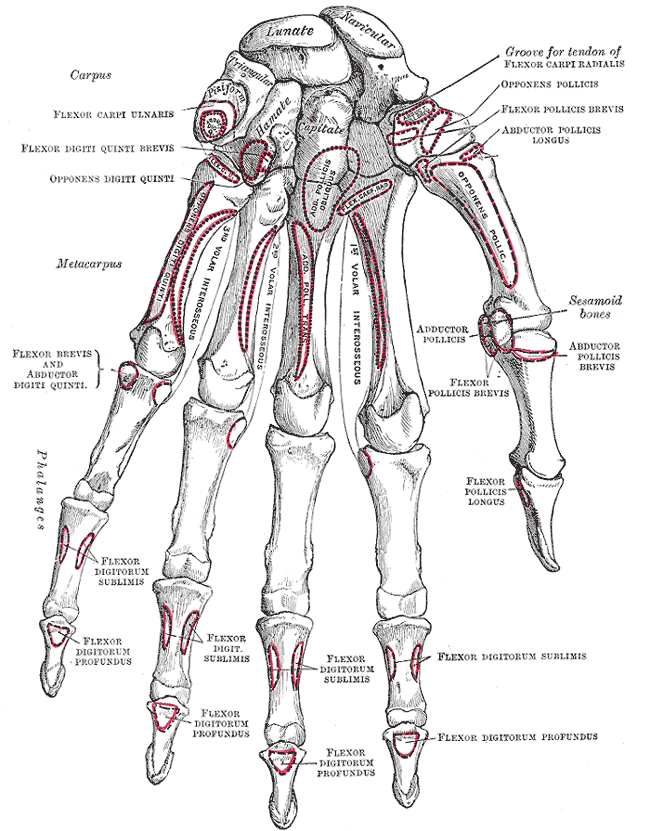
Gray's Anatomy (1918) plate, public domain
The trapezoid is the small, wedge-shaped carpal bone in the far row of the wrist, sitting firmly at the base of the index finger's metacarpal. Tightly bound by ligaments on all sides, it is one of the most stable — and least often injured — bones of the wrist.
Key facts
- The trapezoid is the smallest bone of the wrist's far row.
- It forms the stable base of the index-finger ray.
- It is wedged tightly between trapezium, capitate, scaphoid and the second metacarpal.
- Fractures of it are rare because it is so well protected.
- Its stability helps keep the index side of the hand rigid for pinch grip.
What can go wrong
Because the trapezoid is so well protected and tightly bound, it is seldom injured on its own; damage usually comes as part of a larger wrist or hand injury. Arthritis isolated to the trapezoid is also uncommon.
Related procedures & tests
Related symptoms
Frequently asked questions
Why is the index side of the hand so stiff?
Unlike the thumb and little-finger sides, which are built to move, the index and middle rays are designed as a fixed central column for the hand to grip around — the tightly wedged trapezoid is part of that design.
Can the trapezoid break?
Almost never on its own: fractures usually occur with dislocations or crush injuries of the whole wrist, and they are identified on CT scans taken for the bigger injury.
Educational information only. This atlas explains normal anatomy and describes conditions in general terms; it is not medical advice and does not replace assessment by a qualified clinician. If you have symptoms that worry you, seek medical care.