- Physical Examination
- Surgical Examination
- Ophthalmology
- Clinical Skills
- Orthopedics
- Surgery Videos
- Laparoscopy
- Pediatrics
- Funny Videos
- Cardiothoracic Surgery
- Nursing Videos
- Plastic Surgery
- Otorhinolaryngology
- Histology and Histopathology
- Neurosurgery
- Dermatology
- Pediatric Surgery
- Urology
- Dentistry
- Oncology and Cancers
- Anatomy Videos
- Health and Fitness
- Radiology
- Anaesthesia
- Physical Therapy
- Pharmacology
- Interventional Radiology
- Cardiology
- Endocrinology
- Gynecology
- Emergency Medicine
- Psychiatry and Psychology
- Childbirth Videos
- General Medical Videos
- Nephrology
- Physiology
- Diet and Food Health
- Diabetes Mellitus
- Neurology
- Women Health
- Osteoporosis
- Gastroenterology
- Pulmonology
- Hematology
- Rheumatology
- Toxicology
- Nuclear Medicine
- Infectious Diseases
- Vascular Disease
- Reproductive Health
- Burns and Wound Healing
- Kidney Zone Podcast
- Other
Trigeminal Nerve
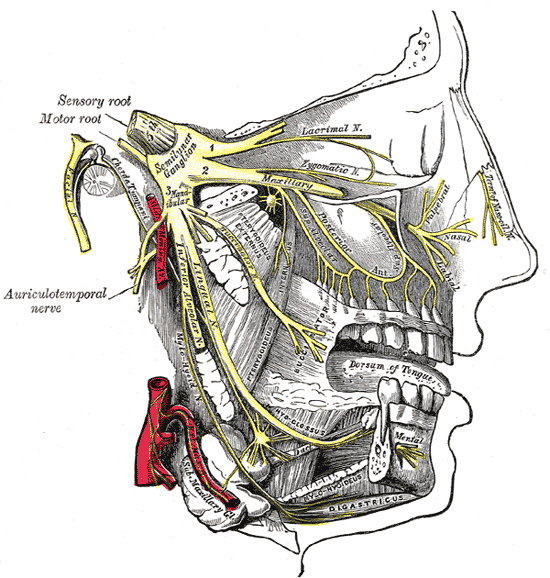
Gray's Anatomy (1918) plate, public domain
The trigeminal nerve (cranial nerve V) is the main sensory nerve of the face and the motor nerve of chewing. It divides into three great branches: ophthalmic (forehead and eye), maxillary (cheek and upper teeth) and mandibular (lower face, lower teeth and the chewing muscles). It is the largest cranial nerve, with a ganglion sitting in a cave of the temporal bone.
Key facts
- Its three divisions are named V1 (ophthalmic), V2 (maxillary) and V3 (mandibular).
- It carries touch, pain and temperature from the whole face.
- Its motor part supplies the muscles of chewing.
- It also supplies sensation to the front two-thirds of the tongue (taste travels elsewhere).
- Shingles can affect its divisions, especially the ophthalmic one.
What can go wrong
Trigeminal neuralgia — brief, electric-shock pains in the cheek or jaw, often triggered by touch, chewing or cold air — is the nerve's best-known disorder. The face can also lose sensation from injury or dental procedures, and shingles in the ophthalmic division can threaten the eye.
Related symptoms
Related muscles
Frequently asked questions
Why is trigeminal neuralgia pain so distinctive?
It comes in paroxysms — seconds-long bursts like electric shocks in one division of the nerve, with pain-free gaps — rather than the steady ache of toothache, which is how clinicians distinguish them.
Do dentists numb this nerve?
Yes — dental local anaesthesia targets branches of the trigeminal: the inferior alveolar nerve (V3) for lower teeth and the upper dental nerves (V2) for upper teeth.
Educational information only. This atlas explains normal anatomy and describes conditions in general terms; it is not medical advice and does not replace assessment by a qualified clinician. If you have symptoms that worry you, seek medical care.