- Physical Examination
- Surgical Examination
- Ophthalmology
- Clinical Skills
- Orthopedics
- Surgery Videos
- Laparoscopy
- Pediatrics
- Funny Videos
- Cardiothoracic Surgery
- Nursing Videos
- Plastic Surgery
- Otorhinolaryngology
- Histology and Histopathology
- Neurosurgery
- Dermatology
- Pediatric Surgery
- Urology
- Dentistry
- Oncology and Cancers
- Anatomy Videos
- Health and Fitness
- Radiology
- Anaesthesia
- Physical Therapy
- Pharmacology
- Interventional Radiology
- Cardiology
- Endocrinology
- Gynecology
- Emergency Medicine
- Psychiatry and Psychology
- Childbirth Videos
- General Medical Videos
- Nephrology
- Physiology
- Diet and Food Health
- Diabetes Mellitus
- Neurology
- Women Health
- Osteoporosis
- Gastroenterology
- Pulmonology
- Hematology
- Rheumatology
- Toxicology
- Nuclear Medicine
- Infectious Diseases
- Vascular Disease
- Reproductive Health
- Burns and Wound Healing
- Kidney Zone Podcast
- Other
Trochlear Nerve
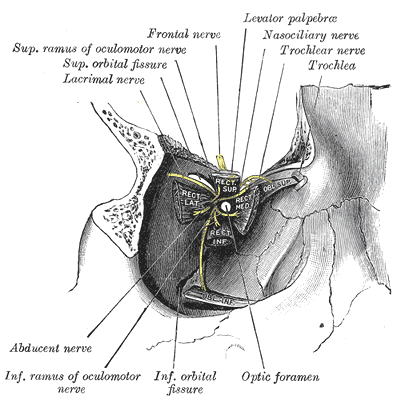
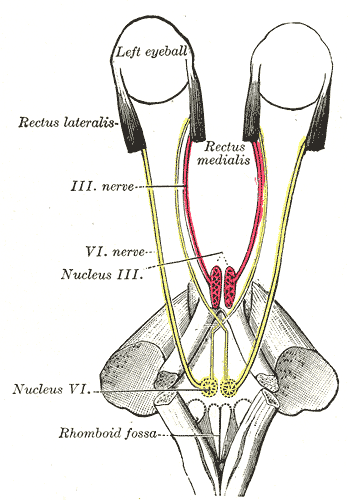
Gray's Anatomy (1918) plate, public domain
The trochlear nerve (cranial nerve IV) supplies just one muscle: the superior oblique, whose tendon loops through a fibrous pulley (the trochlea) at the top inner corner of the eye socket. The muscle turns the eye downwards and inwards. The nerve is the thinnest cranial nerve and has the longest path inside the skull, winding around the brainstem.
Key facts
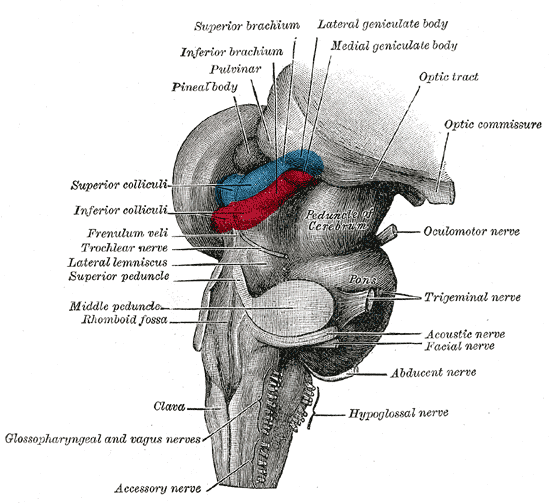
- It is the only nerve to leave the back of the brainstem.
- It supplies a single muscle — the superior oblique.
- It has the longest intracranial course of any cranial nerve.
- Its muscle's pulley gives the nerve its name (trochlea = pulley).
- It helps the eyes tilt to keep images level when the head tilts.
What can go wrong
Fourth nerve palsy causes vertical double vision, worst when looking down and in — reading and descending stairs become difficult — and people often tilt their heads away from the affected side to compensate. It can be congenital (decompensating in later life) or follow head injury, which the nerve's long course makes it vulnerable to.
Related symptoms
Frequently asked questions
Why do people with a fourth nerve palsy tilt their head?
Tilting away from the affected side reduces the eye-torsion the weak muscle must produce, bringing the two images back into line without effort.
Which movement tests the superior oblique?
Looking down while the eye is turned inwards — for example reading the opposite bottom corner of a page. That is the position where the superior oblique does most of the work.
Educational information only. This atlas explains normal anatomy and describes conditions in general terms; it is not medical advice and does not replace assessment by a qualified clinician. If you have symptoms that worry you, seek medical care.