- Physical Examination
- Surgical Examination
- Ophthalmology
- Clinical Skills
- Orthopedics
- Surgery Videos
- Laparoscopy
- Pediatrics
- Funny Videos
- Cardiothoracic Surgery
- Nursing Videos
- Plastic Surgery
- Otorhinolaryngology
- Histology and Histopathology
- Neurosurgery
- Dermatology
- Pediatric Surgery
- Urology
- Dentistry
- Oncology and Cancers
- Anatomy Videos
- Health and Fitness
- Radiology
- Anaesthesia
- Physical Therapy
- Pharmacology
- Interventional Radiology
- Cardiology
- Endocrinology
- Gynecology
- Emergency Medicine
- Psychiatry and Psychology
- Childbirth Videos
- General Medical Videos
- Nephrology
- Physiology
- Diet and Food Health
- Diabetes Mellitus
- Neurology
- Women Health
- Osteoporosis
- Gastroenterology
- Pulmonology
- Hematology
- Rheumatology
- Toxicology
- Nuclear Medicine
- Infectious Diseases
- Vascular Disease
- Reproductive Health
- Burns and Wound Healing
- Kidney Zone Podcast
- Other
Vagus Nerve
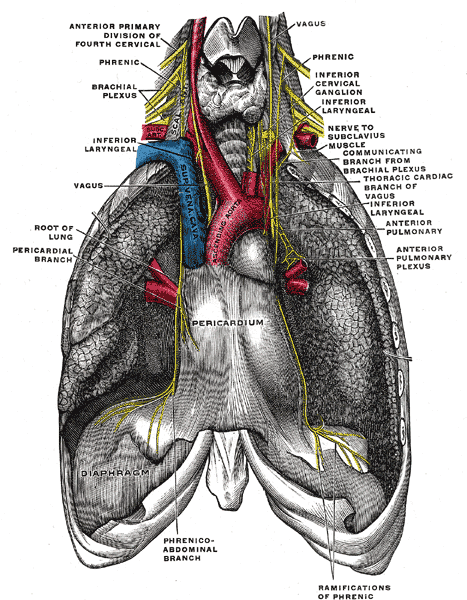
Gray's Anatomy (1918) plate, public domain
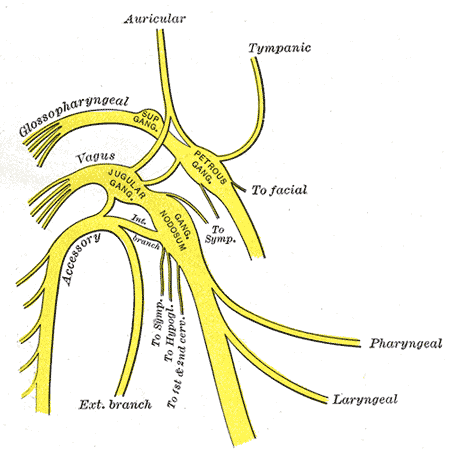
The vagus nerve (cranial nerve X) is the great wanderer — vagus means 'wandering' in Latin. From the brainstem it descends through the neck, chest and abdomen, supplying the voice box, and carrying the parasympathetic ('rest and digest') control to the heart, lungs and most of the gut, as far as the colon. It also serves swallowing and the cough reflex.
Key facts
- It is the longest cranial nerve, reaching from brainstem to abdomen.
- About 80% of its fibres are sensory, reporting from the organs to the brain.
- Its recurrent laryngeal branch loops under the aorta on the left — a long detour to the voice box.
- It slows the heart and stimulates digestion (parasympathetic functions).
- It is the nerve stimulated in vagus nerve stimulation therapy for epilepsy and depression.
What can go wrong
A hoarse voice can follow injury to its recurrent laryngeal branch during thyroid or chest surgery. Excess vagal activity causes the common faint (vasovagal syncope), with slowing of the heart and a drop in blood pressure. Disorders of vagal gut control contribute to gastroparesis, where the stomach empties slowly.
Related procedures & tests
Related symptoms
Frequently asked questions
Why does the left voice-box nerve loop down into the chest?
Embryology: the nerve originally supplied a gill arch whose artery migrated down into the chest as the neck lengthened, dragging the nerve with it. The right nerve loops around a smaller artery in the root of the neck instead.
What happens in a vasovagal faint?
Triggers such as pain, fear or standing too long cause a vagal surge: heart rate falls and blood vessels relax, blood pressure drops, the brain briefly gets too little blood and the person faints — usually recovering quickly when lying flat.
Educational information only. This atlas explains normal anatomy and describes conditions in general terms; it is not medical advice and does not replace assessment by a qualified clinician. If you have symptoms that worry you, seek medical care.