
- Physical Examination
- Surgical Examination
- Ophthalmology
- Clinical Skills
- Orthopedics
- Surgery Videos
- Laparoscopy
- Pediatrics
- Funny Videos
- Cardiothoracic Surgery
- Nursing Videos
- Plastic Surgery
- Otorhinolaryngology
- Histology and Histopathology
- Neurosurgery
- Dermatology
- Pediatric Surgery
- Urology
- Dentistry
- Oncology and Cancers
- Anatomy Videos
- Health and Fitness
- Radiology
- Anaesthesia
- Physical Therapy
- Pharmacology
- Interventional Radiology
- Cardiology
- Endocrinology
- Gynecology
- Emergency Medicine
- Psychiatry and Psychology
- Childbirth Videos
- General Medical Videos
- Nephrology
- Physiology
- Diet and Food Health
- Diabetes Mellitus
- Neurology
- Women Health
- Osteoporosis
- Gastroenterology
- Pulmonology
- Hematology
- Rheumatology
- Toxicology
- Nuclear Medicine
- Infectious Diseases
- Vascular Disease
- Reproductive Health
- Burns and Wound Healing
- Kidney Zone Podcast
- Other
Pulmonary Embolism
A pulmonary embolism is a blockage in an artery of the lungs, usually caused by a blood clot that has travelled from a leg vein. This page explains its symptoms, causes, and treatment in plain language, with videos to help you follow the key points.
✓ Medically reviewed by Dr. Mohamed Ibrahim, MD, PhD — physician-scientist · Last reviewed: November 2026
In short: A pulmonary embolism is a medical emergency. It typically causes sudden breathlessness, chest pain that worsens with breathing in, and a fast heartbeat. Treatment with blood-thinning medicine starts quickly once diagnosed, and prompt care greatly improves outcomes.
Watch: Pulmonary Embolism videos


Read: the plain-language guide
Overview
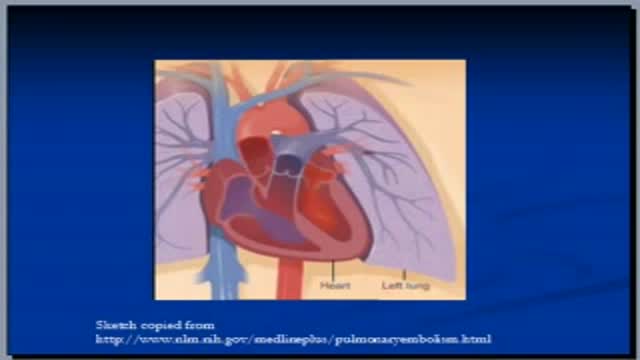
Blood returning from the body passes through the lungs, where it picks up oxygen. A pulmonary embolism occurs when a clot, most often formed in a deep vein of the leg, breaks off, travels through the heart, and lodges in a lung artery. The blockage strains the heart and reduces oxygen transfer. A small clot may cause mild symptoms, while a large one can be life-threatening within hours. This is why sudden unexplained breathlessness is always treated seriously until an embolism is excluded.
Symptoms
The hallmark symptoms are sudden breathlessness and sharp chest pain that is worse when breathing in or coughing. The heart often beats fast, and people may feel light-headed, anxious, or faint. Some cough up blood-streaked mucus. Signs of the source clot may be present: one leg swollen, painful, warm, or red. Symptoms can be subtler in older people or those with existing heart or lung disease, sometimes amounting to unexplained worsening breathlessness or a racing pulse.
Causes & risk factors
Clots form when blood flow slows, the blood becomes more prone to clotting, or a vein wall is injured. Long immobility is a major factor: bed rest, hospital stays, plaster casts, and long journeys. Surgery, especially to the hip, knee, or abdomen, raises risk, as do cancer, pregnancy, and the weeks after childbirth. Hormone treatments, inherited clotting tendencies, obesity, smoking, and previous clots also contribute. Often several factors combine, and occasionally no clear trigger is found.
How it's diagnosed
Clinicians assess the symptoms, examination findings, and individual risk factors to judge how likely an embolism is. A blood test called D-dimer can help rule it out in lower-risk people. The key test is a CT scan of the chest with contrast dye, which shows clots in the lung arteries directly. Ultrasound of the legs may find the source clot, and heart scans and blood tests show whether the heart is strained. Because the condition is dangerous, treatment sometimes starts before scanning when suspicion is high.
Treatment overview
The main treatment is anticoagulant medicine, which stops the clot growing and lets the body dissolve it gradually while preventing new clots. It is given by injection or tablets and usually continues for at least several months; some people need it long term. Large, life-threatening clots may be treated with clot-dissolving medicine or procedures to remove or break up the clot. Oxygen and hospital monitoring support people whose heart or oxygen levels are affected. The underlying cause is reviewed to guide duration.
When to seek care
Call emergency services immediately for sudden breathlessness, chest pain on breathing in, coughing blood, or fainting. Do not drive yourself. A newly swollen, painful leg alongside any breathing symptoms also needs emergency assessment the same day, even if the breathing symptoms seem mild at first.
Frequently asked questions
Can a pulmonary embolism be prevented?
Staying mobile during long journeys, moving the ankles regularly, and following advice about stockings or blood-thinning injections after surgery all reduce risk. Treating a leg clot promptly also prevents it travelling. People at high risk may be given preventive treatment in hospital.
How long do blood thinners continue after a pulmonary embolism?
Treatment usually lasts at least several months. It may continue indefinitely when a clot had no clear trigger, when clots recur, or when an ongoing risk factor remains. The balance between clotting and bleeding risk is reviewed individually at follow-up.
Can you recover fully from a pulmonary embolism?
Most people recover well, especially with prompt treatment, and breathlessness settles as the clot dissolves over weeks to months. A minority have lasting breathlessness from scarred lung arteries or heart strain, which is why follow-up after a large embolism matters.
What does the chest pain of a pulmonary embolism feel like?
It is typically sharp and stabbing, located in one area of the chest, and characteristically worse when taking a deep breath or coughing. It differs from the heavy, central pressure of a heart attack, although any severe chest pain needs emergency assessment.
More in Lungs & Breathing
Related topics on MedicalVideos.com
Sources & further reading
Authoritative references for readers who want to go deeper:
- MedlinePlus: Pulmonary Embolism
- NHS: Pulmonary embolism
- CDC: About Venous Thromboembolism (CDC)
This page is for general education only and is not medical advice. Sudden breathlessness or chest pain on breathing in may be a pulmonary embolism and needs emergency services, not a routine appointment.