
- Physical Examination
- Surgical Examination
- Ophthalmology
- Clinical Skills
- Orthopedics
- Surgery Videos
- Laparoscopy
- Pediatrics
- Funny Videos
- Cardiothoracic Surgery
- Nursing Videos
- Plastic Surgery
- Otorhinolaryngology
- Histology and Histopathology
- Neurosurgery
- Dermatology
- Pediatric Surgery
- Urology
- Dentistry
- Oncology and Cancers
- Anatomy Videos
- Health and Fitness
- Radiology
- Anaesthesia
- Physical Therapy
- Pharmacology
- Interventional Radiology
- Cardiology
- Endocrinology
- Gynecology
- Emergency Medicine
- Psychiatry and Psychology
- Childbirth Videos
- General Medical Videos
- Nephrology
- Physiology
- Diet and Food Health
- Diabetes Mellitus
- Neurology
- Women Health
- Osteoporosis
- Gastroenterology
- Pulmonology
- Hematology
- Rheumatology
- Toxicology
- Nuclear Medicine
- Infectious Diseases
- Vascular Disease
- Reproductive Health
- Burns and Wound Healing
- Kidney Zone Podcast
- Other
Scoliosis
Scoliosis is a sideways curvature of the spine that also involves rotation of the spinal bones, most often noticed during childhood or the teenage growth years. This page explains its symptoms, causes, and treatment in plain language, with videos to help.
✓ Medically reviewed by Dr. Mohamed Ibrahim, MD, PhD — physician-scientist · Last reviewed: November 2026
In short: In scoliosis, the spine curves sideways instead of running straight down the back. Many curves are mild and only need monitoring while a child grows. Larger or progressing curves may need a brace, and the most severe curves may need surgery.
Watch: Scoliosis videos
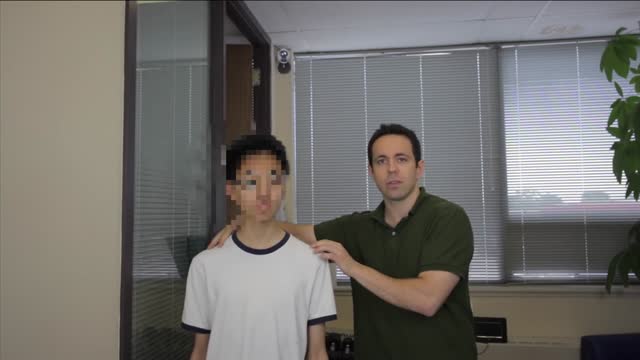
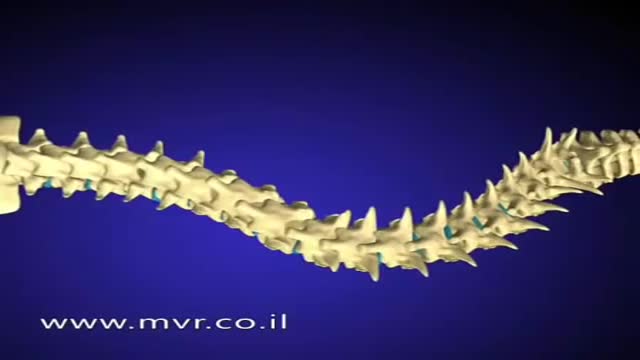
Read: the plain-language guide
Overview
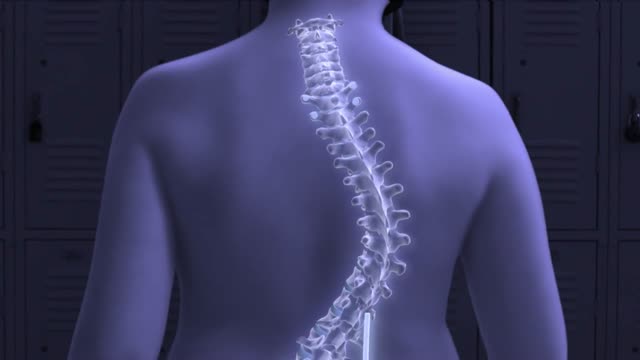
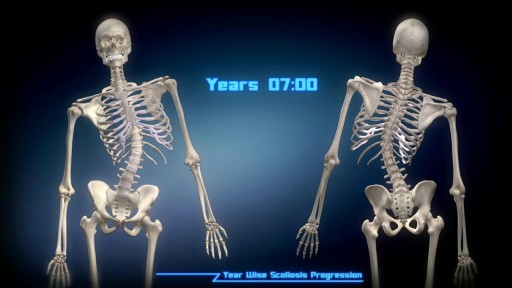
Viewed from behind, a typical spine appears straight, but in scoliosis it curves to one side, often in an S or C shape, and the vertebrae twist slightly as well. The curve can sit in the upper or lower back. Mild curves are common and may never need treatment beyond observation. During growth spurts, some curves progress and can change posture, shoulder and hip level, and how the ribcage sits. Severe untreated curves can eventually reduce space for the lungs, which is why monitoring matters.
Symptoms
Scoliosis often causes no pain or symptoms in children and teenagers, and it is frequently spotted by a parent, teacher, or clinician noticing uneven shoulders, one shoulder blade sticking out, an uneven waist, or hips at different heights. Clothes may hang unevenly. When the person bends forward, one side of the back may appear higher because of the rotation. Adults with scoliosis may develop back pain, stiffness, and fatigue from muscle imbalance, and curves linked with age related wear can also cause leg pain from nerve pressure.
Causes & risk factors
Most childhood and teenage cases have no identifiable cause and are called idiopathic; they tend to run in families and appear during rapid growth. Other cases result from conditions present at birth affecting how vertebrae form, or from nerve and muscle conditions such as cerebral palsy or muscular dystrophy that weaken the support around the spine. In adults, scoliosis can develop gradually from uneven wear and degeneration of spinal discs and joints with aging. Poor posture, leg length difference, and carrying heavy bags do not cause structural scoliosis.
How it's diagnosed
A clinician examines the back standing and bending forward, checks shoulder, waist, and hip symmetry, and assesses nerves, reflexes, and leg strength. Standing X rays of the whole spine confirm the curve and allow its angle to be measured, which guides decisions about monitoring, bracing, or referral. In growing children, assessment of remaining growth helps predict progression risk. Further imaging, such as magnetic resonance imaging, is arranged when pain is severe, the curve pattern is unusual, nerve signs are present, or onset is very early, to look for underlying causes.
Treatment overview
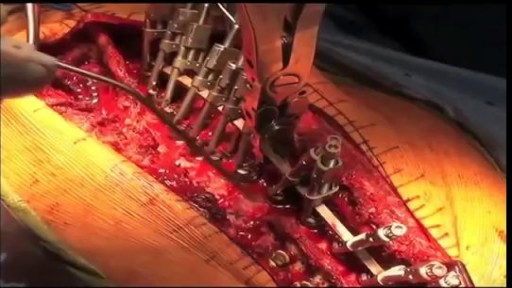
Treatment depends on curve size, pattern, and how much growth remains. Mild curves are observed with periodic examinations and imaging during growth, and specific exercises may help posture and back strength. Moderate curves in a growing child are often treated with a custom brace worn for many hours daily, aiming to stop progression rather than straighten the spine permanently. Surgery is considered for large or progressing curves and typically joins the curved vertebrae with rods and screws. Adults are managed with pain relief, physiotherapy, and sometimes surgery for nerve pressure or progression.
When to seek care
Seek prompt care for back pain in a young child, rapidly worsening curve, weakness, numbness, or changes in bladder or bowel control, since these are not typical of ordinary scoliosis. Breathlessness or chest pain with a severe curve also needs timely medical assessment.
Frequently asked questions
Does scoliosis cause back pain?
Mild scoliosis in teenagers usually causes little or no pain, and significant pain deserves assessment for another cause. Adults with scoliosis more often develop aching and stiffness from uneven loading of joints and muscles, which physiotherapy, activity, and pain relief can help.
Can a brace straighten the spine?
A brace mainly aims to stop a moderate curve from worsening while a child is still growing, rather than permanently straightening it. Wearing it for the prescribed hours gives the best chance of avoiding progression to the size where surgery is usually considered.
Is scoliosis caused by bad posture or heavy school bags?
Posture habits and heavy bags do not cause structural scoliosis, which arises from how the vertebrae grow and rotate. Most teenage cases have no single identifiable cause, although family history plays a part. A posture related lean, by contrast, resolves when its cause is treated.
Will my child need surgery for scoliosis?
Most children with scoliosis never need surgery, because most curves are mild and are managed with monitoring, and moderate curves with bracing during growth. Surgery is reserved for large curves or curves that keep progressing despite bracing, after specialist assessment and discussion.
More in Bones/Joints/Muscles
Related topics on MedicalVideos.com
Sources & further reading
Authoritative references for readers who want to go deeper:
- MedlinePlus: Scoliosis
- NHS: Scoliosis
- American Academy of Orthopaedic Surgeons: Scoliosis (American Academy of Orthopaedic Surgeons)
This page is for general education only and is not medical advice. Weakness, numbness, or bladder or bowel change with a spinal curve is not typical of ordinary scoliosis and needs prompt specialist assessment.