- Physical Examination
- Surgical Examination
- Ophthalmology
- Clinical Skills
- Orthopedics
- Surgery Videos
- Laparoscopy
- Pediatrics
- Funny Videos
- Cardiothoracic Surgery
- Nursing Videos
- Plastic Surgery
- Otorhinolaryngology
- Histology and Histopathology
- Neurosurgery
- Dermatology
- Pediatric Surgery
- Urology
- Dentistry
- Oncology and Cancers
- Anatomy Videos
- Health and Fitness
- Radiology
- Anaesthesia
- Physical Therapy
- Pharmacology
- Interventional Radiology
- Cardiology
- Endocrinology
- Gynecology
- Emergency Medicine
- Psychiatry and Psychology
- Childbirth Videos
- General Medical Videos
- Nephrology
- Physiology
- Diet and Food Health
- Diabetes Mellitus
- Neurology
- Women Health
- Osteoporosis
- Gastroenterology
- Pulmonology
- Hematology
- Rheumatology
- Toxicology
- Nuclear Medicine
- Infectious Diseases
- Vascular Disease
- Reproductive Health
- Burns and Wound Healing
- Kidney Zone Podcast
- Other
Cuts, Grazes and Scrapes — First Aid
What to do
- Wash your hands and put on disposable gloves if you have them.
- If the cut is bleeding, press on it with a clean cloth or gauze for a few minutes until the bleeding stops. Raise the injured part if you can.
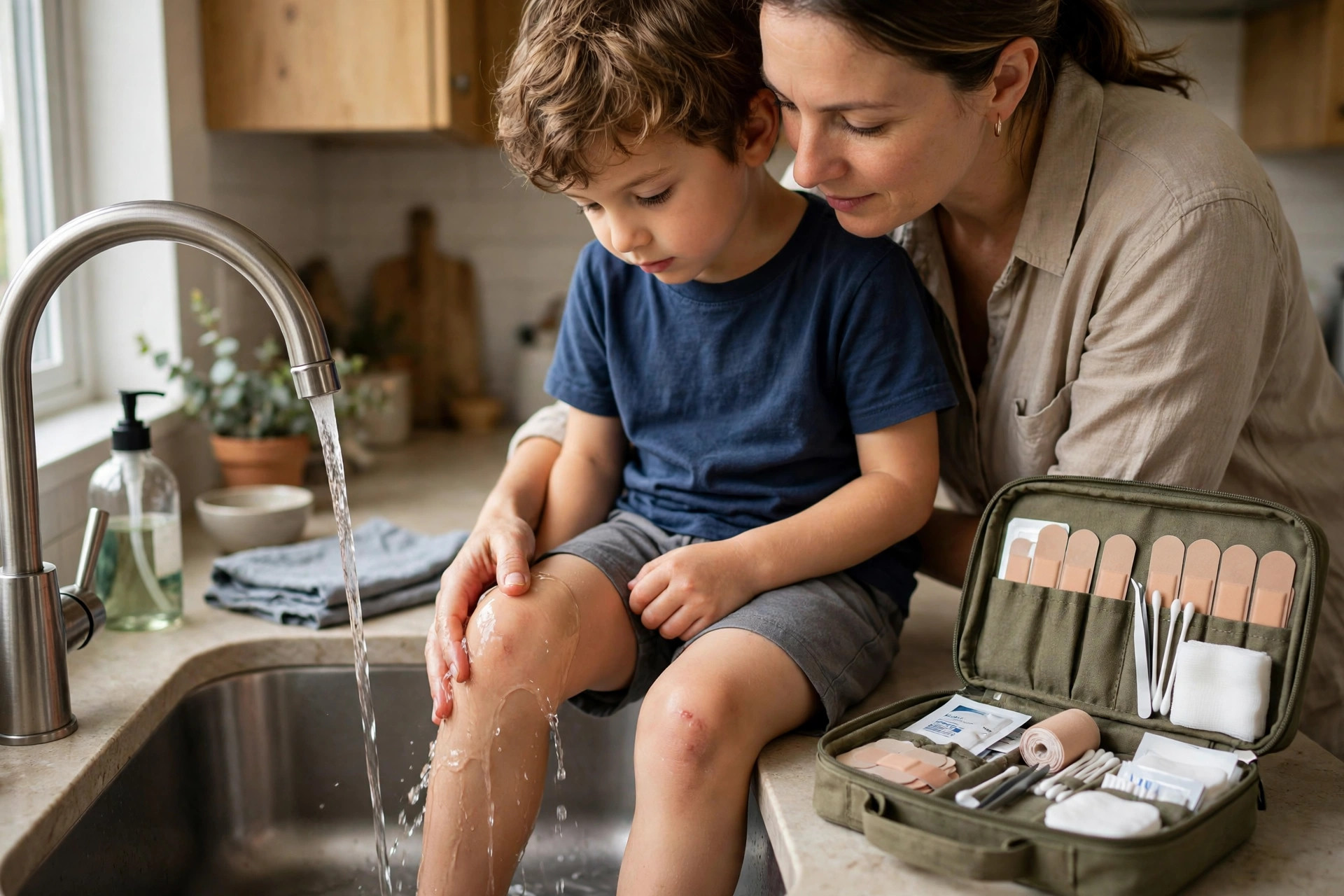
- Clean the wound under clean running water to wash out dirt and grit. You can use mild soap on the skin around the wound, but the running water does the main work.
- Pat the area dry with clean gauze or a cloth, and pick out any remaining visible grit or debris with cleaned tweezers if it comes out easily.
- Cover with a sterile adhesive dressing or plaster; for larger grazes use a non-stick dressing pad held with tape or a bandage.
- Change the dressing daily or if it gets wet or dirty, and watch for signs of infection over the next few days.
What NOT to do
- Do not scrub deep inside the wound — rinse it and let clinicians clean anything that will not rinse out.
- Do not use antiseptic creams or sprays inside the wound unless advised — clean water is the standard first step.
- Do not ignore a wound from a bite, a rusty object or a deep puncture — these need medical assessment.
- Do not forget tetanus: if vaccinations are not up to date, ask a clinician or pharmacist for advice after any dirty wound.
When to get medical care
Seek medical care the same day if the cut is deep or gaping, will not stop bleeding after 10 minutes of pressure, has dirt or an object stuck in it, is on the face, is from an animal or human bite, or shows signs of infection (spreading redness, swelling, increasing pain, pus, fever). Stitches work best within the first several hours.
Related procedures & tests
Related symptoms
Watch: related videos
Frequently asked questions
Does a cut need stitches?
Cuts that are deep, longer than about 2 cm, gaping open, on the face, or that keep bleeding usually benefit from stitches, glue or staples. Getting them assessed within the first several hours gives the best result.
How do I know if a cut is infected?
Increasing redness, swelling, warmth or pain after the first day or two, yellow pus, red streaks spreading from the wound, or fever. Minor wounds should steadily improve; any wound getting worse needs a medical review.
In an emergency, call 911 (or your local emergency number) first — do not delay a call to read a guide. These pages are educational first-aid information in general terms; they are not a substitute for emergency services, first-aid training, or assessment by a qualified clinician.