- Physical Examination
- Surgical Examination
- Ophthalmology
- Clinical Skills
- Orthopedics
- Surgery Videos
- Laparoscopy
- Pediatrics
- Funny Videos
- Cardiothoracic Surgery
- Nursing Videos
- Plastic Surgery
- Otorhinolaryngology
- Histology and Histopathology
- Neurosurgery
- Dermatology
- Pediatric Surgery
- Urology
- Dentistry
- Oncology and Cancers
- Anatomy Videos
- Health and Fitness
- Radiology
- Anaesthesia
- Physical Therapy
- Pharmacology
- Interventional Radiology
- Cardiology
- Endocrinology
- Gynecology
- Emergency Medicine
- Psychiatry and Psychology
- Childbirth Videos
- General Medical Videos
- Nephrology
- Physiology
- Diet and Food Health
- Diabetes Mellitus
- Neurology
- Women Health
- Osteoporosis
- Gastroenterology
- Pulmonology
- Hematology
- Rheumatology
- Toxicology
- Nuclear Medicine
- Infectious Diseases
- Vascular Disease
- Reproductive Health
- Burns and Wound Healing
- Kidney Zone Podcast
- Other
Object Stuck in a Wound — First Aid
What to do
- Do not remove the object. It may be plugging the wound, and removing it can cause severe bleeding and more damage.
- Call 911 if the object is large, deep, or the wound is bleeding heavily; for smaller embedded items (glass shards, a knife, a nail) arrange urgent medical care.
- Control bleeding by pressing on either side of the object — never press down on the object itself.
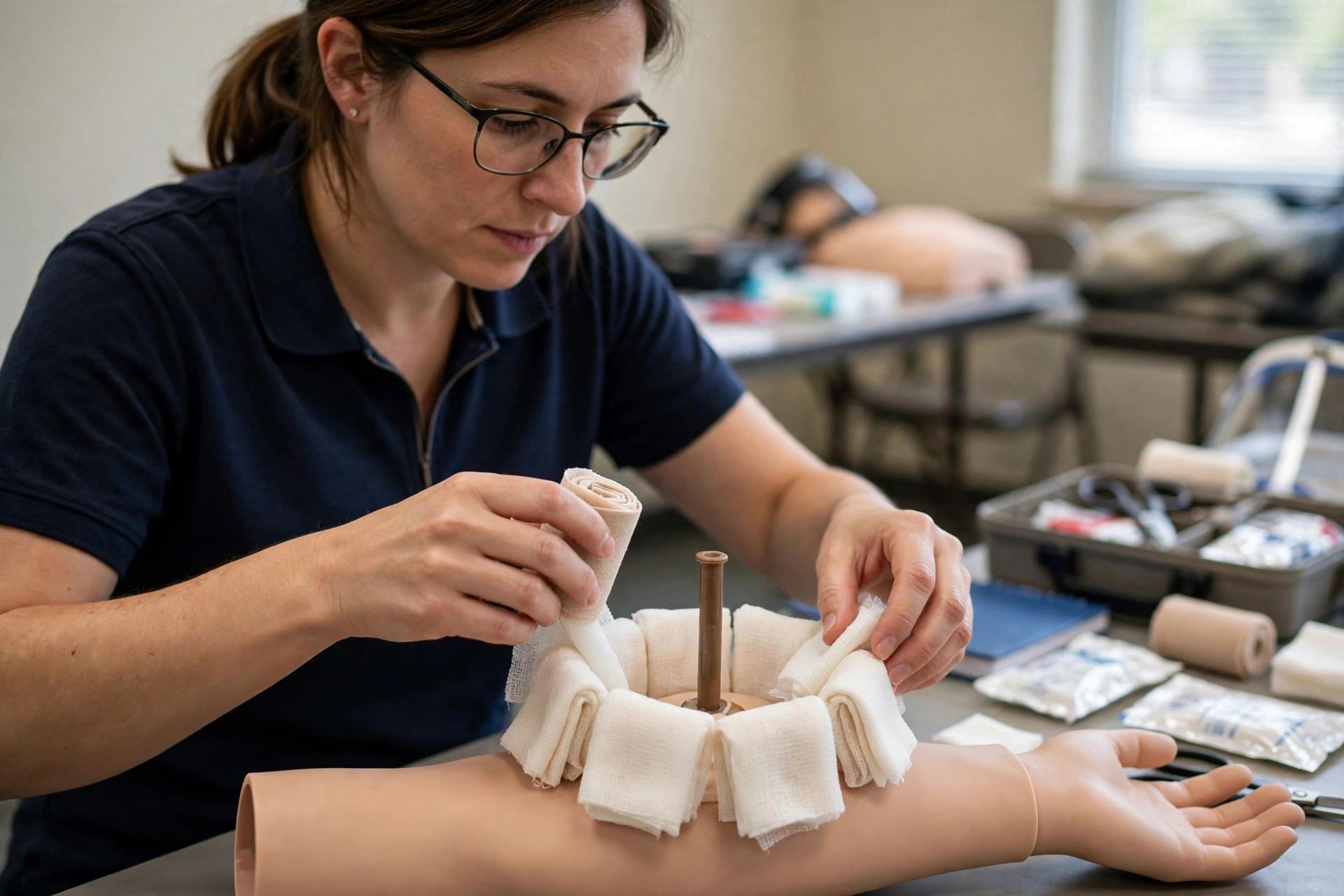
- Build up padding around the object with rolled bandages or clean cloths so a dressing can rest over it without pushing it deeper.
- Bandage over and around the padding to hold everything still, and support the injured part so the object does not move.
- Keep the person still and warm, watch for shock, and hand over to medical care as soon as possible.
What NOT to do
- Do not pull the object out, even if it looks small.
- Do not press directly on top of the object.
- Do not let the person eat or drink if the injury is serious — they may need surgery to remove the object safely.
- Do not try to cut a long object shorter unless it prevents transport and emergency services advise it.
When to get medical care
Any object embedded deeply, in the eye, chest, abdomen or head, or causing heavy bleeding needs 911 and hospital care. Smaller embedded items such as glass or a splinter that will not wash out, or wounds that become red, swollen or painful, need same-day medical assessment.
Related procedures & tests
Frequently asked questions
Why should I not pull an embedded object out?
The object may be pressing on blood vessels and limiting bleeding, and its path through tissue is unknown. Removing it outside hospital can trigger severe bleeding and further injury. Clinicians remove objects with imaging, lighting and the ability to operate if needed.
What about a small splinter?
Small, superficial splinters are different: wash the area, and remove the splinter with cleaned tweezers along the angle it went in. If it will not come out, breaks off, or the area becomes red and painful, get it checked.
In an emergency, call 911 (or your local emergency number) first — do not delay a call to read a guide. These pages are educational first-aid information in general terms; they are not a substitute for emergency services, first-aid training, or assessment by a qualified clinician.