- Physical Examination
- Surgical Examination
- Ophthalmology
- Clinical Skills
- Orthopedics
- Surgery Videos
- Laparoscopy
- Pediatrics
- Funny Videos
- Cardiothoracic Surgery
- Nursing Videos
- Plastic Surgery
- Otorhinolaryngology
- Histology and Histopathology
- Neurosurgery
- Dermatology
- Pediatric Surgery
- Urology
- Dentistry
- Oncology and Cancers
- Anatomy Videos
- Health and Fitness
- Radiology
- Anaesthesia
- Physical Therapy
- Pharmacology
- Interventional Radiology
- Cardiology
- Endocrinology
- Gynecology
- Emergency Medicine
- Psychiatry and Psychology
- Childbirth Videos
- General Medical Videos
- Nephrology
- Physiology
- Diet and Food Health
- Diabetes Mellitus
- Neurology
- Women Health
- Osteoporosis
- Gastroenterology
- Pulmonology
- Hematology
- Rheumatology
- Toxicology
- Nuclear Medicine
- Infectious Diseases
- Vascular Disease
- Reproductive Health
- Burns and Wound Healing
- Kidney Zone Podcast
- Other
Scalp and Head Wounds — First Aid
What to do
- Scalp wounds bleed dramatically because the scalp has a rich blood supply — even a small cut can look alarming. Stay calm and assess the person first.
- Check how the injury happened and how the person is: a fall, blow or collision with a scalp wound may also mean a head injury. Call 911 if they were knocked out, are drowsy, confused, vomiting, or the blow was severe (see Head Injury & Concussion).
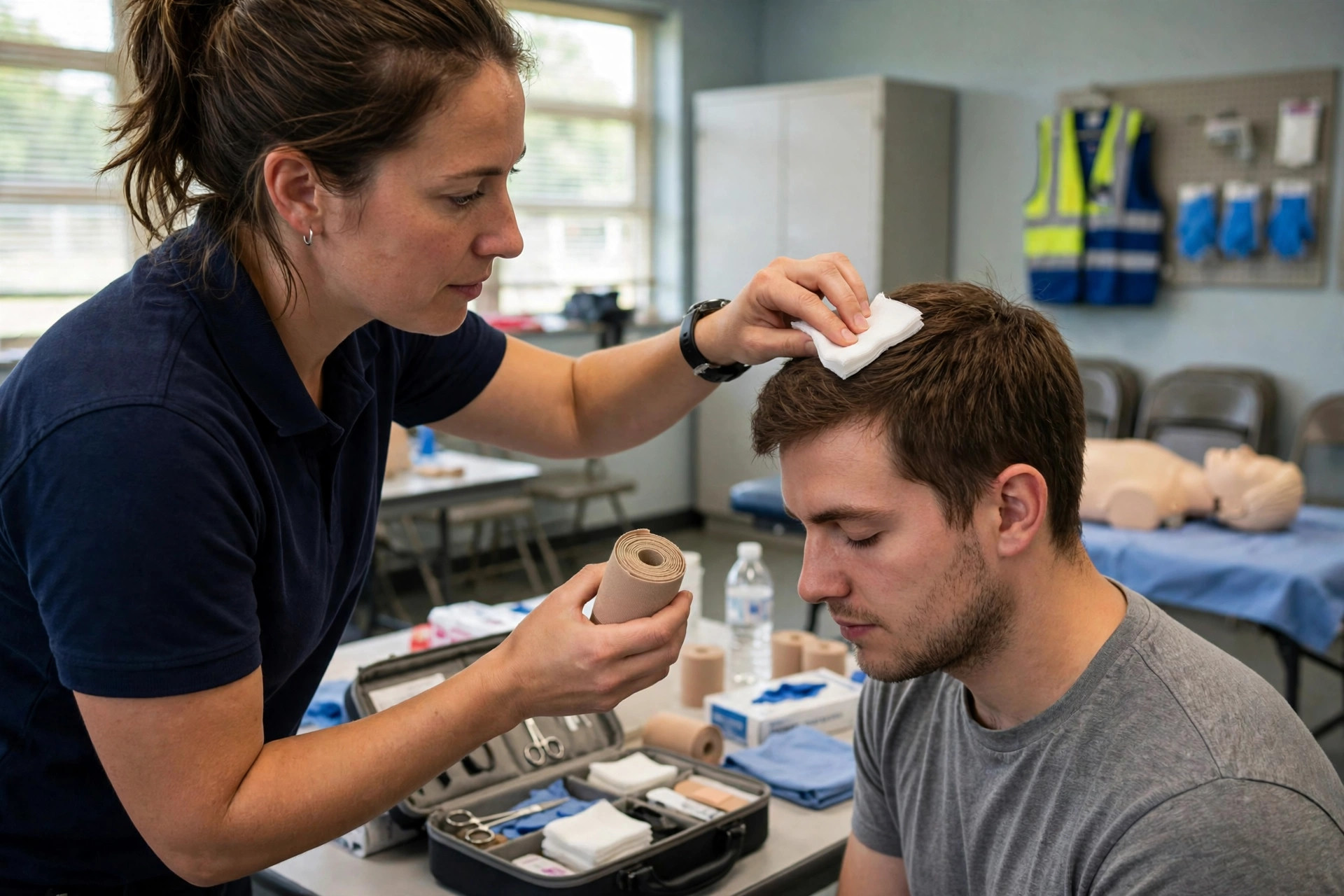
- Wash your hands or use gloves. Press firmly on the wound with a sterile dressing or clean cloth for 10 to 15 minutes to stop the bleeding.
- If there might be an object in the wound or a depressed area of skull, do not press hard directly on it — press around it and get emergency help.
- Once bleeding is controlled, apply a bandage around the head to hold the dressing in place.
- Watch the person for head-injury warning signs for the next 24 to 48 hours, and arrange medical assessment for any deep or gaping scalp wound — scalp cuts often need stitches or staples.
What NOT to do
- Do not dismiss a head wound just because the bleeding has stopped — the head injury underneath matters more than the cut.
- Do not wash a deep scalp wound vigorously or pick out debris.
- Do not let the person drive themselves to hospital if they feel drowsy, dizzy or unwell.
- Do not give alcohol to 'calm nerves' — it hides head-injury symptoms.
When to get medical care
Call 911 if the person lost consciousness at any point, is drowsy or hard to wake, vomits repeatedly, has a seizure, clear fluid from the nose or ears, unequal pupils, worsening headache, or the injury involved a major force. Get same-day assessment for deep or gaping scalp wounds, wounds with dirt or debris, or any scalp wound in a baby.
Related procedures & tests
Related symptoms
Frequently asked questions
Why do scalp wounds bleed so much?
The scalp's blood vessels are held open by the tight tissue around them, so they cannot contract and close as easily as vessels elsewhere. Firm, direct pressure for 10 to 15 minutes controls nearly all scalp bleeding.
Does a scalp wound need stitches?
Deep, long or gaping scalp wounds usually need stitches, staples or glue to heal well and stop bleeding fully. Assessment within the first several hours gives the best closure options.
In an emergency, call 911 (or your local emergency number) first — do not delay a call to read a guide. These pages are educational first-aid information in general terms; they are not a substitute for emergency services, first-aid training, or assessment by a qualified clinician.