
- Physical Examination
- Surgical Examination
- Ophthalmology
- Clinical Skills
- Orthopedics
- Surgery Videos
- Laparoscopy
- Pediatrics
- Funny Videos
- Cardiothoracic Surgery
- Nursing Videos
- Plastic Surgery
- Otorhinolaryngology
- Histology and Histopathology
- Neurosurgery
- Dermatology
- Pediatric Surgery
- Urology
- Dentistry
- Oncology and Cancers
- Anatomy Videos
- Health and Fitness
- Radiology
- Anaesthesia
- Physical Therapy
- Pharmacology
- Interventional Radiology
- Cardiology
- Endocrinology
- Gynecology
- Emergency Medicine
- Psychiatry and Psychology
- Childbirth Videos
- General Medical Videos
- Nephrology
- Physiology
- Diet and Food Health
- Diabetes Mellitus
- Neurology
- Women Health
- Osteoporosis
- Gastroenterology
- Pulmonology
- Hematology
- Rheumatology
- Toxicology
- Nuclear Medicine
- Infectious Diseases
- Vascular Disease
- Reproductive Health
- Burns and Wound Healing
- Kidney Zone Podcast
- Other
Angiography (catheter angiogram)
Category: Imaging & Scans · All imaging & scans
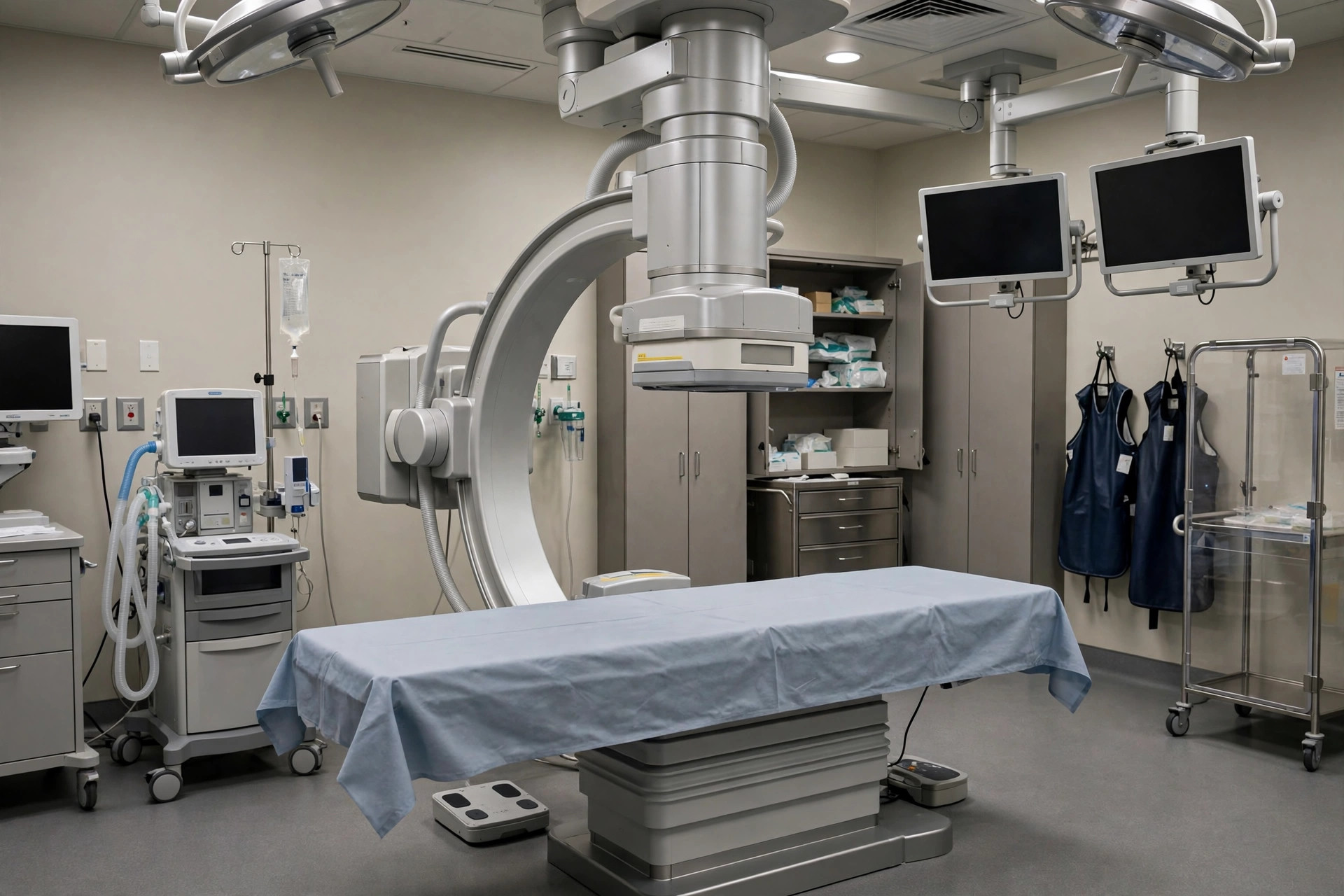
What it is
An angiogram is an X-ray procedure in which contrast dye is injected through a fine tube (catheter) placed into a blood vessel, so that arteries or veins and any narrowings or blockages show up clearly.
Why it is done
It is used to investigate narrowed or blocked blood vessels — for example in the heart, legs, kidneys or brain — and sometimes to deliver treatment at the same time, such as widening a narrowed artery.
How to prepare
You will usually fast for several hours beforehand. Blood tests and kidney function are checked, and the team will ask about allergies and blood-thinning medicines. The entry site (usually the groin or wrist) is shaved if needed.
What happens during the procedure
You lie on an X-ray table and the entry site is numbed with local anaesthetic. The catheter is passed through the vessel using X-ray guidance and dye is injected while pictures are taken; the dye can cause a brief warm flush. The procedure usually takes 30 to 60 minutes, longer if treatment is done at the same time.
Afterwards — recovery & results
You will rest in bed for a few hours afterwards while the entry site is checked, and most people go home the same or the next day. You will be told to watch for bleeding or swelling at the site and to drink fluids to help clear the dye.
Risks & considerations
Risks include bruising or bleeding where the catheter entered, an allergic-type reaction to dye, effects on the kidneys, and rarely damage to the blood vessel or disturbance of heart rhythm. The team will explain the balance of risks and benefits for your situation.
Related guides on MedicalVideos.com
Frequently asked questions
Is an angiogram the same as an angioplasty?
An angiogram is the diagnostic picture-taking part. Angioplasty is a treatment — widening a narrowed artery, often with a stent — that can be done during the same procedure if a suitable narrowing is found.
Will it hurt?
The entry site is numbed, so you should feel pressure rather than pain. The dye injection often causes a short warm flush that passes quickly.
Related procedures — Imaging & Scans
Browse the A section of the A–Z list or return to the Procedures & Tests hub.