
- Physical Examination
- Surgical Examination
- Ophthalmology
- Clinical Skills
- Orthopedics
- Surgery Videos
- Laparoscopy
- Pediatrics
- Funny Videos
- Cardiothoracic Surgery
- Nursing Videos
- Plastic Surgery
- Otorhinolaryngology
- Histology and Histopathology
- Neurosurgery
- Dermatology
- Pediatric Surgery
- Urology
- Dentistry
- Oncology and Cancers
- Anatomy Videos
- Health and Fitness
- Radiology
- Anaesthesia
- Physical Therapy
- Pharmacology
- Interventional Radiology
- Cardiology
- Endocrinology
- Gynecology
- Emergency Medicine
- Psychiatry and Psychology
- Childbirth Videos
- General Medical Videos
- Nephrology
- Physiology
- Diet and Food Health
- Diabetes Mellitus
- Neurology
- Women Health
- Osteoporosis
- Gastroenterology
- Pulmonology
- Hematology
- Rheumatology
- Toxicology
- Nuclear Medicine
- Infectious Diseases
- Vascular Disease
- Reproductive Health
- Burns and Wound Healing
- Kidney Zone Podcast
- Other
Coronary CT angiography
Category: Imaging & Scans · All imaging & scans
What it is
Coronary CT angiography is a CT scan that uses contrast dye to picture the coronary arteries — the vessels that supply the heart muscle — and look for narrowing caused by fatty deposits.
Why it is done
It is often used for people with chest pain whose risk is thought to be low or intermediate, as a non-invasive way to check whether narrowed heart arteries are a likely cause.
How to prepare
You may be asked to avoid caffeine on the day and not to eat for a few hours. Tell the team about allergies, kidney problems, asthma and any heart-rhythm medicines you take. A blood test for kidney function is usually checked first.
What happens during the procedure
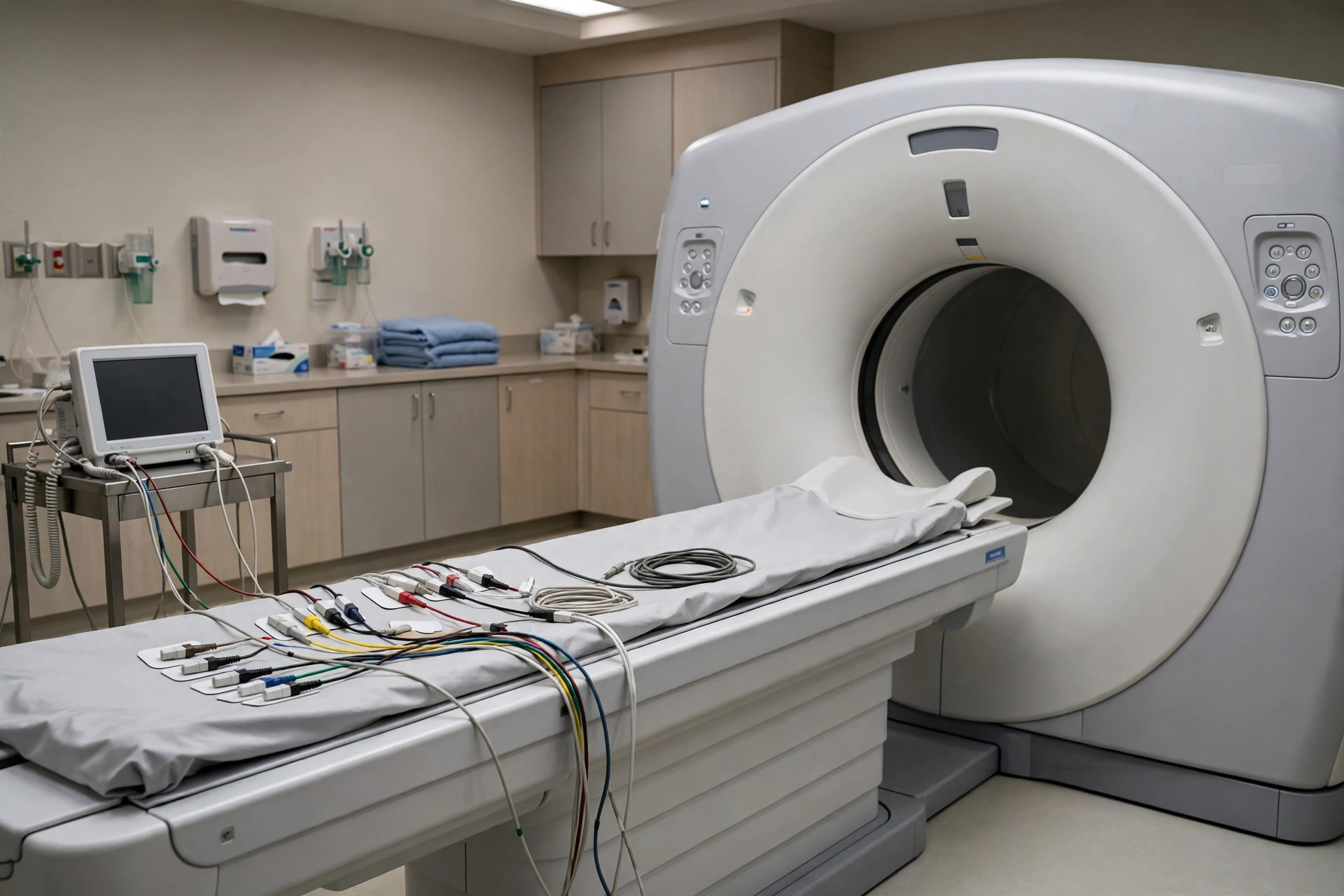
Sticky ECG dots are placed on your chest so the scanner can time pictures to your heartbeat. You may be given a medicine to slow the heart rate and a spray under the tongue to widen the arteries, then contrast dye is injected as the table moves through the scanner. It usually takes 15 to 30 minutes.
Afterwards — recovery & results
You will usually be observed briefly afterwards and can then go home. Results are reviewed by specialists and sent to your doctor, who will discuss what they mean and whether any treatment or further test is advised.
Risks & considerations
Risks include an allergic-type reaction to contrast dye, effects on the kidneys in people with kidney problems, and the radiation dose of the scan. The medicines used to slow the heart can briefly cause breathlessness or flushing.
Related guides on MedicalVideos.com
Frequently asked questions
Is this the same as a catheter angiogram?
No. This scan takes pictures from outside the body using a CT scanner and a dye injection in the arm, while a catheter angiogram threads a fine tube to the heart. The CT version cannot treat narrowings but is less invasive.
What happens if a narrowing is found?
Your doctor will explain the finding and discuss options, which may include medicines, lifestyle measures or a catheter angiogram to look more closely.
Related procedures — Imaging & Scans
Browse the C section of the A–Z list or return to the Procedures & Tests hub.