
- Physical Examination
- Surgical Examination
- Ophthalmology
- Clinical Skills
- Orthopedics
- Surgery Videos
- Laparoscopy
- Pediatrics
- Funny Videos
- Cardiothoracic Surgery
- Nursing Videos
- Plastic Surgery
- Otorhinolaryngology
- Histology and Histopathology
- Neurosurgery
- Dermatology
- Pediatric Surgery
- Urology
- Dentistry
- Oncology and Cancers
- Anatomy Videos
- Health and Fitness
- Radiology
- Anaesthesia
- Physical Therapy
- Pharmacology
- Interventional Radiology
- Cardiology
- Endocrinology
- Gynecology
- Emergency Medicine
- Psychiatry and Psychology
- Childbirth Videos
- General Medical Videos
- Nephrology
- Physiology
- Diet and Food Health
- Diabetes Mellitus
- Neurology
- Women Health
- Osteoporosis
- Gastroenterology
- Pulmonology
- Hematology
- Rheumatology
- Toxicology
- Nuclear Medicine
- Infectious Diseases
- Vascular Disease
- Reproductive Health
- Burns and Wound Healing
- Kidney Zone Podcast
- Other
Cardioversion (DC shock treatment)
Category: Heart Tests & Procedures · All heart tests & procedures
What it is
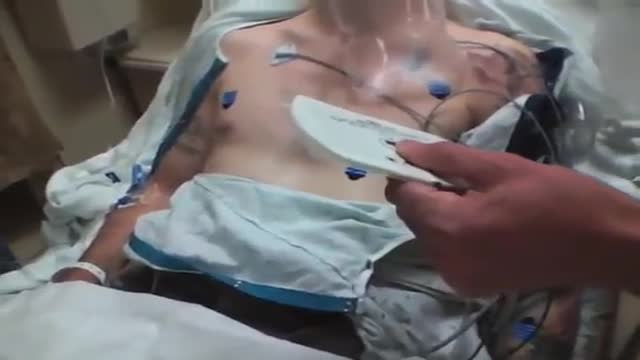
Cardioversion is a planned procedure in which a controlled electric shock is delivered through pads on the chest to reset an abnormal heart rhythm (such as atrial fibrillation) back to normal.
Why it is done
It is used when the heart is beating irregularly or too fast in a rhythm that can be reset by a shock, with the aim of relieving symptoms such as palpitations, breathlessness and fatigue.
How to prepare
You will fast for several hours. Because clots can form in a fibrillating heart, you usually need blood-thinning treatment for a period before and after, or a special echo beforehand to check for clots. Tell the team about all medicines, especially blood thinners.
What happens during the procedure
You are connected to monitors and given a short general anaesthetic or deep sedation so you feel nothing. Pads are placed on the chest and one or more brief shocks are delivered, timed to the heartbeat. The procedure itself takes only a few minutes and success is judged immediately by the ECG.
Afterwards — recovery & results
You recover as the anaesthetic wears off, usually within an hour or two, and most people go home the same day with an escort. The chest skin may be mildly red or sore where the pads were. You must not drive for 24 hours.
Risks & considerations
Risks include skin soreness, a small risk of the shock triggering a different rhythm problem (managed by the team present), and a small risk of stroke if a clot is disturbed — the reason blood-thinning treatment around the procedure is so important. The rhythm can also slip back over time.
Watch: Cardioversion (DC shock treatment) videos
Real procedure videos from the MedicalVideos.com library. Some clinical footage is graphic — that is the nature of a medical video library.
Frequently asked questions
Will I feel the shock?
No — the shock is given while you are asleep under a very short anaesthetic, and it is over in a second.
What if cardioversion doesn't work?
The team may repeat the shock at higher energy, adjust medicines, and try again another day, or discuss alternatives such as ablation. One unsuccessful attempt does not close off options.
Related procedures — Heart Tests & Procedures
Browse the C section of the A–Z list or return to the Procedures & Tests hub.