
- Physical Examination
- Surgical Examination
- Ophthalmology
- Clinical Skills
- Orthopedics
- Surgery Videos
- Laparoscopy
- Pediatrics
- Funny Videos
- Cardiothoracic Surgery
- Nursing Videos
- Plastic Surgery
- Otorhinolaryngology
- Histology and Histopathology
- Neurosurgery
- Dermatology
- Pediatric Surgery
- Urology
- Dentistry
- Oncology and Cancers
- Anatomy Videos
- Health and Fitness
- Radiology
- Anaesthesia
- Physical Therapy
- Pharmacology
- Interventional Radiology
- Cardiology
- Endocrinology
- Gynecology
- Emergency Medicine
- Psychiatry and Psychology
- Childbirth Videos
- General Medical Videos
- Nephrology
- Physiology
- Diet and Food Health
- Diabetes Mellitus
- Neurology
- Women Health
- Osteoporosis
- Gastroenterology
- Pulmonology
- Hematology
- Rheumatology
- Toxicology
- Nuclear Medicine
- Infectious Diseases
- Vascular Disease
- Reproductive Health
- Burns and Wound Healing
- Kidney Zone Podcast
- Other
Fine needle aspiration (FNA) cytology
Category: Biopsies, Lab & Pathology Tests · All biopsies, lab & pathology tests
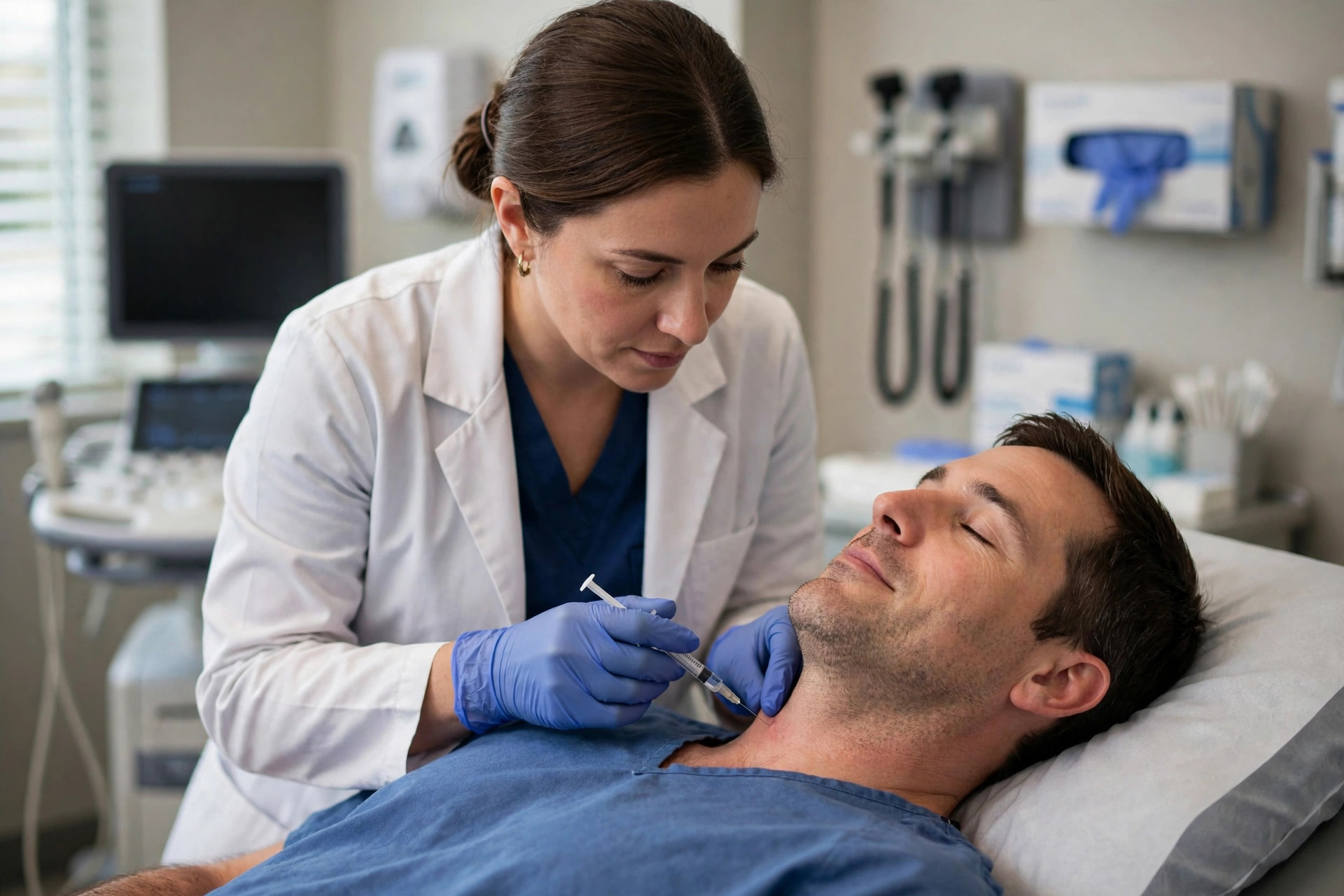
What it is
Fine needle aspiration uses a thin needle to draw out cells from a lump or gland for cytology (looking at individual cells). It is quick, needs no anaesthetic in most sites, and is a first-line test for thyroid nodules, neck lumps, salivary gland lumps and some breast and lymph node assessments.
Why it is done
It distinguishes benign from suspicious lumps and can identify infection or cysts (which can be drained at the same time). It is often combined with ultrasound guidance to sample the right area.
How to prepare
No special preparation; tell the clinician about blood thinners. For thyroid FNA, lie still and avoid swallowing during passes as instructed.
What happens during the procedure
The needle is moved gently within the lump several times while suction is applied; two to four passes are typical, taking a few minutes in total. A small plaster covers the site. Cysts may collapse as fluid is drawn off (the fluid is still sent for testing).
Afterwards — recovery & results
You can go home immediately. A small bruise is common. Results usually take one to two weeks. Categories range from benign to malignant; an 'inadequate' or indeterminate result may lead to repeat FNA, core biopsy or diagnostic surgery depending on the site.
Risks & considerations
Risks are low: bruising, minor bleeding and discomfort. FNA samples cells rather than tissue architecture, so some questions (especially lymphoma classification) need core or excisional biopsy instead or as well.
Related guides on MedicalVideos.com
Frequently asked questions
Why might I need another test after FNA?
Some lumps give indeterminate cytology — cells that cannot be called benign or malignant with confidence. A core biopsy or surgical removal then provides the architecture needed.
Is no anaesthetic really okay?
The needle is very fine — most people find the brief discomfort similar to a blood test. Numbing can be used for anxious patients or sensitive sites.
Related procedures — Biopsies, Lab & Pathology Tests
Browse the F section of the A–Z list or return to the Procedures & Tests hub.