
- Physical Examination
- Surgical Examination
- Ophthalmology
- Clinical Skills
- Orthopedics
- Surgery Videos
- Laparoscopy
- Pediatrics
- Funny Videos
- Cardiothoracic Surgery
- Nursing Videos
- Plastic Surgery
- Otorhinolaryngology
- Histology and Histopathology
- Neurosurgery
- Dermatology
- Pediatric Surgery
- Urology
- Dentistry
- Oncology and Cancers
- Anatomy Videos
- Health and Fitness
- Radiology
- Anaesthesia
- Physical Therapy
- Pharmacology
- Interventional Radiology
- Cardiology
- Endocrinology
- Gynecology
- Emergency Medicine
- Psychiatry and Psychology
- Childbirth Videos
- General Medical Videos
- Nephrology
- Physiology
- Diet and Food Health
- Diabetes Mellitus
- Neurology
- Women Health
- Osteoporosis
- Gastroenterology
- Pulmonology
- Hematology
- Rheumatology
- Toxicology
- Nuclear Medicine
- Infectious Diseases
- Vascular Disease
- Reproductive Health
- Burns and Wound Healing
- Kidney Zone Podcast
- Other
SPECT and nuclear medicine scans
Category: Imaging & Scans · All imaging & scans
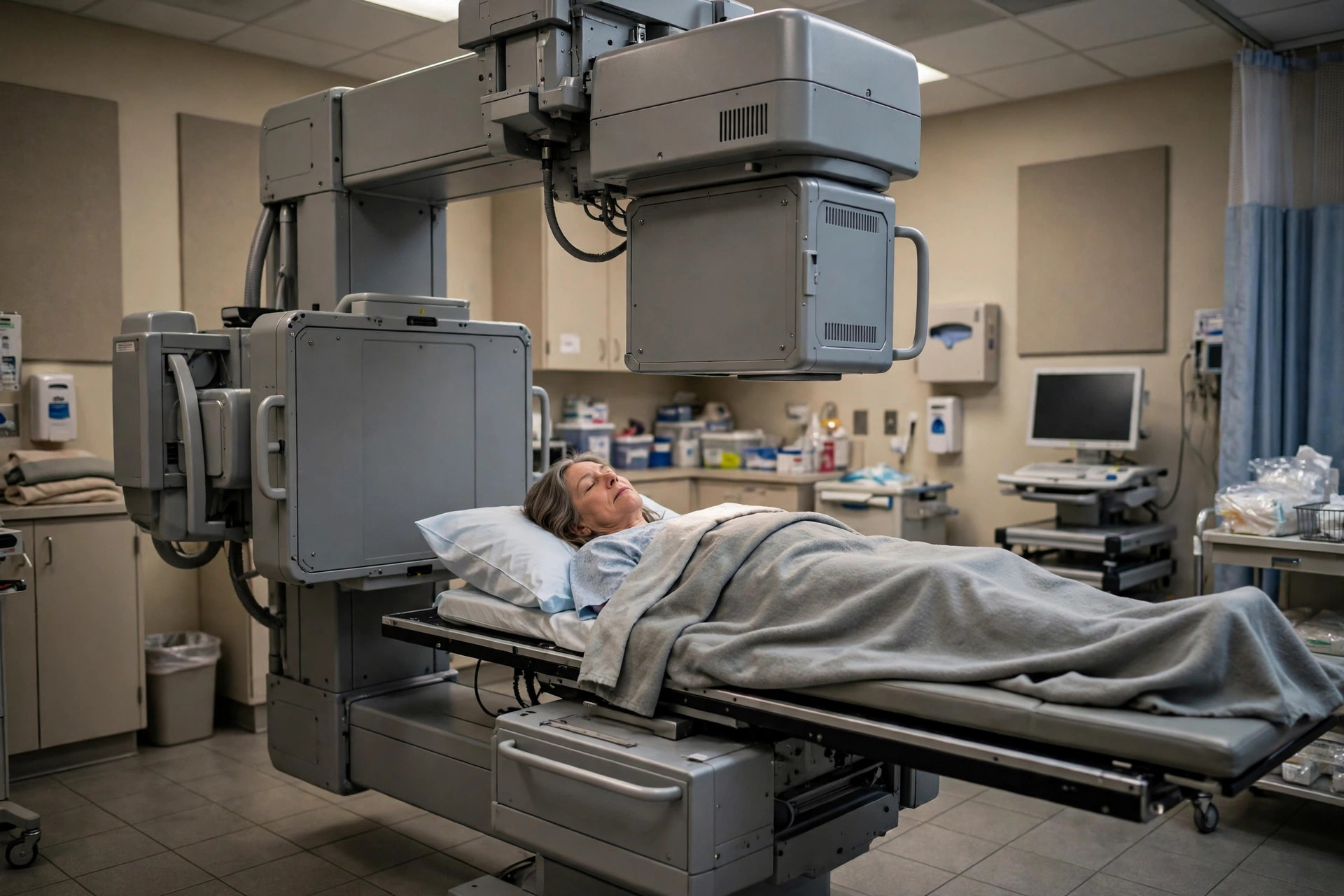
What it is
Nuclear medicine scans inject a tiny amount of radioactive tracer and use a gamma camera to picture how organs are working rather than just how they look — for example bone scans (tracer gathers where bone is active), thyroid scans, kidney (renogram) scans and lung perfusion scans. SPECT adds 3D (tomographic) imaging.
Why it is done
They investigate bone pain and cancer spread to bones, thyroid overactivity patterns, kidney function split between the two kidneys, drainage blockages, and blood flow, among many other functional questions.
How to prepare
Instructions vary by scan: thyroid scans may need you to avoid iodine-containing medicines and recent contrast scans; renograms ask you to drink well. Tell the team about pregnancy and breastfeeding (tracer precautions apply) and recent nuclear scans.
What happens during the procedure
The tracer is injected into a vein (a small drink or inhalation for a few types). After a waiting period for the tracer to distribute — minutes for some scans, two to four hours for bone scans — you lie under the gamma camera while it moves slowly around you taking pictures for about 20 to 45 minutes. It does not enclose you.
Afterwards — recovery & results
You can usually eat and go home straight after imaging. You will be advised to drink fluids to flush the tracer, and for some scans to limit close contact with babies and pregnant people for the rest of the day. Results go to your referring team within days.
Risks & considerations
The radiation dose is small to moderate and justified by the diagnostic need; allergic reactions to tracers are very rare. The scans show function with less anatomical detail than CT, so images are often combined with CT (SPECT-CT) for precision.
Related guides on MedicalVideos.com
Frequently asked questions
Will I be radioactive afterwards?
Briefly, at very low levels. The tracer decays within hours and is flushed in urine; the department gives you simple precautions for the rest of the day.
Why the long wait between injection and scan for a bone scan?
The tracer needs time to clear from soft tissues and bind to active bone, which sharpens the picture. You can usually leave the department and return for the scan.
Related procedures — Imaging & Scans
Browse the S section of the A–Z list or return to the Procedures & Tests hub.