
- Physical Examination
- Surgical Examination
- Ophthalmology
- Clinical Skills
- Orthopedics
- Surgery Videos
- Laparoscopy
- Pediatrics
- Funny Videos
- Cardiothoracic Surgery
- Nursing Videos
- Plastic Surgery
- Otorhinolaryngology
- Histology and Histopathology
- Neurosurgery
- Dermatology
- Pediatric Surgery
- Urology
- Dentistry
- Oncology and Cancers
- Anatomy Videos
- Health and Fitness
- Radiology
- Anaesthesia
- Physical Therapy
- Pharmacology
- Interventional Radiology
- Cardiology
- Endocrinology
- Gynecology
- Emergency Medicine
- Psychiatry and Psychology
- Childbirth Videos
- General Medical Videos
- Nephrology
- Physiology
- Diet and Food Health
- Diabetes Mellitus
- Neurology
- Women Health
- Osteoporosis
- Gastroenterology
- Pulmonology
- Hematology
- Rheumatology
- Toxicology
- Nuclear Medicine
- Infectious Diseases
- Vascular Disease
- Reproductive Health
- Burns and Wound Healing
- Kidney Zone Podcast
- Other
Hepatitis B Screening
Hepatitis B can damage the liver silently for decades. The USPSTF recommends screening people at increased risk (grade B) and every pregnant person at the first prenatal visit (grade A).
Hepatitis B is a virus that infects the liver. Many people acquire it without knowing — at birth, in childhood, or through blood or sexual contact — and carry it silently while it slowly scars the liver. Screening finds the infection so it can be monitored and treated, and so vaccination can be offered to the people around you.
The USPSTF recommends screening adolescents and adults at increased risk (grade B), and screening every pregnant person at the first prenatal visit (grade A) — because a baby born to a mother with hepatitis B can be protected by vaccination and immunoglobulin given at birth.
What this screening checks
- A blood test for hepatitis B markers — principally the surface antigen (HBsAg), which shows current infection, with antibody tests that show past infection or vaccine protection.
- If infection is confirmed, follow-up blood tests and liver scans assess how active the virus is and whether the liver has been damaged.
Who should have it, and how often
People born in parts of the world where hepatitis B is common, and their household contacts — geographic origin is the strongest risk marker.
People who inject drugs, household and sexual contacts of someone with hepatitis B, people with HIV or hepatitis C, and people receiving dialysis or immune-suppressing treatment.
All pregnant persons, at the first prenatal visit of every pregnancy (grade A).
If you were never vaccinated and are at risk, ask about vaccination at the same visit — screening and vaccination go together.
What happens during the test
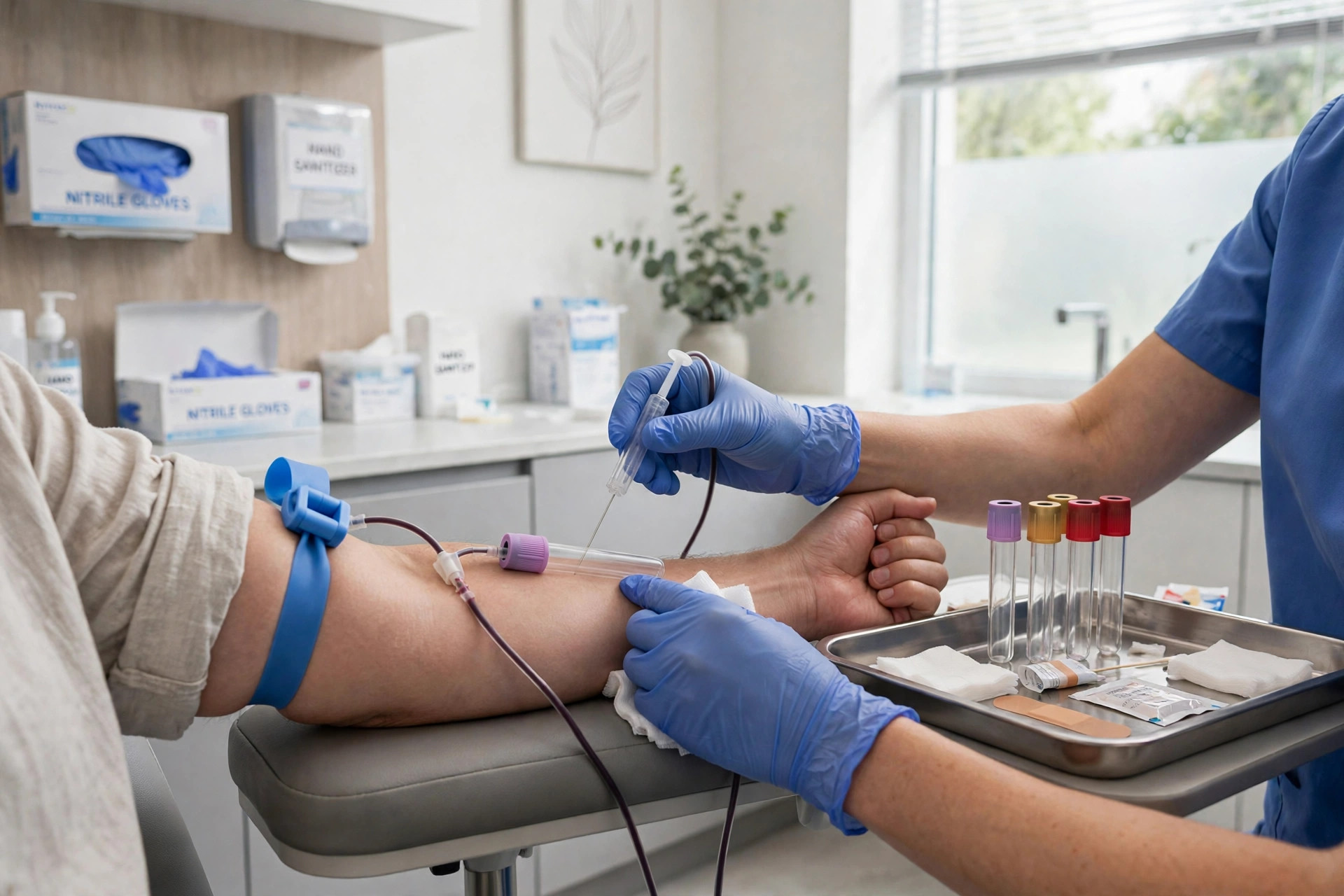
- A blood sample is taken from a vein in the arm.
- The laboratory checks the panel of hepatitis B markers, which together show whether you are currently infected, were infected in the past, or are protected by vaccination.
- Results usually take a few days and are explained by your clinician, with referral to liver services if infection is found.
How to prepare
- No fasting or preparation is needed.
- Tell the clinician your country of birth and whether you have ever been vaccinated against hepatitis B — both change how the results are interpreted.
- If you are pregnant, this test is a routine part of first-visit bloods; you do not need to request it separately.
What the results mean
A negative surface antigen with protective antibodies usually means vaccination worked. No markers at all usually means you are susceptible and vaccination is worthwhile if you are at risk.
A positive surface antigen means current infection. That is not a verdict of liver damage — many people need only monitoring — but it does mean specialist follow-up, treatment assessment, and testing and vaccination for your household and sexual contacts.
Benefits
- Finds a silent infection before it causes cirrhosis or liver cancer.
- In pregnancy, screening allows newborn protection that prevents lifelong infection in the baby.
- Identifies contacts who can be vaccinated before they are exposed.
Limits and possible harms
- A positive result can cause anxiety and stigma; confirmatory and follow-up testing clarify what it means.
- Markers can be complex to interpret — past infection, vaccination and window-period results look different, which is why results come with a clinical explanation.
- False positives are uncommon but possible, and are resolved with repeat testing.
Watch: related videos
Useful links and tools
More in Infections & Sexual Health
Frequently asked questions
Who counts as 'increased risk' for hepatitis B?
The USPSTF recommendation (grade B) targets adolescents and adults at increased risk — most importantly people born in regions where hepatitis B is common, people who inject drugs, household and sexual contacts of infected people, and people with HIV, hepatitis C or immune suppression. Separately, every pregnant person is screened at the first prenatal visit (grade A).
I was vaccinated as a child. Do I still need screening?
If you completed vaccination and are not in a risk group, routine screening is usually unnecessary — your records or an antibody test can confirm protection. Screening matters most if you were born in a higher-prevalence region, were never vaccinated, or have one of the risk factors listed on this page.
This guide explains how a screening test usually works and who it is generally offered to. It is general educational information only — not medical advice, and not a recommendation for you personally. Screening decisions depend on your age, history and risk, so talk to your own clinician about which tests you need and when. If you have symptoms now, do not wait for a screening test — seek medical care promptly.