
- Physical Examination
- Surgical Examination
- Ophthalmology
- Clinical Skills
- Orthopedics
- Surgery Videos
- Laparoscopy
- Pediatrics
- Funny Videos
- Cardiothoracic Surgery
- Nursing Videos
- Plastic Surgery
- Otorhinolaryngology
- Histology and Histopathology
- Neurosurgery
- Dermatology
- Pediatric Surgery
- Urology
- Dentistry
- Oncology and Cancers
- Anatomy Videos
- Health and Fitness
- Radiology
- Anaesthesia
- Physical Therapy
- Pharmacology
- Interventional Radiology
- Cardiology
- Endocrinology
- Gynecology
- Emergency Medicine
- Psychiatry and Psychology
- Childbirth Videos
- General Medical Videos
- Nephrology
- Physiology
- Diet and Food Health
- Diabetes Mellitus
- Neurology
- Women Health
- Osteoporosis
- Gastroenterology
- Pulmonology
- Hematology
- Rheumatology
- Toxicology
- Nuclear Medicine
- Infectious Diseases
- Vascular Disease
- Reproductive Health
- Burns and Wound Healing
- Kidney Zone Podcast
- Other
Syphilis Screening
Syphilis is rising again and is easily missed — its early stages can be painless or invisible. The USPSTF recommends screening people at increased risk (grade A) and everyone early in pregnancy (grade A).
Syphilis is a sexually transmitted bacterial infection that progresses in stages. Early on it may cause a painless sore that heals on its own — which is why it is so often missed — while untreated infection can damage the heart, brain and nervous system years later, and can seriously harm a baby in pregnancy.
The USPSTF recommends screening people at increased risk (grade A) and screening early in pregnancy for everyone (grade A) — the pregnancy recommendation was reaffirmed and strengthened in 2025 as rates of congenital syphilis rose.
What this screening checks
- A blood test for syphilis antibodies. Because no single test is perfect, services use a sequence of two different blood tests to confirm a result.
- If you have a sore or rash, the clinician may also examine it and test for other infections at the same visit — syphilis, HIV and other STIs are usually checked together.
Who should have it, and how often
People at increased risk: those with a partner diagnosed with syphilis or another STI, a new or multiple partners, a previous STI, or sexual networks where syphilis is circulating; men who have sex with men and people with HIV are specifically named in the evidence.
All pregnant persons, as early as possible in pregnancy — and in some situations again later in pregnancy if risk is high.
Anyone with a painless genital sore, or a rash involving the palms and soles, should not wait for 'screening' — book a sexual health appointment promptly.
What happens during the test
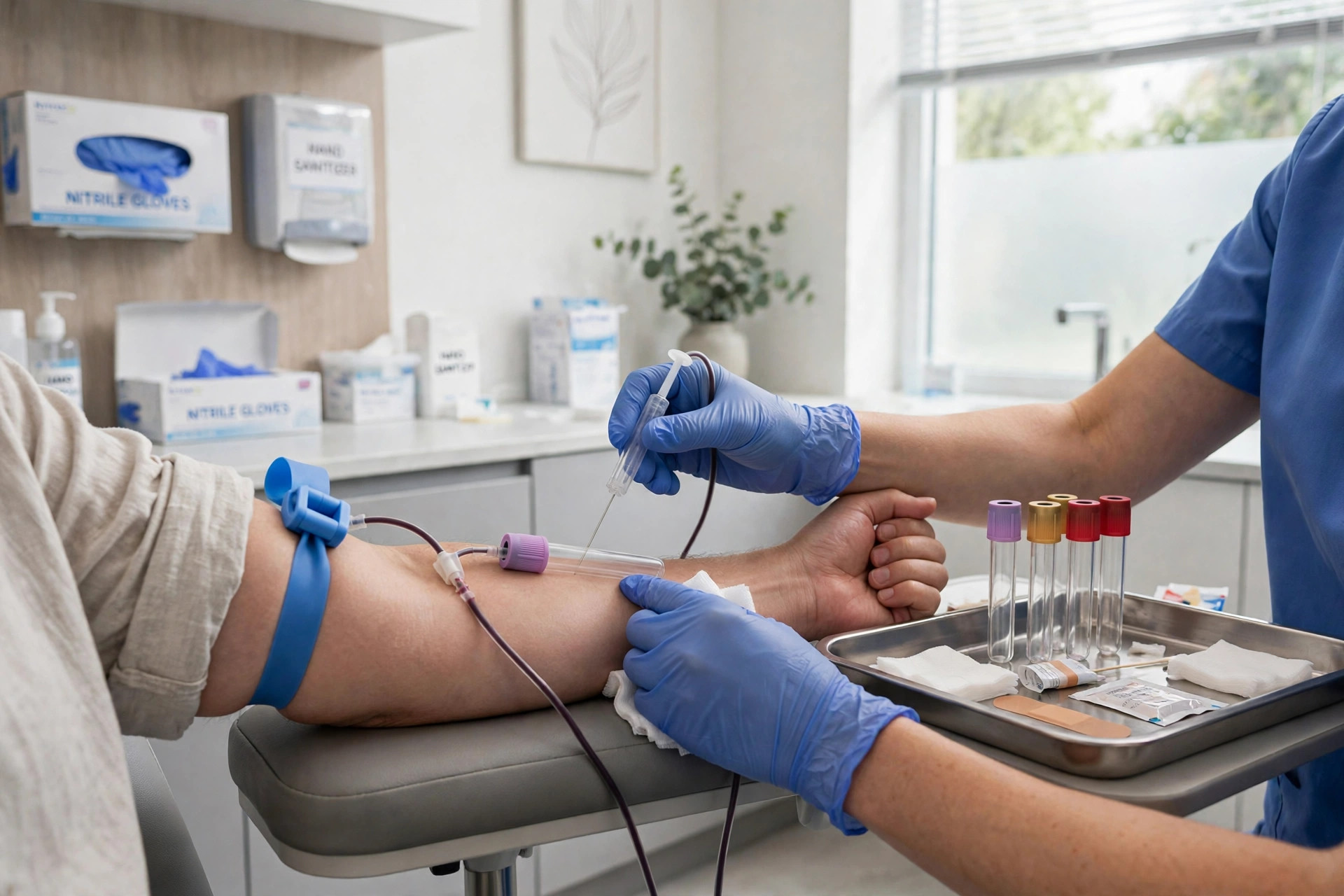
- A blood sample is taken from a vein in the arm.
- The laboratory runs the antibody test; if it is reactive, a second, different test confirms the result, and sometimes a further test measures how active the infection is.
- If syphilis is confirmed, treatment is arranged, and partner notification support is offered so contacts can be tested and treated too.
How to prepare
- No preparation is needed for the blood test.
- Tell the clinician about any sores, rashes, previous syphilis treatment, and drug allergies — penicillin allergy in particular changes treatment planning.
- If you were treated for syphilis before, say so: antibodies can stay positive for years, and the team will interpret your result against your history.
What the results mean
A negative result means no evidence of syphilis — with the usual caveat that a very recent infection can be missed, so a repeat test may be advised after a recent exposure.
A confirmed positive result means treatment is needed. Syphilis is curable with antibiotics; follow-up blood tests then track the response, and partners need testing and treatment to prevent reinfection and onward spread.
Benefits
- Catches a curable infection at a stage when it has done no lasting damage.
- In pregnancy, screening and treatment prevent congenital syphilis, which can cause stillbirth and serious newborn illness.
- Finding one infection prompts testing for others that travel together, such as HIV.
Limits and possible harms
- The two-step testing sequence means a wait between a first reactive result and confirmation, which can be anxious.
- Antibodies from an old, treated infection can complicate interpretation of new results.
- False positives occur, particularly in pregnancy and with some other conditions — another reason confirmation matters.
Watch: related videos
Useful links and tools
More in Infections & Sexual Health
Frequently asked questions
Why is syphilis screening in pregnancy now emphasised so strongly?
Because congenital syphilis — infection passed to the baby — has risen sharply and can cause stillbirth, neonatal death and serious disability, yet is preventable with timely testing and treatment. The USPSTF recommends early screening in pregnancy for everyone (grade A, reaffirmed 2025), with repeat testing later in pregnancy for people at high risk.
I was treated for syphilis years ago. Will my test always be positive?
Some syphilis blood tests do stay positive for life after successful treatment, which is why telling the clinician about past treatment matters. Services use the pattern of tests — including one that measures activity — to tell an old, treated infection apart from a new or untreated one.
This guide explains how a screening test usually works and who it is generally offered to. It is general educational information only — not medical advice, and not a recommendation for you personally. Screening decisions depend on your age, history and risk, so talk to your own clinician about which tests you need and when. If you have symptoms now, do not wait for a screening test — seek medical care promptly.