
- Physical Examination
- Surgical Examination
- Ophthalmology
- Clinical Skills
- Orthopedics
- Surgery Videos
- Laparoscopy
- Pediatrics
- Funny Videos
- Cardiothoracic Surgery
- Nursing Videos
- Plastic Surgery
- Otorhinolaryngology
- Histology and Histopathology
- Neurosurgery
- Dermatology
- Pediatric Surgery
- Urology
- Dentistry
- Oncology and Cancers
- Anatomy Videos
- Health and Fitness
- Radiology
- Anaesthesia
- Physical Therapy
- Pharmacology
- Interventional Radiology
- Cardiology
- Endocrinology
- Gynecology
- Emergency Medicine
- Psychiatry and Psychology
- Childbirth Videos
- General Medical Videos
- Nephrology
- Physiology
- Diet and Food Health
- Diabetes Mellitus
- Neurology
- Women Health
- Osteoporosis
- Gastroenterology
- Pulmonology
- Hematology
- Rheumatology
- Toxicology
- Nuclear Medicine
- Infectious Diseases
- Vascular Disease
- Reproductive Health
- Burns and Wound Healing
- Kidney Zone Podcast
- Other
HIV Screening
HIV can be silent for years while treatment works best early. The USPSTF recommends screening everyone aged 15 to 65 at least once (grade A), and all pregnant people in every pregnancy.
HIV weakens the immune system slowly and silently. Modern treatment started early keeps people healthy for decades and, once the virus is suppressed, stops sexual transmission. Screening is how people find out in time to get that benefit.
The USPSTF recommends screening for HIV in everyone aged 15 to 65 (grade A), in younger and older people who are at increased risk, and in all pregnant persons — including those who arrive in labour without a documented test. Testing is voluntary and confidential.
What this screening checks
- HIV antibodies and antigen in a blood sample (the standard laboratory test looks for both). Rapid tests on blood or oral fluid are also used in some settings.
- A reactive screening result is never the final answer: it is always followed by confirmatory laboratory testing before a diagnosis is made.
Who should have it, and how often
Everyone aged 15 to 65, at least once — whether or not you think you are at risk.
Younger or older than that range if you are at increased risk — for example a new or multiple sexual partners, a partner with HIV, injecting drug use, or another sexually transmitted infection.
All pregnant persons, early in every pregnancy, because treatment in pregnancy protects the baby as well as the mother.
How often to repeat the test depends on ongoing risk rather than a fixed schedule; people at continuing high risk should also ask their clinician about PrEP, the preventive medicine the USPSTF recommends for people at increased risk of acquiring HIV (grade A).
What happens during the test
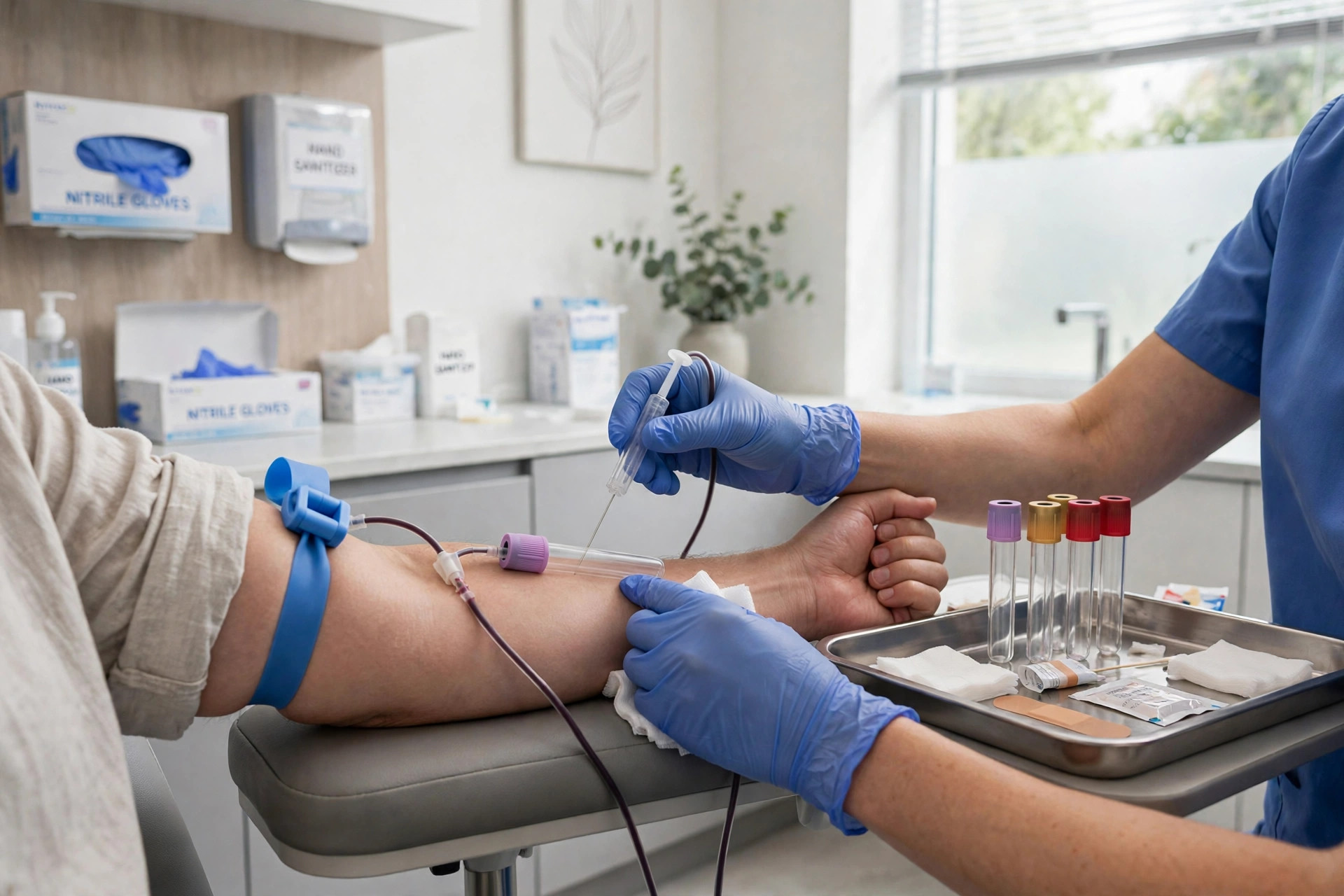
- A blood sample is taken from a vein in the arm; rapid tests may use a finger-prick sample or an oral swab.
- Laboratory tests usually take days rather than minutes; rapid tests give a preliminary result in a single visit, which is then confirmed in the laboratory if reactive.
- Results are given confidentially, with counseling and, if positive, a direct link into HIV care.
How to prepare
- No preparation is needed. You may be asked about the timing of any recent possible exposure, because tests cannot detect very recent infections — if you test too soon after an exposure, a repeat test later may be advised.
- You can ask how you will receive the result and who else, if anyone, will see it — testing services are used to these questions.
What the results mean
A negative result means no HIV was detected — with the timing caveat above if you had a very recent exposure. A confirmed positive result leads into specialist care, where treatment is started and partner services can help you notify contacts safely and confidentially.
A positive result today is not the diagnosis it was decades ago: with modern treatment, people with HIV who start early can expect a near-normal life expectancy and, once virally suppressed, do not pass the virus on sexually.
Benefits
- Early treatment preserves the immune system and prevents AIDS-defining illness.
- Knowing your status protects partners — through treatment, and through informed choices.
- Testing in pregnancy, with treatment, reduces transmission to the baby to very low levels.
Limits and possible harms
- A reactive first test that turns out negative on confirmation can cause days of distress.
- Testing very soon after an exposure can give a false-negative result; a repeat test may be needed.
- Some people worry about privacy or stigma; services are confidential, and you can ask exactly how results are recorded.
Watch: related videos
Useful links and tools
More in Infections & Sexual Health
Frequently asked questions
How often should I test for HIV?
The USPSTF recommends that everyone aged 15 to 65 is screened at least once (grade A), and that people at increased risk — and all pregnant persons in every pregnancy — are tested as well. Beyond that, the Task Force does not set one fixed interval: repeat testing is based on your ongoing risk, which your clinician or testing service can help you judge.
Can a test miss a recent infection?
Yes. HIV tests detect the virus's antigen or the antibodies your body makes against it, and both take some weeks to appear after infection. If you test soon after a possible exposure and the result is negative, you may be advised to test again later to be certain. Tell the testing service about recent exposures so they can time your tests correctly.
This guide explains how a screening test usually works and who it is generally offered to. It is general educational information only — not medical advice, and not a recommendation for you personally. Screening decisions depend on your age, history and risk, so talk to your own clinician about which tests you need and when. If you have symptoms now, do not wait for a screening test — seek medical care promptly.