
- Physical Examination
- Surgical Examination
- Ophthalmology
- Clinical Skills
- Orthopedics
- Surgery Videos
- Laparoscopy
- Pediatrics
- Funny Videos
- Cardiothoracic Surgery
- Nursing Videos
- Plastic Surgery
- Otorhinolaryngology
- Histology and Histopathology
- Neurosurgery
- Dermatology
- Pediatric Surgery
- Urology
- Dentistry
- Oncology and Cancers
- Anatomy Videos
- Health and Fitness
- Radiology
- Anaesthesia
- Physical Therapy
- Pharmacology
- Interventional Radiology
- Cardiology
- Endocrinology
- Gynecology
- Emergency Medicine
- Psychiatry and Psychology
- Childbirth Videos
- General Medical Videos
- Nephrology
- Physiology
- Diet and Food Health
- Diabetes Mellitus
- Neurology
- Women Health
- Osteoporosis
- Gastroenterology
- Pulmonology
- Hematology
- Rheumatology
- Toxicology
- Nuclear Medicine
- Infectious Diseases
- Vascular Disease
- Reproductive Health
- Burns and Wound Healing
- Other
Ophthalmology
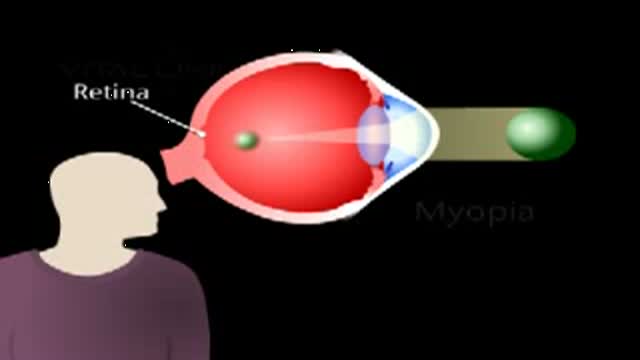

This animated video reviews myopia, which is the medical term for nearsightedness.
What is a Cataract
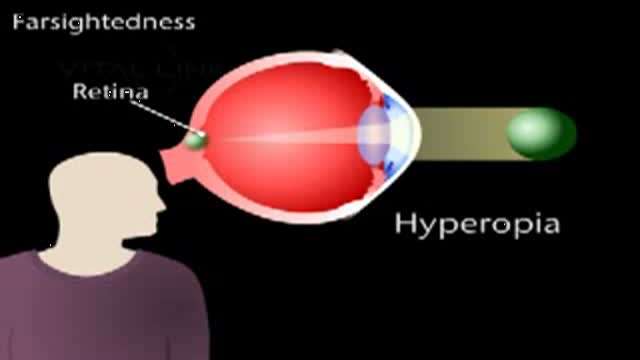
This animated video reviews hyperopia, or farsightedness.
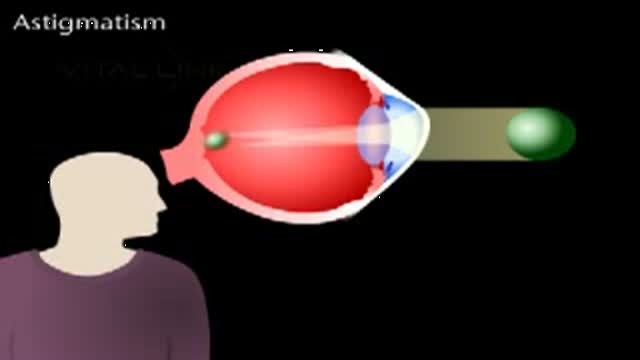
This animated video explains what is meant by astigmatism, which is a very common problem with the eyes.
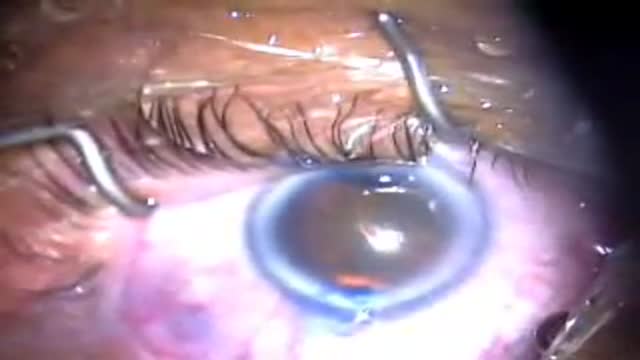
Cataract surgery with dense arcus
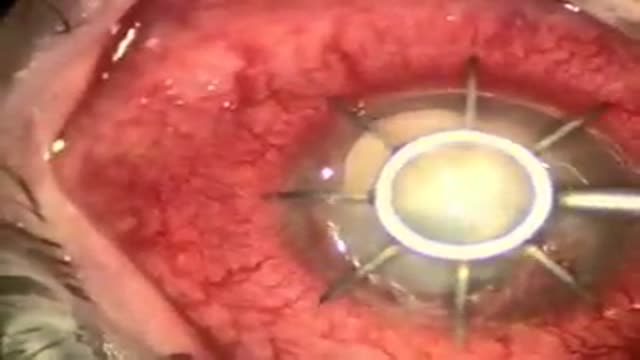
Cornea Transplant
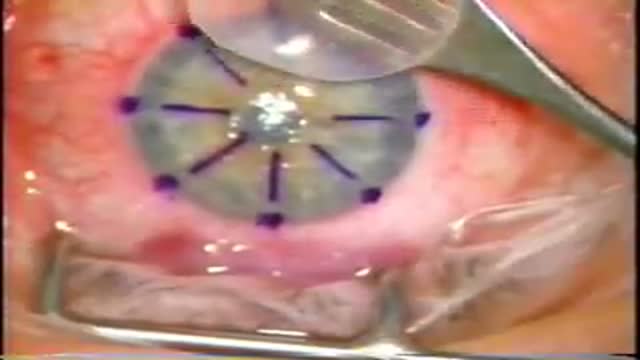
Most corneal transplants performed in the U.S. involve replacing the entire thickness of the diseased cornea with a healthy donor cornea (called penetrating keratoplasty or PK). In partial-thickness corneal transplants (LK), only the anterior (surface) layers of the cornea are removed. The donor cornea is then attached to the host corneal bed, containing only posterior (deeper) layers. LK is less risky, but tends to result in somewhat inferior vision vs. PK and cannot be performed if the disease process (e.g. scar) involves the deeper layers of the cornea.
Radial Keratotomy
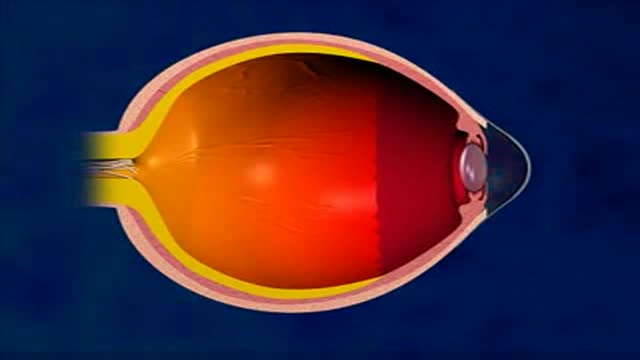
LASIK or Laser-Assisted In Situ Keratomileusis is a surgical procedure intended to reduce a person's dependency on glasses or contact lenses.
LASIK surgery is most commonly performed as a cure for myopia (nearsightedness), but can also be used to cure hyperopia (farsightedness) or astigmatism (corneal irregularities).
LASIK is a procedure that permanently changes the shape of the cornea using a special laser and thus focusing the light rays exactly on the retina.
The steps of the procedure are as follows:
A suction ring is placed on the eye to stabilize and check the eye pressure.
The microkeratome, a cutting instrument, is attached to the suction ring.
The blade of the microkeratome is used to cut a flap in the cornea.
The exposed inner layer of the cornea is then reshaped with an excimer laser.
The corneal flap is returned to its original position.
LASIK is an ambulatory procedure; the patient can walk into the surgery center, have the procedure and walk out again and is awake the whole time. Occasionally, the doctor may administer a mild oral sedative.
LASIK eye surgery operation
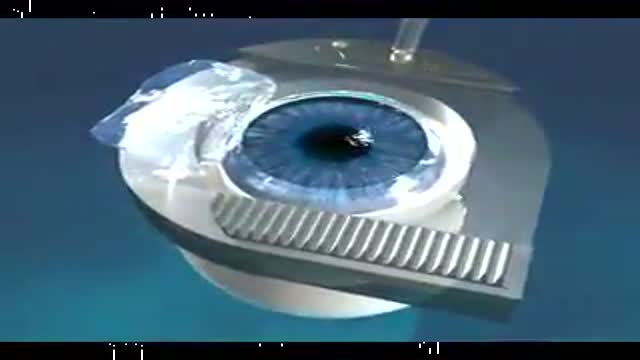
Microkeratome in Lasik
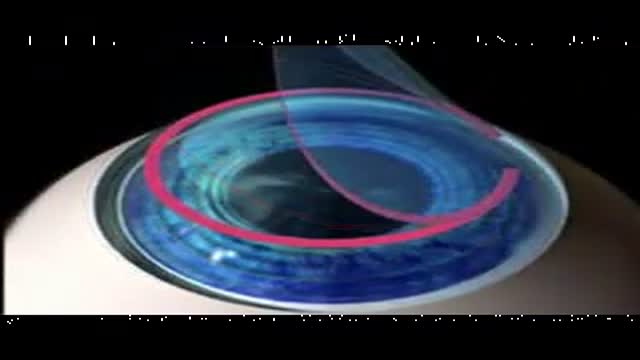
LASIK Surgery Procedure
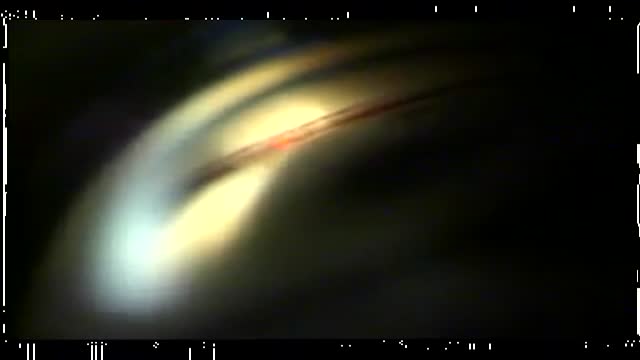
A LASAG Yag laser is in thermal mode, 1.5 Joules/pulse to treat the trabecular meshwork between the cornea and iris for glaucoma. The view is of the inside anterior eyeball.
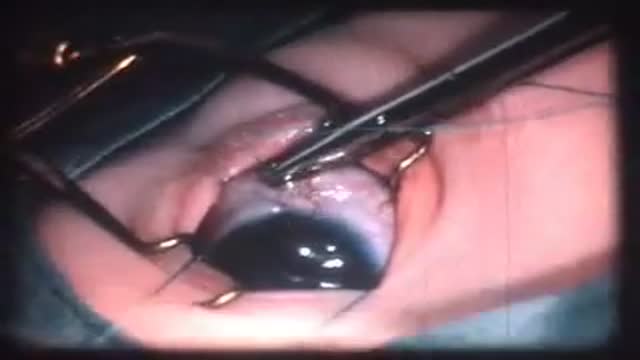
A technique of goniotomy. Sent by Prof. Dr. Daljit Singh. I think it has been done by Dr. Jan Worst and the video is probably more than 15 years old.
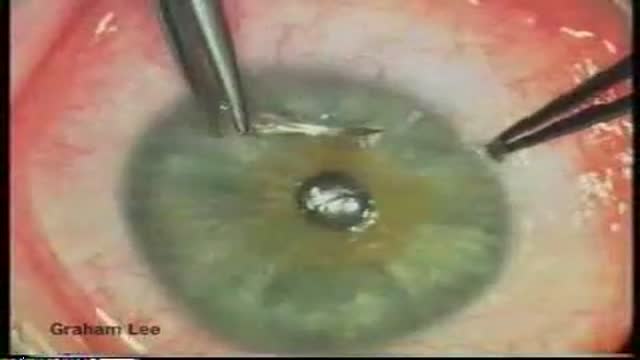
Trabeculectomy with mitomycin-C for complex glaucoma. video
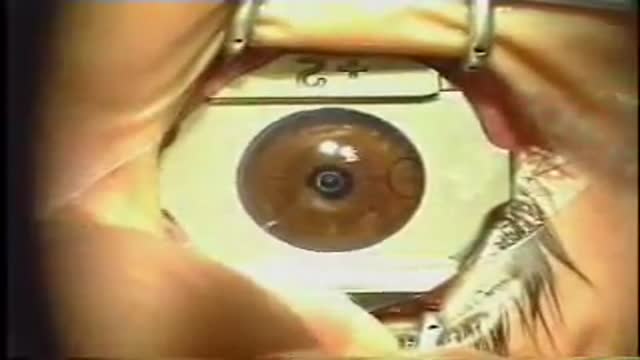
A video showing the laser eye surgery
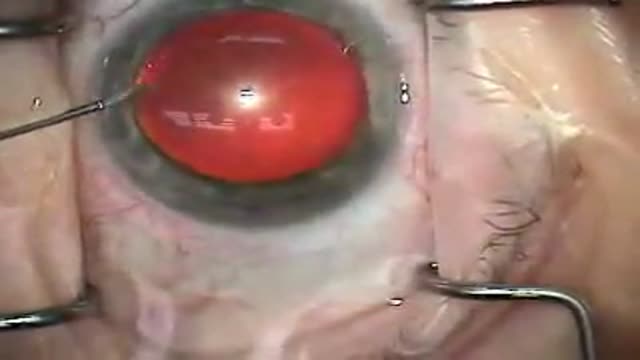
A video of modern cataract surgery employing a temporal, clear-corneal approach with topical anesthesia and ultrasound phacoemulsification; an aspheric silicone lens implant is inserted

The Pulsed Electron Avalanche Knife, a new electrosurgical knife for “cold” and traction-less cutting, was successfully used for a variety of surgical maneuvers commonly encountered in patients undergoing ocular surgery.

Removal of 5 Releasable sutures from the Eye

The trypan blue-stained viscoelastic is removed in its entirety using a Simcoe cannula. A stream of Healonid GV can be seen flowing into the cannula with some residual viscoelastic remaning, which is subsequently removed. Without the dye, much of the viscoelastic might have been left in the anterior... chamber – a risk factor for an acute rise in intra ocular pressure.
